Yes Standard Review
Affiliate disclosure: As an Amazon Associate we earn from qualifying purchases. Some links below are affiliate links, see our full disclosure. This breakdown is based on our independent research of current-season specifications and aggregated expert and user feedback.
The quick verdict: The best board-per-dollar in the category: a surfy mid-wide all-rounder with serious edge hold, easy butters, and a hidden powder stance. Chargers will want more spring; everyone else will just have fun. ~$550
Overview
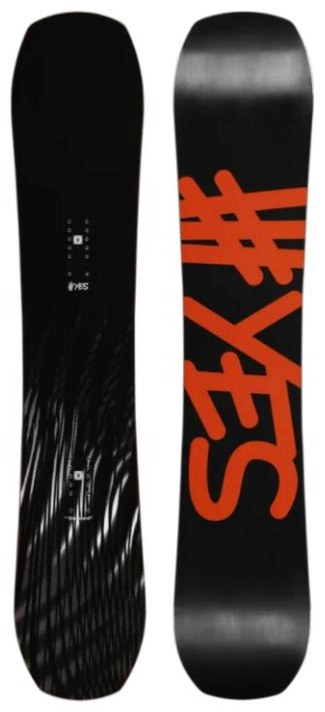
Yes was founded by three pro riders who left Burton to build the boards they actually wanted, and the Standard has become the brand's thesis statement: one unpretentious deck that works everywhere. Yes positions it as a do-everything resort board, and it anchors a small family that now includes the premium Standard Uninc DC and the stiffer Standard Xtrm. The regular Standard is the one most riders should buy.
Three design choices define it. The shape is a directional volume twin, wider than typical underfoot with a touch more surface area in the nose than the tail. The sidecut uses the brand's MidBite geometry, which narrows the board slightly between the bindings so the edge pressures harder under your feet, sharpening grip and quickening turn initiation on a platform this wide. And the rear inserts include Slamback packs: bolt the back binding into them and the stance shifts roughly two inches rearward, turning the Standard into a credible powder board on storm days. The 2026 version also firmed up its flex compared to earlier years, per published reviews, which improved hard-snow manners without losing the playful character.
Key Specs
| Spec | Yes Standard |
|---|---|
| Flex | Medium |
| Profile | CamRock: mellow camber with extended rocker at nose and tail |
| Shape | Directional volume twin, mid-wide, MidBite sidecut |
| Sizes | 149, 151, 153, 156, 159, 162, 167 (brand site) |
| Stance | Centered, with Slamback rear inserts (~2.25 in setback option) |
| Base | Sintered |
| Rider level | Confident beginner to expert |
| Warranty | Yes limited warranty |
| Price | ~$550 (brand site) |
Sizing & Fit
Because the platform is mid-wide, most riders should treat the Standard as a size-normal board and resist the urge to add length for width reasons: boots up to about US 12 fit the regular sizes without toe drag at everyday edge angles. There are no separate W sizes and, realistically, no need for them below size 13. One hardware note matters: the Slamback inserts only accept bindings with full-size center discs, so mini-disc bindings (several Burton and Union models) cannot use the powder stance. Check your discs before buying if that feature is part of the appeal, and see our bindings guide for compatible options.
Where It Shines
- Edge hold on hard snow near the top of the class, credited to the MidBite outline in published reviews
- Quick turn initiation for a mid-wide board; it never feels like a barge edge to edge
- Butters and presses easily, with a forgiving personality that flatters progressing riders
- Slamback stance makes it a legitimate storm-day board without buying a second deck
- Lowest price in our lineup while giving up little in build quality
Tradeoffs to Know
- Pop is the weak spot; reviewers consistently note the mellow camber lacks spring out of turns and off ollies
- Not the tool for bombing: at high speed it gives up composure to the Mercury and even the Mountain Twin
- Slamback requires full-size binding discs, an easy detail to miss at checkout
- The wide-ish platform mutes some precision for lighter riders with small feet
Who It's For
Riders who want one reasonably priced board that handles a full western season: groomers, trees, slush, and the occasional dump. It fits an unusually wide skill band, friendly enough for a confident beginner, capable enough that advanced riders keep it as a daily. It is also the natural pick for surf-style riders who care more about slashes and flow than about trenching corduroy.
Who Should Skip It
Anyone whose riding is defined by speed or spring. If you measure days in top speed and carve depth, the Mercury is worth the extra ~$150. If you spend half your time lapping jumps, the Assassin's extra pop earns its price gap. And small-footed riders who found mid-wides sluggish before will not be converted here, MidBite or not.
How It Compares
The Jones Mountain Twin costs ~$50 more and is the tighter, more precise board with a far bigger size run. Pick the Jones for crisp response and true switch riding; pick the Standard for a looser, surfier feel and the powder stance.
The Capita Mercury is ~$150 more and the inverse personality: stiff, precise, speed-hungry. The Standard is more fun below 25mph; the Mercury owns everything above it.
The Salomon Assassin runs ~$100 more and jumps, spins, and ollies better. The Standard counters with wider-platform stability, better powder float via Slamback, and the lower price.
See the full lineup in our guide: The Best All-Mountain Snowboards of 2026-27.
Frequently Asked Questions
What do the Yes Standard's Slamback inserts do?
They are an extra rear insert pack that lets you move the back binding roughly two inches further back than a normal stance, shifting your weight toward the tail so the wide nose planes up in powder. You need bindings with full-size center discs to use them.
Is the Yes Standard good for beginners?
It is one of the friendlier boards in its class. The forgiving CamRock profile and easy turn initiation suit confident beginners and progressing intermediates, while the edge hold and powder capability mean advanced riders will not outgrow it. Our beginner gear guide covers the rest of the setup.
Do I need a wide Yes Standard?
Probably not. The Standard is built as a mid-wide board, so its regular sizes already run wider than typical. Most riders up to about US size 12 boots fit the standard widths; there are no separate W sizes in the line.