Jones Mountain Twin Review
Affiliate disclosure: As an Amazon Associate we earn from qualifying purchases. Some links below are affiliate links, see our full disclosure. This breakdown is based on our independent research of current-season specifications and aggregated expert and user feedback.
The quick verdict: The definitive one-board quiver: camber pop, rockered tips, honest switch riding, and the most consistent all-terrain manners in the category. Nothing here is the best at any single thing, and that is the point. ~$600
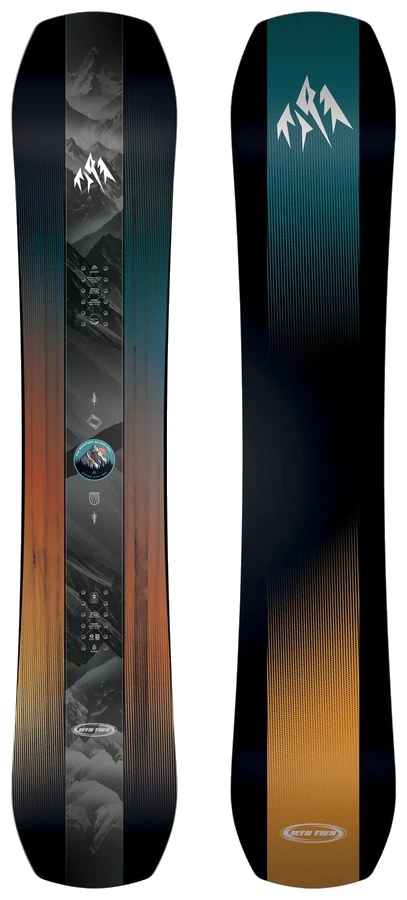
Overview
Jeremy Jones built his company on big-mountain boards, but the Mountain Twin is the one that pays the bills. Jones describes it as the bestselling board in the line and positions it squarely at riders who roam the whole resort: groomers before lunch, trees after, side hits whenever they appear. It sits in the middle of the Jones freestyle-to-freeride spectrum, more playful than a Flagship, more capable in rough snow than a park deck.
The formula is a directional twin shape over Jones's CamRock profile: camber between the bindings, rocker toward nose and tail. The brand pairs that with a sintered base and its usual environmental build credentials, including bio-based resin. None of it is exotic. What the Mountain Twin sells is balance, and the research backs the pitch; the recurring line in published reviews is that it is the most reliably consistent board they test, year after year.
Key Specs
| Spec | Jones Mountain Twin |
|---|---|
| Flex | Medium (about 6/10) |
| Profile | CamRock: camber underfoot, rockered nose and tail |
| Shape | Directional twin, modest setback |
| Sizes | 149-168cm, ~15 sizes incl. W (wide) and UW (ultra-wide), per the Jones site |
| Base | Sintered (Sintered 8000) |
| Rider level | Intermediate to advanced |
| Warranty | Jones limited warranty |
| Price | ~$600 (brand site) |
Sizing & Fit
The size run is the quiet superpower here. Few boards offer fifteen length and width combinations, and it means almost nobody has to compromise: regular widths roughly 149-163, W sizes for US 11.5+ boots, and UW sizes for the size 13+ crowd that most brands ignore. Jones publishes weight ranges per size, and the standard advice applies: ride the middle of your range, size down 2-3cm if you prioritize quick trees and spins, up a size for stability and float. The medium flex suits riders from roughly 130 to 220 pounds across the run without feeling like a plank at the light end or a noodle at the heavy end.
Where It Shines
- Consistency across terrain: groomers, chop, trees, and moguls all feel like the same predictable board, a point published reviews make repeatedly
- Genuine switch capability for a board with this much all-terrain range, thanks to the near-twin shape
- Camber underfoot delivers real edge hold on firm snow where rocker-heavy rivals wash out
- Rockered tips and the setback option keep it afloat in a foot of fresh without a dedicated powder board
- Huge size run, including ultra-wides for big-footed riders
Tradeoffs to Know
- Pop is good, not great; the Assassin ollies noticeably harder per aggregated reviews
- High-speed, low-angle carves reveal the flex limit sooner than the stiffer Mercury
- Not a jib board; the medium flex resists presses more than soft park decks
- Does nothing best in class, which matters if one terrain type dominates your season
Who It's For
The rider who owns one board and wants it to be the right answer every single morning. Intermediates will progress on it for years without outgrowing it, and advanced riders keep one around as the daily driver that handles whatever the forecast delivers. It is also the easy recommendation for anyone with large feet, since the W and UW sizes are real options rather than afterthoughts.
Who Should Skip It
Riders with a defined specialty. If you count carving angles, the Mercury holds a higher edge. If your season is one powder cycle after another, a tapered directional board floats better. And true beginners still learning to link turns will have an easier first season on something softer, per our beginner snowboard gear guide.
How It Compares
The Capita Mercury runs ~$100 more, a half-step stiffer, and noticeably more directional. Choose the Mercury if carving and speed are the highlight of your day; choose the Mountain Twin for a more forgiving, more switch-friendly all-rounder.
The Yes Standard saves ~$50 and counters with a mid-wide platform and Slamback powder stance. The Mountain Twin answers with a bigger size run and snappier response edge to edge. Surfy and loose goes Standard; precise and predictable goes Jones.
The Salomon Assassin is the more freestyle-flavored take: more pop, livelier spins, a bit less composure in rough snow. Park-rat habits pick the Assassin; all-terrain mileage picks the Mountain Twin.
See the full lineup in our guide: The Best All-Mountain Snowboards of 2026-27.
Frequently Asked Questions
Is the Jones Mountain Twin good for beginners?
It suits progressing riders better than true first-timers. The medium flex and camber underfoot reward riders who already link turns confidently; a brand-new rider will find it less forgiving than a soft rocker-dominant board, though it is far from punishing.
Does the Jones Mountain Twin ride switch well?
Yes, and better than most boards this capable in powder. The shape is a directional twin with a modest setback, so landing and riding switch feels close to natural. Riders who spin constantly may still prefer a true twin.
What sizes does the Mountain Twin come in?
The 2026/27 lineup spans roughly 149 to 168cm across regular, wide (W), and ultra-wide (UW) widths, around 15 sizes in total per the Jones site. Riders with US 11.5+ boots should look at the W sizes, and 13+ at the UW sizes.