YES Hell Yes Review
Affiliate disclosure: As an Amazon Associate we earn from qualifying purchases. Some links below are affiliate links, see our full disclosure. This breakdown is based on our independent research of current-season specifications and aggregated expert and user feedback.
The quick verdict: The board that topped the biggest independent women's all-mountain test we found does it the honest way: camber where you need grip, rocker where you need forgiveness, and an edge design that bites on days everyone else calls icy. Deep powder and park rails are the only jobs it does merely well. ~$580
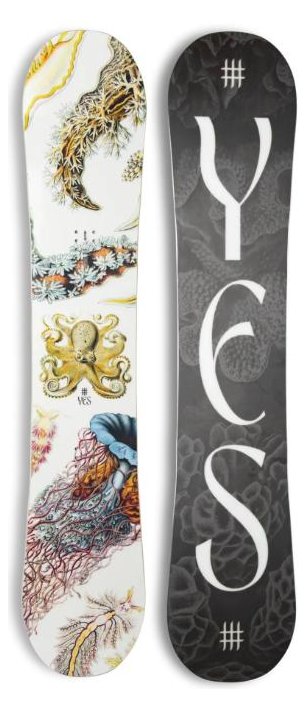
Overview
YES was started in 2009 by three pro riders who walked away from the biggest brand in snowboarding to build boards their own way, and the Hell Yes (sold for years as the Hel Yes, same board, new spelling) has grown into the company's women's flagship. The brand pitches it as a true quiver killer: groomers, side hits, park laps, and storm-day leftovers on one deck. That is marketing language, but for once the independent testing agrees. In the largest women's all-mountain comparison we found, covering 24 current boards, the Hell Yes finished first overall with a score of 91.6, clear of some much more famous names.
The construction explains the result. YES's CamRock 3-4-3 profile puts real camber between the feet with rocker rising at the tip and tail, so the board drives like a cambered deck mid-turn and forgives like a rockered one at the edges of your technique. A Torrent wood core carries triaxial glass with carbon reinforcement at the tip and tail, the base is sintered, and the edges use the brand's UnderBite geometry, which pulls the contact zone inward under the bindings to concentrate pressure where your weight actually is. On scraped Eastern hardpack, that detail is the difference between arcing and sliding, according to both the brand's claims and the test results on firm snow from similar UnderBite boards.
Key Specs
| Spec | YES Hell Yes |
|---|---|
| Sizes | 146, 149, 152, 155cm |
| Waist width | 239 / 241 / 242 / 244mm (retailer listings) |
| Shape | Directional twin, 10mm setback |
| Profile | CamRock 3-4-3: camber between the feet, rocker tip and tail |
| Flex | 7/10 on the spec sheet; testers describe the ride closer to medium |
| Core | Torrent wood core |
| Laminates | Triax glass with carbon tip and tail reinforcement |
| Base | Sintered |
| Rider weight | 94-154 lbs (146) up to 127-187 lbs (155), per retailer size charts |
| Inserts | 2x4 pattern with SlamBack setback inserts |
| Warranty | 2 years, lifetime coverage available with registration (brand site) |
| Price | ~$580, deck only (brand site) |
Sizing & Fit
Buy by the weight chart, not by height. The ranges overlap generously, and riders who land in two sizes should go shorter for trees and switch riding, longer for open-bowl speed. The 244mm waist on the 155 covers US women's boots to roughly size 10 with sensible binding angles; smaller sizes suit the 6-to-9 range most women ride. Published reader guidance from the test site suggests medium to medium-stiff bindings, around 6 or 7 out of 10, which matches the board's character. The SlamBack inserts deserve a mention: shift your rear binding to the last holes on a storm morning and the Hell Yes turns into a far better powder board than its 10mm stock setback suggests.
Where It Shines
- Overall balance: first of 24 boards in the big independent women's all-mountain test, with no category dragging the score down
- Edge hold on firm snow, which the UnderBite design targets and reviewers of UnderBite boards consistently confirm
- Carving energy that stays manageable at slow speeds, a rare pairing in this flex range
- Accessible pop for side hits and small jumps without a stiff-board runup
- Forgiveness: the rockered contact points shrug off the lazy edge catches that full-camber boards punish
Tradeoffs to Know
- Flat-out speed is not its specialty; testers note the lighter feel can get deflected in heavy chop where the Feelgood Camber stays planted
- Deep powder takes active back-foot work unless you use the SlamBack inserts; a dedicated freeride shape floats with less effort
- Not a jib board: rail-focused riders will want something softer and more buttery
- The 7/10 spec flex rides friendlier than the number, which is a feature for most buyers but a surprise for anyone expecting a plank
Who It's For
Intermediate through expert riders who want one board for the whole resort and the whole season. If your typical day strings together groomer laps, a few tree runs, some side hits, and whatever the weather delivered overnight, this is the most complete single answer in the current women's lineup. It rewards improving technique without punishing the learning process, which is exactly what a daily driver should do.
Who Should Skip It
True beginners should start softer; the Twin Sister is kinder in its smaller sizes. Riders who spend most days arcing fast turns on groomed snow will find a higher ceiling in the Feelgood Camber. And if your idea of a great run involves more butters than carves, the looser, surfier Infinity fits that personality better.
How It Compares
The Burton Feelgood Camber is the harder-edged alternative: full camber, stiffer flex, more grip and more speed, with less patience for soft technique. Choose the Burton if carving is the main event; choose the Hell Yes for range.
The Jones Twin Sister runs softer and comes in six sizes to the Hell Yes's four. It gives up a little edge bite on ice and gains approachability, making it the better call for riders earlier in their progression.
The Never Summer Infinity trades outright precision for play. It butters and spins more willingly, feels looser between turns, and carries a three-year warranty; the Hell Yes out-grips and out-carves it.
See the full lineup in our guide: The Best Women's Snowboards of 2026-27.
Frequently Asked Questions
Is the Hell Yes the same board as the Hel Yes?
Yes. YES changed the spelling on its own site for the current season, and retailers list both names for the same design. The CamRock profile, UnderBite edges, and size run carry straight over, so reviews of recent Hel Yes models still apply.
Is the Hell Yes too stiff for intermediates?
No. The spec sheet says 7/10, but testers consistently describe the on-snow feel as medium, with slightly softer tips and tails. Confident intermediates progressing into advanced terrain are squarely in its range; only true first-season riders should look softer.
What bindings pair well with it?
Medium to medium-stiff bindings around 6 or 7 out of 10 flex match the board's character, per the test site's reader guidance. It uses a standard 2x4 insert pattern, so any current major-brand binding mounts without adapters.