Tubbs Mountaineer Review: Specs, Sizing and Verdict
Affiliate disclosure: As an Amazon Associate we earn from qualifying purchases. Some links below are affiliate links, see our full disclosure. This breakdown is based on our independent research of current-season specifications and aggregated expert and user feedback.
The quick verdict: The flotation pick: a wide tubular frame and full deck that keep heavy hikers and loaded packs on top of untracked snow, with the highest load rating in this class. Heavy, and happiest off the packed trail. ~$280
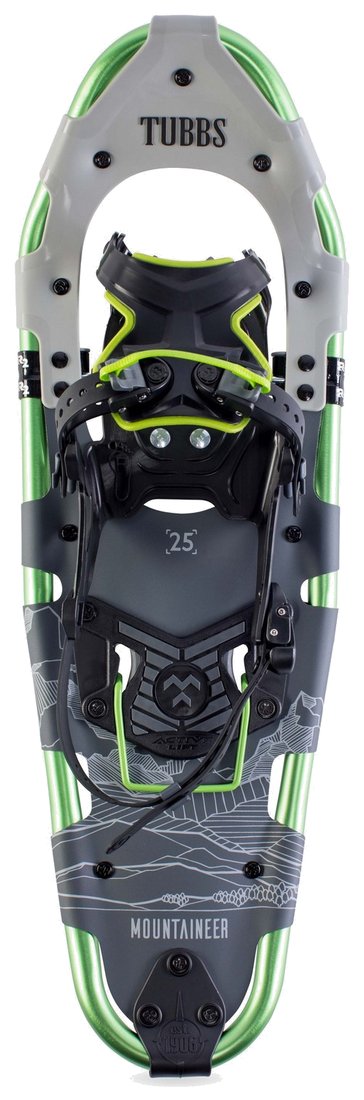
Overview
Tubbs has been making snowshoes in one form or another since 1906, longer than most ski brands have existed, and the Mountaineer sits at the top of its backcountry range. Where MSR chases traction with edge rails, Tubbs chases flotation: a rounded Pro-Step tubular frame, an upturned tail, and a full Soft-Tec deck that puts the maximum surface area on the snow. The result is the shoe that stays on top when the trail disappears and the snow gets bottomless.
GearJunkie picked it as the deep-powder snowshoe of 2026 and praised exactly that combination: excellent flotation, secure bindings, and heel lifts that take the sting out of climbs. Treeline Review reached the same verdict from the load side, calling it the best choice for heavy hikers and big winter packs because its 200-to-300-pound top range is the highest among the shoes it tested. The tradeoff is printed right on the scale: around five pounds per pair in the larger sizes, the heaviest in our guide.
Key Specs
Figures below come from Tubbs's product pages for the 2026/27 season; weights are from published reviews, as Tubbs does not list them.
| Spec | Men's 25 in | Men's 30 in | Men's 36 in |
|---|---|---|---|
| Load range | 120-200 lb | 170-250 lb | 220-300 lb |
| Weight per pair | ~4 lb 14 oz | ~5 lb 5 oz | heaviest in line |
| Boot sizes | US 8-13 | US 8-13 | US 8-13 |
| Women's version | 21, 25, 30 in covering 80-250 lb, US W6-11 | ||
Frame: Pro-Step tubular aluminum with R2 articulation and rotation limiter · Decking: Soft-Tec · Crampons: Anaconda carbon-steel toe (8 teeth) and Python heel · Binding: ActiveFit 2.0 with TPU cinch strap and one-hand EZ heel buckle · Heel lift: ActiveLift 19° · Price: ~$280
Sizing, Fit and Compatibility
Pick the size whose load range covers your body weight plus pack with a margin for wet, unconsolidated snow. A 190-pound hiker with a 20-pound winter pack is a 30-inch customer, not a 25; running the top of a range works on firm snow and sinks in fresh. The 36-inch size exists for genuinely big loads, multi-day sleds and lake-effect snowpacks, and almost nobody else makes anything comparable.
The ActiveFit 2.0 binding takes most waterproof hiking and winter boots in the US men's 8 to 13 band; the TPU cinch strap sheds ice and the heel buckle works one-handed in gloves. Two fit notes from published reviews: low-volume boots at the small end of the range can feel uneven pressure from the cinch strap, and the wide frame forces a slightly wider stance than tapered shoes, which shorter hikers notice for the first hour and then stop thinking about. Standard trekking poles with snow baskets complete the setup.
Where It Shines
- Untracked powder: the widest effective deck in our guide keeps you nearer the surface, the core finding of GearJunkie's deep-powder testing
- Heavy loads: 300 lb combined rating on the 36 in, the highest here, backed by a frame with no flex complaints in owner feedback
- Descents: the Python heel crampon sits centered under the boot and brakes predictably on the way down
- Rolling climbs: the 19° ActiveLift bar is among the taller heel lifts in class and saves calves on sustained pitches
Tradeoffs to Know
- Weight: around 5 lb per pair in the bigger sizes, roughly a pound more than the MSR Lightning Ascent, and you feel it late in the day
- Icy sidehills: reviews consistently rank its crampon traction behind edge-rail designs on hard, angled snow
- Bulk: the wide frame is awkward on a pack and forces a wider stance than tapered designs
- Small-boot comfort: the binding can pressure low-volume boots, worth testing before a big outing
Who It’s For
Heavier hikers, winter campers hauling real packs, and anyone whose local snow is deep and soft more often than packed and icy. It is also the natural pick for breaking trail in front of a group, where flotation does the work and the extra weight is the toll.
Who Should Skip It
Skip it if your routes trend steep and icy; the MSR Lightning Ascent grips angled hardpack in a way no tubular frame matches. Skip it too if you mostly walk packed trails, where all that deck is dead weight and the MSR Evo Trail costs $100 less.
Frequently Asked Questions
What is the weight limit of the Tubbs Mountaineer?
The men's 36-inch size is rated for 220 to 300 pounds of combined body and pack weight, the highest in its class. The 25-inch covers 120 to 200 pounds and the 30-inch 170 to 250 pounds, per Tubbs's published ranges.
Is there a women's Tubbs Mountaineer?
Yes. The women's version comes in 21, 25 and 30 inch lengths covering 80 to 250 pounds depending on size, with a frame and binding shaped for smaller boots in roughly US women's 6 to 11.
Is the Tubbs Mountaineer good on icy trails?
It is competent rather than exceptional. The carbon-steel Anaconda toe and Python heel crampons bite well walking straight uphill and braking downhill, but published reviews agree that edge-rail designs like the MSR Lightning Ascent hold better on icy sidehills.
How It Compares
See how it stacks up in our full guide: The Best Snowshoes of 2026/27.
Choose the MSR Lightning Ascent instead if steep, icy or technical terrain is the point; its full-perimeter traction rails out-grip any tubular frame on angled hardpack.
Choose the Atlas Montane instead if you want most of the flotation in a lighter, cheaper package with a more natural stride, and your pack weight stays moderate.
Choose the MSR Evo Trail instead if packed trails dominate your winter and $280 of flotation would mostly ride on your car's back seat.