MSR Evo Trail Review: Specs, Sizing and Verdict
Affiliate disclosure: As an Amazon Associate we earn from qualifying purchases. Some links below are affiliate links, see our full disclosure. This breakdown is based on our independent research of current-season specifications and aggregated expert and user feedback.
The quick verdict: The best $180 in snowshoeing: a one-piece deck with steel rails that survives rocks, roots and rental-fleet abuse, now with a genuinely good glove-friendly binding. One size, no heel lift, no pretensions. ~$180
Overview
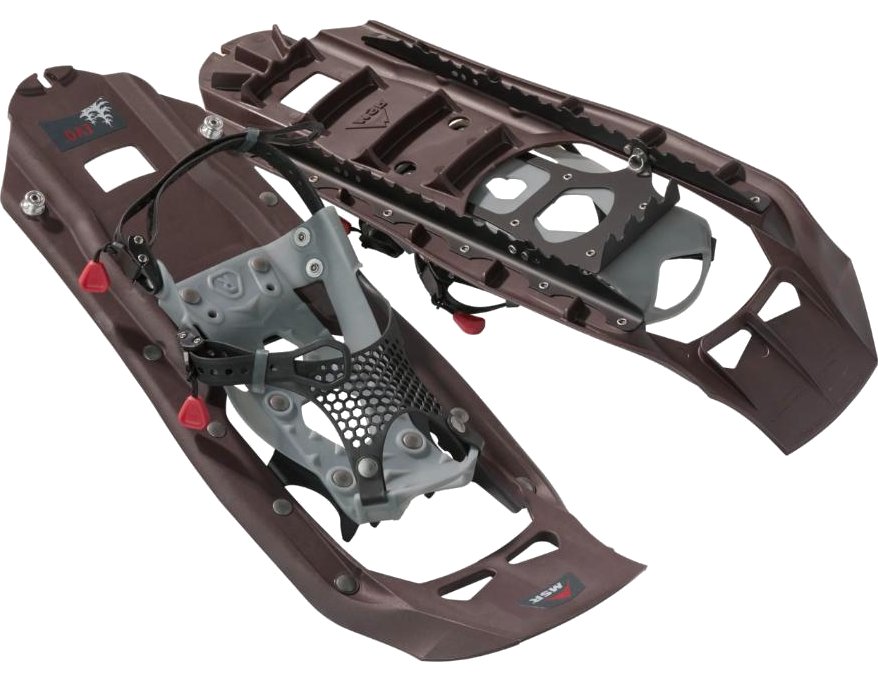
The Evo is MSR's entry shoe and arguably the most copied snowshoe design of the last two decades: a single injection-molded deck with traction rails bolted straight to its underside, no tubing, no fabric, nothing to tear or delaminate. The Evo Trail is the current version, and the big news in recent seasons is the Paraglide binding, which replaced the old rubber straps that owners loved to hate. Two straps, big roller buckles, molded toe stops; on and off in gloves without looking.
Reviewers treat it as the default recommendation for most new snowshoers. GearJunkie named it the most durable shoe of 2026 and CleverHiker scored it the top budget pick, both telling essentially the same story: it does the unglamorous majority of snowshoeing, packed trails and rolling woods, for about $180, and it refuses to die. Treeline Review went further and made it their best overall for how most people actually use snowshoes.
Key Specs
Figures below come from MSR's product listing and current retailer spec sheets.
| Spec | Evo Trail 22 in |
|---|---|
| Load, shoe alone | up to ~180 lb |
| Load, with 6 in tails | up to ~250 lb |
| Weight per pair | ~3 lb 10 oz |
| Sizes | 22 in only, unisex |
| Heel lift | None |
Deck: One-piece molded polypropylene unibody · Traction: Steel rails and brake bars bolted to the deck · Binding: Paraglide with roller buckles and toe stops · Tails: Snap-on 6 in Evo tails, sold separately (~$60) · Warranty: 3-year limited (MSR) · Price: ~$180
Sizing, Fit and Compatibility
There is exactly one decision: do you need tails? The bare shoe carries about 180 pounds of body, clothing and pack on packed snow. Heavier hikers, big packs, or regular soft-snow outings call for the snap-on tails, which add six inches of flotation and lift the practical ceiling to roughly 250 pounds for about $60 more. Lighter users on soft snowpacks should note the real-world feedback: some owners find the bare 22-inch deck starts to wallow in deep powder well before the rated limit, which is the physics of a compact deck, not a defect.
The Paraglide binding fits trail runners' winter boots through bulky insulated hikers, with molded toe stops that position the boot correctly every time. It is the easiest binding in this guide to operate in gloves. One honest note: the deck pivots on a fixed rod rather than a strap or spring, so the tail drags slightly as you stride, a feel MSR fans call efficient and first-timers call clattery for the first mile.
Where It Shines
- Durability: a deck with no fabric and no tubes shrugs off rocks, roots and parking-lot gravel; GearJunkie's most-durable award matches years of rental-fleet service records
- Value: $180 buys real steel traction rails and brake bars, more grip than anything near its price per published comparisons
- Glove-friendly binding: the Paraglide's roller buckles and toe stops fixed the old Evo's floppy-strap complaints
- Upgrade path: tails extend load and flotation later, so the shoe grows with your ambitions
Tradeoffs to Know
- No heel lift: sustained steep climbs burn calves; this is the clearest line between the Evo Trail and the technical shoes
- One 22-inch size: tall, heavy hikers start at the load ceiling before adding a pack
- Deep-powder float is modest, and tails are an extra purchase
- The plastic deck is audibly louder on icy hardpack than fabric-decked shoes
Who It’s For
First-time buyers, families outfitting several people, and anyone whose snowshoeing is mostly packed trails, golf courses and rolling woods. It is also the right beater pair to keep in the trunk for spontaneous outings, because nothing about it demands care.
Who Should Skip It
Skip it if your routes climb seriously or ice over regularly; the MSR Lightning Ascent exists for that and has the heel lifts to prove it. Skip it too if you are a bigger hiker heading into consistently deep snow, where the Tubbs Mountaineer's full-size deck is the honest answer.
Frequently Asked Questions
What is the weight limit of the MSR Evo Trail?
MSR rates the 22-inch Evo Trail to about 180 pounds of combined body, clothing and pack weight on packed snow. Snap-on 6-inch Evo tails, sold separately, raise that to roughly 250 pounds or buy back flotation in softer snow.
Does the MSR Evo Trail have a heel lift?
No. The Evo Trail skips a heel riser, which is fine for the rolling and packed terrain it is built for. If your routes include sustained steep climbs, step up to a shoe with a televator bar like the Lightning Ascent.
Is the MSR Evo Trail loud on packed snow?
Louder than fabric-decked shoes, yes. The one-piece plastic deck clacks on icy hardpack, a tradeoff reviewers accept for its durability. On softer snow the noise difference mostly disappears.
How It Compares
See how it stacks up in our full guide: The Best Snowshoes of 2026/27.
Choose the MSR Lightning Ascent instead if steep or icy terrain is in your plans; its heel lifts and full-perimeter traction are what the Evo deliberately leaves out.
Choose the Tubbs Mountaineer instead if you need serious flotation for a heavy load in deep snow; no tail accessory turns a 22-inch deck into a 36-inch one.
Choose the Atlas Montane instead if you want a quieter deck, a heel lift and more float for about $70 more, with a more natural stride into the bargain.