MSR Lightning Ascent Review: Specs, Sizing and Verdict
Affiliate disclosure: As an Amazon Associate we earn from qualifying purchases. Some links below are affiliate links, see our full disclosure. This breakdown is based on our independent research of current-season specifications and aggregated expert and user feedback.
The quick verdict: The technical benchmark in snowshoes: the whole frame is a serrated traction rail, the Paragon binding stays set between outings, and heel lifts make long climbs civilized. Worth the premium anywhere steep or icy. ~$400
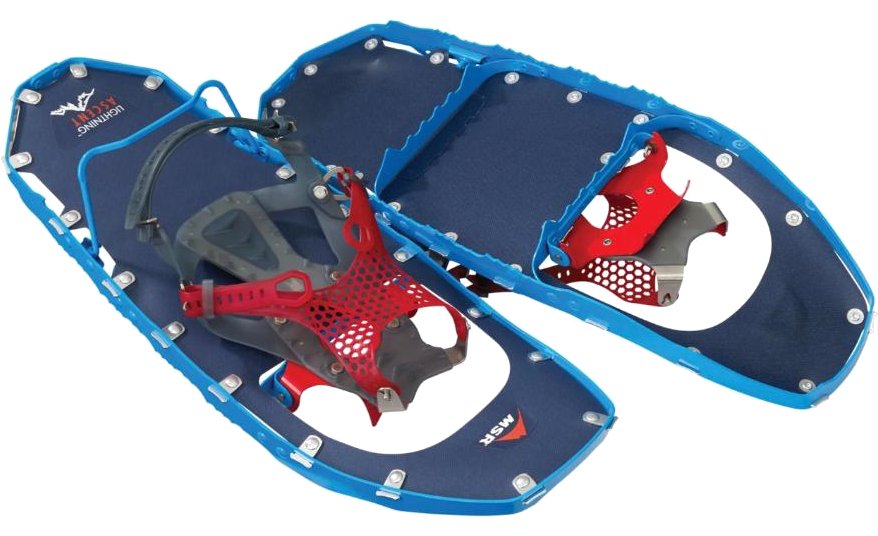
Overview
MSR builds the Lightning Ascent as the top of its snowshoe line, above the Revo and Evo families, and aims it squarely at people who leave the flat stuff behind: winter summits, icy traverses, rolling backcountry with real pitches in it. The design idea is simple and still unusual: instead of hanging crampons off a round tube, the aluminum frame itself is a vertical blade, serrated along its full perimeter. MSR calls it 360-degree Traction, and it means the shoe bites at its edges, exactly where a sidehill tries to roll you off.
The spec sheet has aged remarkably little because competitors still have not matched the formula. GearJunkie made it the best overall snowshoe of 2026 and called its grip top of its class, and Switchback Travel's long-term review reaches the same conclusion from the other direction: more traction and a better binding than anything else, at a price that stings. This is also one of the few technical snowshoes with a true women's version rather than a recolor, with a narrower frame and smaller binding cradle in 22 and 25 inch lengths.
Key Specs
Figures below come from MSR's product listing and current retailer spec sheets for the 2026/27 season.
| Spec | 22 in | 25 in | 30 in |
|---|---|---|---|
| Load, no tails | up to ~180 lb | up to ~220 lb | up to ~280 lb |
| Load, with tails | ~250 lb | ~280 lb | 300+ lb |
| Weight per pair | ~4 lb 2 oz | ~4 lb 5 oz | ~4 lb 14 oz |
| Women's version | Yes | Yes | No |
Frame: 360° Traction aluminum rails, serrated full perimeter · Decking: TPU-coated ballistic nylon · Crampon: Steel toe claw plus two cross bars · Binding: Paragon one-piece mesh with freeze-resistant straps · Heel lift: Ergo Televator bars · Tails: 5 in modular, sold separately · Warranty: 3-year limited (MSR) · Price: ~$400
Sizing, Fit and Compatibility
Size by your total load: body, boots, clothing and pack together. The 22 is the agile choice for day hikers under roughly 180 pounds all-in, the 25 covers most adults with a pack, and the 30 exists for heavy loads and consistently soft snow. MSR's modular tails complicate the choice in a good way: a 22 or 25 with tails in the pack handles powder days without the year-round clumsiness of a bigger shoe, so most buyers should round down and add tails later if needed.
The Paragon binding is a single stretched-mesh panel over the forefoot with a heel strap behind. It needs setting to your boot once; after that it goes on in seconds and spreads pressure well enough that soft winter hikers and stiff mountaineering boots both work. Reviewers note two caveats: truly bulky pac boots can run out of strap, and the heel strap wants a firm cinch before you walk, because a loose one is the usual culprit when owners report a foot popping out in deep snow.
Where It Shines
- Steep and icy ground: full-perimeter frame teeth, a steel toe claw and two cross bars grip where tube-framed shoes slide sideways, the consistent verdict across GearJunkie, Switchback and owner reviews
- Long climbs: the Ergo Televator heel lifts flip up with a pole grip and take the burn out of calves on sustained pitches
- Quiet decking: TPU-coated nylon walks noticeably quieter on hardpack than all-plastic decks, per published comparisons
- One-pair quiver: modular tails stretch each size's load rating by 50 to 70 pounds for deep-snow days
Tradeoffs to Know
- Price: at about $400 it costs more than twice an Evo Trail, and flat-trail walkers will never use the hardware they paid for
- Flotation per inch trails the wide-deck shoes: the narrow frame that makes it nimble gives up float to the Tubbs Mountaineer in untracked powder
- Straps can loosen on long days; retightening the heel strap at the first break is a habit worth forming
- Tails are a separate purchase, so budget for them if your snowpack is soft
Who It’s For
Winter hikers and peak-baggers whose routes involve real elevation, ice, or sidehilling, and anyone who wants to buy one technical snowshoe and be done for a decade. The women's version deserves a specific mention: it is one of the few genuinely narrower technical shoes, not a cosmetic variant.
Who Should Skip It
Skip it if your snowshoeing happens on packed park trails and rolling woods, where the MSR Evo Trail does the job for less than half the money. Skip it too if you are the heaviest-loaded hiker in deep-powder country; the Tubbs Mountaineer floats big loads better.
Frequently Asked Questions
Do the MSR Lightning Ascent snowshoes come with flotation tails?
No, the 5-inch modular tails are a separate purchase. They attach and detach without taking the snowshoes off and raise each size's load rating by roughly 50 to 70 pounds for deep-snow days.
What is the difference between the men's and women's Lightning Ascent?
The women's version uses a narrower frame and a binding shaped for smaller boots, and comes in 22 and 25 inch lengths. Reviewers note the narrower deck suits a narrower natural stride; the traction hardware is the same.
Do the Lightning Ascents work with any winter boot?
The Paragon binding's mesh cradle fits most waterproof hiking and winter boots, and MSR designed it to handle stiffer mountaineering boots too. Very bulky pac boots can max out the straps, so test the fit with your actual boots early.
How It Compares
See how it stacks up in our full guide: The Best Snowshoes of 2026/27.
Choose the Tubbs Mountaineer instead if deep, untracked snow and heavy pack loads define your winters; its wider deck and 36-inch size float where the Lightning's narrow frame digs in.
Choose the Atlas Montane instead if you want a classic-frame all-rounder with the most natural stride for about $150 less, and your routes stop short of truly technical ground.
Choose the MSR Evo Trail instead if packed and rolling trails are your reality; it keeps MSR's build quality at $180 and takes the same style of modular tails.