Salomon S/Lab Shift2 13 MN Review: Specs, Sizing and Verdict
Affiliate disclosure: As an Amazon Associate we earn from qualifying purchases. Some links below are affiliate links, see our full disclosure. This breakdown is based on our independent research of current-season specifications and aggregated expert and user feedback.
The quick verdict: The one binding that is a real pin binding uphill and a real alpine binding downhill, now stiffer and more refined in its second generation. Heavy for long tours and unbeatable for skiers who split their season with the resort. ~$680
Overview
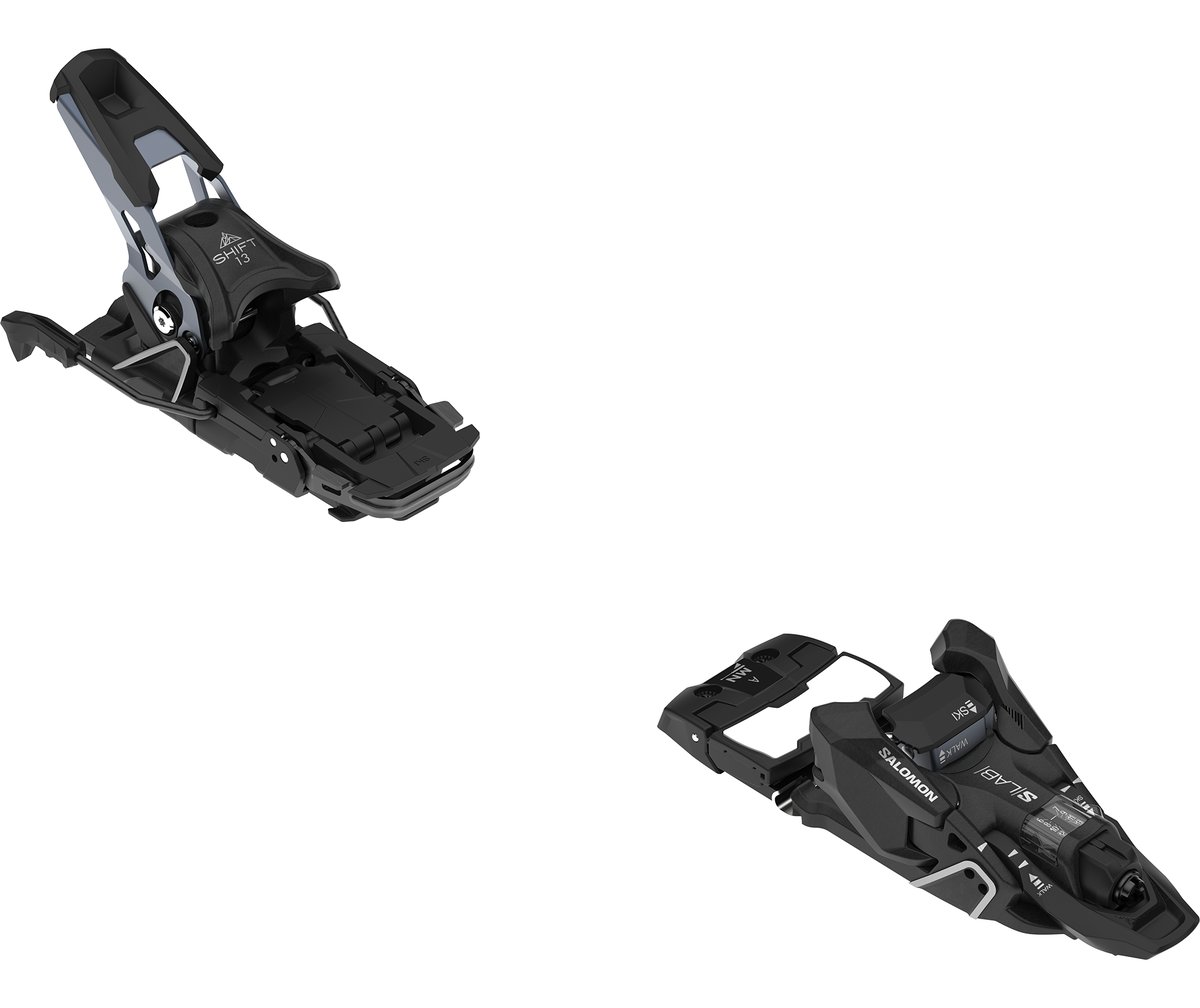
When the original Shift arrived in 2018 it created the hybrid category, and the Shift2 is Salomon's long-awaited second pass at the idea. The concept is unchanged: pin toe for a natural pivot on the skin track, then flip the toe into a full alpine-style clamp with wings and a sliding AFD plate for the descent. What changed is the execution. Salomon rebuilt the AFD into a height-adjustable Power Block with a single aluminum insert that the brand says adds about 30 percent more lateral stiffness over the first generation, simplified the climbing-aid mechanism, and reworked materials toward carbon-infused PA, aluminum and steel.
Reviewers kept it at the top of the hybrid pile for 2026/27. GearJunkie calls its downhill safety unmatched in the touring category and notes it releases exactly like an alpine binding, while Switchback Travel names it the best hybrid resort and backcountry binding of the season, lighter and more affordable than Marker's Duke PT. The same binding is sold in Atomic and Armada colors, so shop across all three brands for price.
Key Specs
Figures below come from Salomon's product listing and current retailer spec sheets for the 2026/27 season.
| Spec | S/Lab Shift2 13 MN |
|---|---|
| Weight per pair | ~1,840 g with brakes (about 920 g per binding) |
| Release range | DIN 6-13, TÜV certified, vertical and lateral |
| Brake widths | 90, 100, 110, 120 mm (included) |
| Climbing aids | Flat plus two: ~21 mm (4°) and ~45 mm (8.5°) |
| Boot sole adjustment | 30 mm |
| Boot compatibility | Multi Norm: alpine ISO 5355, GripWalk, touring ISO 9523, with tech inserts for touring |
| Materials | Carbon-infused PA, aluminum, steel |
| Approximate price | ~$680 |
Toe: pin pivot in walk mode, transforms to alpine wings with sliding pedal for ski mode · AFD: height-adjustable Power Block, aluminum insert · Heel: alpine-style cup with brakes integrated · Crampon slot: yes, Salomon Shift crampon · Also sold as: Atomic and Armada versions in different colors
Sizing, Fit and Compatibility
Boot compatibility is the Shift2's party trick and its one paperwork headache. MN stands for Multi Norm: in ski mode it accepts alpine ISO 5355 soles, GripWalk and touring ISO 9523 norms, so one pair of skis can serve your alpine boots and your touring boots. The catch sits at the extremes: the boot must have tech inserts for walk mode, and boots with shortened race-style toe and heel lugs are not compatible. Full-rockered sole touring boots work; verify anything exotic in a shop.
Choose brakes at or just above ski waist width from the 90 to 120 mm options, and note the generous 30 mm of boot sole adjustment, the widest in our touring lineup. Release values run 6 to 13 and carry TÜV certification to the alpine DIN standard, which is the whole reason this binding exists; skiers below a calculated value of 6 (lighter skiers, cautious settings) are outside its range, and Salomon sells a Shift2 10 for them.
Where It Shines
- Descent trust: a certified DIN release with real elasticity, which GearJunkie's testers used in-bounds about 80 percent of the time without babying it
- One-quiver logic: alpine boots on lift days, touring boots on tour days, same skis, same binding
- Second-generation stiffness: the aluminum Power Block AFD noticeably firms up lateral power transfer compared with the original Shift, per Salomon's claims and early reviews
- Proper pivot: unlike frame bindings, the pin toe walks like a tech binding, with two usable climbing aids
Tradeoffs to Know
- Weight: 1,840 grams a pair is two to three times the pin bindings here, a real tax on long approaches and multi-lap days
- Transition complexity: brakes must be stowed and the toe transformed between modes; reviewers consistently call the fiddle factor real until muscle memory forms
- Tour-mode care: Switchback notes the heel lever can pop out in tour mode if snow and ice are not cleared from the mechanism
- Not for race boots: shortened-lug tech boots are incompatible, so ultralight boot owners should check before buying
Who It’s For
Skiers whose season is genuinely split: resort laps most weekends, tours and sidecountry gates in between, one setup for all of it. It is also the conservative choice for anyone unwilling to give up certified release behavior in consequential terrain.
Who Should Skip It
Skip it if you tour far more than you ride lifts; the ATK Raider 13 Evo gives up little on the descent and saves over a kilogram per pair. Budget-focused skiers who rarely ski inbounds get most of what matters from the Dynafit Seven Summits at two-thirds the price.
Frequently Asked Questions
What changed from the original Shift MNC 13 to the Shift2?
The release concept and 6-13 DIN range carry over. The Shift2 adds a height-adjustable Power Block AFD with an aluminum insert that Salomon says increases lateral stiffness by about 30 percent, a simplified climbing-aid mechanism, and revised materials. Early reviews also describe it as more durable and less prone to the pre-release complaints of the first generation.
Can I use regular alpine boots with the Shift2?
For the descent, yes: alpine ISO 5355 and GripWalk soles work in ski mode. To tour, the boot needs tech inserts in the toe, which alpine boots lack. Many owners run alpine boots on lift days and a touring boot for skinning, on the same skis.
Is the Shift2 too heavy for real touring?
Depends on your days. For objectives under about 1,000 meters of climbing it carries fine, and plenty of patrollers and guides tour on it. For long glacier days or fast-and-light missions, the kilogram-plus penalty against bindings like the Alpinist or Raider becomes the dominant fact of your day.
How It Compares
See how it stacks up in our full guide: The Best Touring Bindings of 2026/27.
Choose the ATK Raider 13 Evo instead if the skin track is your main venue; it is the better pure touring tool and still skis hard, at half the weight.
Choose the Marker Alpinist 12 instead if you are building a dedicated lightweight rig for spring missions and long days, and you accept simpler release hardware in exchange for 600 fewer grams per binding.
Choose the Dynafit Seven Summits instead if price is the constraint and your skiing stays in touring terrain; it covers release values 4-10 for about $230 less.