ATK Raider 13 Evo Review: Specs, Sizing and Verdict
Affiliate disclosure: As an Amazon Associate we earn from qualifying purchases. Some links below are affiliate links, see our full disclosure. This breakdown is based on our independent research of current-season specifications and aggregated expert and user feedback.
The quick verdict: The all-mountain touring benchmark: adjustable release at toe and heel, an automatic brake, real elastic travel and CNC-machined Italian construction, all at about 370 grams per binding. Expensive, and worth it for high-mileage skiers. ~$750
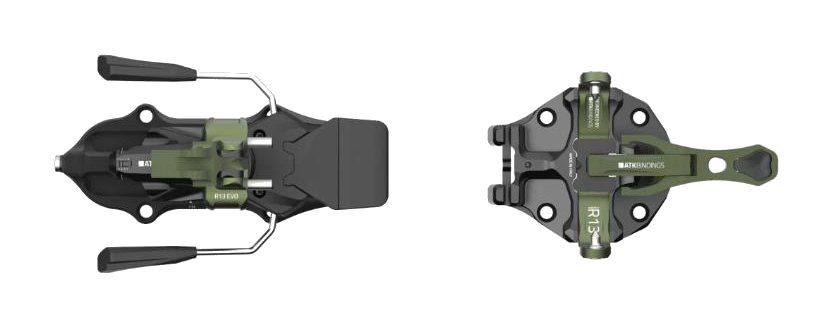
Overview
ATK machines its bindings in Maranello, the Italian town better known for Ferrari, and the comparison has become a cliche in touring circles because it keeps being apt. The Raider 13 Evo sits at the top of ATK's free-touring family, below the burlier Freeraider models and above the lighter Haute Route and Crest lines, and it is the binding ATK aims at people who tour big days and still ski the descent hard.
The 2026 season treated it well. GearJunkie named it the best all-mountain touring binding of the year with an 8.5 out of 10, praising a construction it called a masterclass in durability, and Switchback Travel highlights its automatic brake system and best-in-class machining in its 2026/27 roundup. Owner feedback echoes both: this is the pin binding people recommend when someone asks for one binding that does everything but race.
Key Specs
Figures below come from ATK's product page and current retailer spec sheets for the 2026/27 season.
| Spec | ATK Raider 13 Evo |
|---|---|
| Weight per binding | ~370 g (claimed, before brake); ~382 g with 97 mm brake per retailer scales |
| Release range | 5-13, adjustable vertical and lateral |
| Brake widths | 86, 91, 97, 102, 108, 120 mm |
| Walking modes | Flat, +26 mm, +47.5 mm (magnetic risers) |
| Boot sole adjustment | 25 mm |
| Heel elastic travel | 14 mm |
| Materials | 7075 aluminum, POM, stainless steel |
| Approximate price | ~$750 |
Toe: Easy Entry System with snap-in pins and adjustable lateral release spring · Heel: cam-release pins, 14 mm Elastic Response System · Brake: automatic EVO system, arms when you step in, stows on heel rotation · Crampon slot: yes, ATK crampons sold separately · Freeride Spacer: optional heel support plate, sold separately · Made in: Maranello, Italy
Sizing, Fit and Compatibility
The Raider 13 Evo takes any boot with tech inserts, which covers effectively every touring boot sold today; alpine boots without inserts are out. Pick the brake width at or slightly above your ski's waist: 97 mm brakes for a 94 mm ski is the classic mount, and the 86 to 120 mm spread covers everything from skimo-adjacent skis to true powder boards. The heel track gives 25 mm of boot sole adjustment, enough to swap between most boots a half size apart without remounting.
Release values run 5 to 13 on both axes, and unlike most pin bindings in this weight class you adjust the toe as well as the heel. The values are not TÜV certified to the alpine DIN standard, which is normal for tech bindings; have a shop set them against your weight, height and boot sole length rather than copying your alpine numbers. Skiers whose calculated value lands at 12 or 13 should look at the Freeraider 15 Evo instead, so the spring is not working at its limit.
Where It Shines
- Durability: CNC-machined 7075 aluminum throughout, the single most consistent point of praise across GearJunkie, Switchback and owner reviews
- Transitions: the brake arms itself when you step in and stows when you rotate the heel, so there is no separate lever to forget, and the magnetic risers flip positively with a pole tip
- Downhill manners: 14 mm of elastic heel travel absorbs ski flex and impacts that cause pre-release on stiffer, simpler pin heels
- Snow shedding: reviewers single out how little ice builds up in the mechanism compared with other tech bindings
Tradeoffs to Know
- Price: at about $750 it costs as much as some complete binding-plus-crampon-plus-leash setups from value brands
- Not the lightest: dedicated ski mountaineers can save 70 to 90 grams per binding with the Marker Alpinist at the cost of adjustability
- Release tops out at 13, which GearJunkie notes may not satisfy larger or very aggressive skiers
- Crampons, leashes and the Freeride Spacer are all separate purchases, so the real outlay climbs past sticker
Who It’s For
Skiers logging 20-plus touring days a season who want one binding for everything from dawn patrol laps to multi-day traverses, and anyone tired of replacing plastic-bodied bindings. It rewards people who notice build quality every time they step in.
Who Should Skip It
Skip it if your season is mostly lift-served: the Salomon Shift2 skis downhill like the alpine binding it becomes. Skip it too if you are watching budget; the Dynafit Seven Summits delivers the core pin-binding experience for roughly $300 less.
Frequently Asked Questions
Is the ATK Raider 13 Evo good for the resort?
For mixed days, yes: the elastic heel travel and solid machining handle piste skiing better than most pin bindings. For skiers who ride lifts most of the time, a hybrid like the Shift2 or a dedicated alpine binding is still the safer, smoother-releasing tool on repeated hardpack impacts.
Does the Raider 13 Evo come with brakes?
Yes, the automatic EVO brake is integrated and you choose the width (86 to 120 mm) when you buy. That is worth remembering when comparing prices against bindings like the Marker Alpinist, where brakes add about $70.
What is the difference between the Raider 13 Evo and the Raider 11 Evo?
The two share the platform; the 11 caps release values at 11 and costs the same in most shops. Pick by your calculated release value: if a shop puts you at 9 or below, the 11 leaves useful headroom, while values of 10 and up belong on the 13.
How It Compares
See how it stacks up in our full guide: The Best Touring Bindings of 2026/27.
Choose the Salomon S/Lab Shift2 13 MN instead if half your skiing happens inside the ropes; its alpine-style toe and TÜV-certified release are worth the extra kilogram for lift-heavy seasons.
Choose the Marker Alpinist 12 instead if grams decide your objectives; it gives up the adjustable vertical release and auto brakes to land under 300 grams per binding.
Choose the Dynafit Seven Summits instead if you tour moderately and want the best spec-per-dollar in the category; its 4-10 release range covers most non-aggressive skiers.