Glade Adapt 2 Review: Specs, Fit and Verdict
Affiliate disclosure: As an Amazon Associate we earn from qualifying purchases. Some links below are affiliate links, see our full disclosure. This breakdown is based on our independent research of current-season specifications and aggregated expert and user feedback.
The quick verdict: A real photochromic lens at less than half the flagship price. The rare budget pick that wins on technology as well as price. ~$150 list (REVEAL lens), ~$170 with REVEAL 4K; typically ~$135-150 on sale
Overview
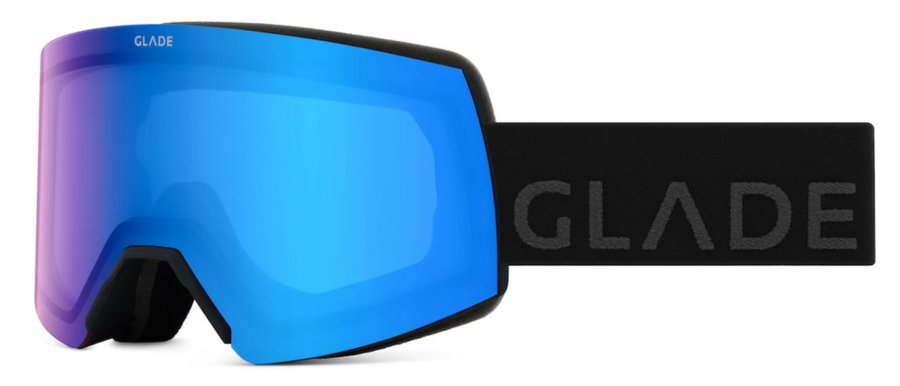
Glade is a small direct-to-consumer brand out of Breckenridge, and the Adapt 2 is its argument that lens tech should not cost $300. The REVEAL 4K photochromic lens shifts tint automatically as light changes, covering roughly the bright-to-overcast range most resort skiers actually encounter. Reviewers keep reaching the same conclusion: the optics punch far above the price, and the whole package, flexible TPU frame, triple-layer foam, helmet-friendly strap, feels like a premium goggle with a different logo.
Where It Shines
- Genuine photochromic performance for around $135 to 150
- Responsive tint transitions as weather changes (no photochromic lens is instant in the trees)
- Flexible frame seals well on a wide range of face shapes
- Direct-to-consumer model means frequent restocks and responsive support
Tradeoffs to Know
- Loses a little snow-surface detail in truly dark storm light versus premium low-light lenses
- Notched lens swap only (no magnets); spare REVEAL 4K lenses cost about $85
- Cylindrical shape shows minor edge distortion next to spherical flagships
Who It’s For
Skiers who want modern adaptive lens tech without a flagship budget, families outfitting several heads at once, and anyone skeptical that a goggle needs to cost as much as a lift ticket. Skiers in relentlessly stormy climates should consider the Lightyear’s wider range instead.
Key Specs and Sizes
Figures are approximate and drawn from Glade’s published product pages (via shopglade.com) and aggregated reviews; Glade prints no numeric VLT figures, so the lens range below comes from reviewers at OutdoorGearLab and Advnture. The goggle comes in one medium/large size, with a separate Adapt 2S for smaller faces.
| Spec | Detail |
|---|---|
| Lens shape | Cylindrical, frameless look, notched lens interchange (not magnetic) |
| Lens options | REVEAL photochromic (standard) or REVEAL 4K photochromic (contrast-enhanced, about $20 more) |
| Photochromic VLT range | Roughly 15% to 60% depending on tint (category 1 to 3); never goes fully clear |
| Frame | Flexible TPU, low-profile, oversized top and bottom vents, 100% UV protection |
| Foam | Triple-density contoured face foam with fleece liner |
| OTG | Yes: fits most glasses under 5.5in wide by 2in tall (standard and Low-Bridge frames; not stated for the 2S) |
| Helmet compatibility | Low-profile frame designed for a gap-free helmet fit; Glade suggests medium/large helmets |
| Strap | Dual-adjust, silicone-backed, swappable via Glade’s strap connection (no quick release) |
| Anti-fog | Anti-fog coating plus airflow channels; Glade advertises a fog-free guarantee |
| Warranty | Two-year guarantee against defects for the original owner; lens scratches not covered; no published crash-replacement program |
| In the box | Goggle with photochromic lens installed, microfiber bag and lens sleeve; hard case sold separately (~$25) |
| Price | ~$150 list with the REVEAL lens, ~$170 with REVEAL 4K; Glade’s own site typically shows ~$135 and ~$150 on sale |
Across the line the recipe is the same: one photochromic lens does the work a two-lens magnetic goggle does with a swap. Spare REVEAL 4K lenses run about $85 and a fixed-tint low-light lens about $40 to 45, so a two-lens quiver still undercuts most flagships. Glade sells direct, so the sale price on shopglade.com is the real-world price most of the time.
Sizing and Fit
The Adapt 2 is a medium/large goggle, and reviewers consistently describe it as big. On a medium face it feels generous; on a small face it will sit proud of the cheekbones and let wind in at the sides. If you have narrow features, go straight to the Glade Adapt 2S, which uses the same lenses in a small/medium frame. Flat nose bridges get the Low-Bridge version of the standard frame, with foam and frame geometry reshaped to close the gap most goggles leave there.
Glasses wearers are well served. Glade states the standard frame clears most glasses under 5.5in wide by 2in tall, and the triple-density foam has enough give that temple arms don’t press. Helmet fit is a quiet strength: the frame is low-profile enough to tuck under a brim without a gap, and the wide, silicone-backed, dual-adjust strap can be set once for a helmet and left alone.
One thing it won’t do is go clear. The lens tops out around 60% VLT, fine for overcast afternoons but dim for a storm day in the trees or a dusk lap. Buy the separate low-light lens if you ski those conditions often, and budget a few minutes for the notched swap until you’ve done it a couple of times.
Who Should Skip It
Skip the Adapt 2 if you ski a lot of true storm light and want the widest photochromic range on the market; the Julbo Lightyear goes lighter at the low end and is the better bad-weather goggle. Skip it if you want a magnetic lens system and a bundled second lens for bluebird days, because the Smith 4D MAG and Anon M4S both swap in seconds and ship with two lenses. Skip it if spherical or toric optics matter to you: the Adapt 2 is a cylindrical lens, and the Oakley Flight Deck M gives you a spherical Prizm lens for only about $50 more.
Adapt 2 vs. Julbo Lightyear vs. Oakley Flight Deck M
These three answer the same question with three different budgets. The Julbo Lightyear, at roughly $300, is the photochromic benchmark: a wider tint range that reaches properly bright in flat light, a minimalist frame and Julbo’s REACTIV lens. The Oakley Flight Deck M, at about $200, is not photochromic at all; it is a spherical Prizm goggle with a fixed tint, so you pick a lens for the day and accept it will be wrong some of the time. The Adapt 2, at roughly $135 to 170 depending on lens, splits the difference: adaptive tint like the Julbo, a price nearer the Oakley, and a cylindrical lens that gives up a little edge clarity to both. Pick the Lightyear if you ski the Pacific Northwest or Northeast and storm days outnumber sunny ones; pick the Flight Deck M if you want Oakley’s optics and your local weather is predictable enough for one tint; pick the Adapt 2 if you want one lens to handle a normal mixed resort day and would rather spend the savings on a lift ticket.
Frequently Asked Questions
Is the Glade Adapt 2 photochromic lens fast enough?
For weather changes, yes. Aggregated reviews describe the tint shift as responsive as clouds move through, which is what photochromic lenses are for. No photochromic lens reacts fast enough for a sudden duck into the trees, and the Adapt 2 is no exception.
What size Glade Adapt 2 should I get?
The standard Adapt 2 fits medium to large faces and most glasses under 5.5in by 2in. Smaller or narrower faces should take the Adapt 2S, and flat nose bridges should look at the Low-Bridge version of the standard frame.
Glade Adapt 2 or Julbo Lightyear?
The Julbo Lightyear has the wider range and the better low-light floor, at about twice the price. The Adapt 2 covers bright to overcast for roughly $135 to 170 and is the better value for a skier who mostly sees sun and broken cloud.
Does the Glade Adapt 2 fog up?
Glade advertises a fog-free guarantee, and reviewers across several outlets report no fogging in normal resort use thanks to the large top and bottom vents. Hiking in them or skiing with the goggle on your forehead will still beat any coating.
How It Compares
See how it stacks up in our full guide: Ski Goggle Lens Guide 2026-27. Other picks from that list: Smith 4D MAG · Anon M4S · Julbo Lightyear · Oakley Flight Deck M.