Arc’teryx Sabre Bib Pant Review: Specs, Sizing and Verdict
Affiliate disclosure: As an Amazon Associate we earn from qualifying purchases. Some links below are affiliate links, see our full disclosure. This breakdown is based on our independent research of current-season specifications and aggregated expert and user feedback.
The quick verdict: The benchmark freeride bib, revised this season with PFAS-free GORE-TEX ePE. Costs like flagship gear because it is. ~$700 list, outgoing 80D version ~$350-450 on closeout
Overview
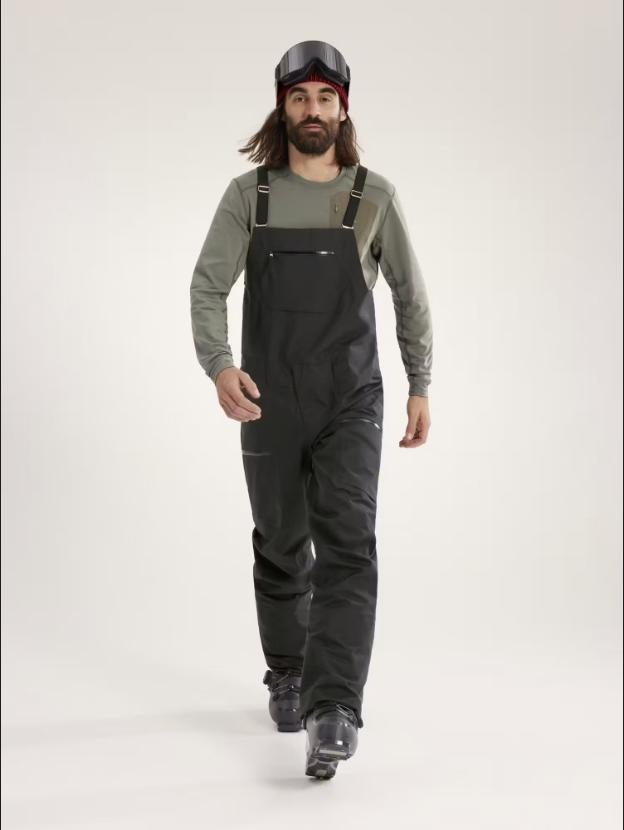
The Sabre line is what Arc’teryx builds for skiers who treat storm days as appointments. The current bib pairs a 100-denier face fabric (up from 80 on the outgoing version) with the newer GORE-TEX ePE membrane, which drops the intentionally added PFAS of older laminates while keeping full 3-layer protection. A fleece and flannel backer takes the cold, clammy feel out of hardshell on lift rides, and long thigh vents dump heat on bootpacks.
Details are typical Arc’teryx: watertight zips, an embedded RECCO reflector, instep patches that shrug off edges, and patterning that moves with a driving stance instead of fighting it. The price is serious, and so is the service life; these are the bibs that show up in gear-closet photos a decade on.
Where It Shines
- Top-tier weather protection with a softer, quieter feel than older GORE-TEX
- Cut for skiing: articulated knees and a stance-friendly rise
- Vents big enough to matter on hikes and spring laps
- Build quality and warranty support that justify the buy-once framing
Tradeoffs to Know
- ~$700 is real money; the Baker Bib delivers most of the function for far less
- Light backer adds a touch of warmth that fast-and-light tourers may not want
- Regular Arc’teryx fit; size up if you layer heavily
Who It’s For
The dedicated freerider or coastal-storm skier who wants the best fabric technology available and plans to keep it for many seasons. If you ski 20 storm days a year, the math works.
Key Specs by Size
Figures are approximate and drawn from Arc’teryx’s published men’s bottoms size chart and Sabre Bib product page (via arcteryx.com) plus REI and evo listings. Waist, hip and inseam are body measurements the brand fits each size and length to. Arc’teryx lists the bib in XS through XXL and three inseam lengths, though most US retailers stock Regular only.
| Size | Waist | Hip | Inseam, Short | Inseam, Regular | Inseam, Tall |
|---|---|---|---|---|---|
| XS | 30 in (76cm) | 35.5 in (90cm) | 29 in (75cm) | 31 in (80cm) | 34 in (88cm) |
| S | 32 in (81cm) | 37.5 in (95cm) | 29.5 in (76cm) | 31.5 in (81cm) | 34.5 in (89cm) |
| M | 34 in (86cm) | 39.5 in (100cm) | 30 in (77cm) | 32 in (82cm) | 35 in (90cm) |
| L | 37 in (94cm) | 42.5 in (108cm) | 30.5 in (78cm) | 32.5 in (83cm) | 35.5 in (91cm) |
| XL | 40 in (102cm) | 45.5 in (116cm) | 31 in (79cm) | 33 in (84cm) | 36 in (92cm) |
| XXL | 44 in (112cm) | 49.5 in (126cm) | 31 in (79cm) | 33 in (84cm) | 36 in (92cm) |
Across all sizes: three-layer GORE-TEX ePE (the PFAS-free membrane) on a recycled nylon face with a lo-loft fleece and flannel backer, FC0 DWR, fully taped seams. Arc’teryx says the current version bumps the face from 80 to 100 denier, adds a pack-compatible drop seat, reworks the rise and swaps the Keprotec instep for a lighter patch woven with Hadron yarns; the previous 80D Keprotec bib is what you’ll find at closeout. Two WaterTight thigh vents, a zippered bib pocket, two zippered thigh pockets, belt loops, elasticated powder cuffs and a RECCO reflector round it out. Brand-listed weight is about 748g (1 lb 10.4 oz); the prior version came in near 725g. The garment inseam on a size M Regular is about 33 in (83cm), with Short at 31 in and Tall at 36 in. List price is $700; the outgoing 80D version has been showing up at roughly $350 to 450 at REI and evo.
Sizing and Fit
Buy by waist first and let the suspenders handle the rest. Arc’teryx’s chart puts a 34 in waist in a Medium and a 37 in waist in a Large, and the brand notes that its smaller sizes now run a touch tighter and larger sizes a touch looser than they used to. If you sit between sizes, the regular cut through seat and thigh means the smaller size still has room for a baselayer and light midlayer; go up only if you plan to ski in a puffy underneath. Reviews at REI are split, with some riders finding a Medium big and others finding the bib snug across the chest with layers, a decent hint that torso length, not waist, is where fit surprises happen. Long-torsoed skiers should check the suspender range before committing.
Length matters more on a bib because you can’t cheat with a belt. The Regular inseam on a Medium is 33 in, which suits most riders from about 5 ft 8 in to 6 ft 1 in. Shorter riders who bunch a Regular at the ankle should hunt for the Short (31 in), and anyone over about 6 ft 2 in should look for the Tall (36 in); Arc’teryx sells all three, though evo, REI and most US shops list only Regular. The powder cuffs clear wide alpine boots and snowboard boots, and the drop seat and elasticated rear panel on the new version make it comfortable under a touring pack. There is no insulation beyond the backer, so this is a layering piece.
Who Should Skip It
Skip the Sabre Bib if you want real insulation for lift-served cold days: the The North Face Freedom Insulated Pant at around $240 is warmer out of the box and costs less than a third as much. Skip it if you prefer a pant and never wear a pack, because the Arc’teryx Beta Pant gives you the same GORE-TEX ePE waterproofing at roughly $300 without the bib. And skip it if you mostly ski groomers a few weekends a season; the Columbia Bugaboo V at about $130 does that job fine, and the Sabre’s durability dividend only pays off when you ride hard and often.
Sabre Bib vs. Flylow Baker Bib vs. Arc’teryx Beta Pant
These three sit at very different price points for different reasons. The Flylow Baker Bib at about $450 uses Flylow’s own three-layer fabric rather than GORE-TEX, runs a looser freeride cut and is the burly all-rounder most people cross-shop against the Sabre. The Arc’teryx Beta Pant at roughly $300 is the lighter, non-bib hardshell from the same company, with GORE-TEX ePE but a thinner face and fewer snow-specific features. The Sabre Bib is the most protective of the three and the most expensive at $700, trading some breathability for a 100D face and a flannel backer. Pick the Baker if you want a tough bib with more room and $250 left over; pick the Beta Pant if you want Arc’teryx GORE-TEX for mixed resort and spring touring and don’t need a bib; pick the Sabre Bib if you ski deep snow and tight trees all winter and want a shell that still seals out weather five seasons from now.
Frequently Asked Questions
Is the Arc’teryx Sabre Bib insulated?
Not in the usual sense. There is no synthetic fill, but the three-layer GORE-TEX ePE is bonded to a lo-loft fleece and flannel backer that adds a little warmth and a softer feel against baselayers. Treat it as a warm shell, not an insulated pant.
What size Arc’teryx Sabre Bib should I get?
Use the waist column above: 31 in is a Small, 34 in a Medium, 37 in a Large and 40.5 in an XL. The fit is regular through the seat and thigh with room for a light midlayer, so size up only if you layer heavily or sit at the top of a range.
Sabre Bib or Flylow Baker Bib?
The Baker is the value pick with a roomier freeride cut and non-GORE fabric at about $450. The Sabre costs $700 but brings GORE-TEX ePE, a tougher 100D face and a more athletic fit; it is the one to buy for longevity and weather protection.
Does the Arc’teryx Sabre Bib have a drop seat?
The current version does: Arc’teryx lists a pack-compatible drop seat alongside an elasticated rear bib panel. The previous 80D version sold at closeout prices does not list one, so check which generation you’re buying.
How It Compares
See how it stacks up in our full guide: The Best Ski Pants & Bibs of 2026-27. Other picks from that list: Flylow Baker Bib · Arc’teryx Beta Pant · Patagonia Powder Town Pants · The North Face Freedom Insulated Pant · Columbia Bugaboo V.