Arc’teryx Beta Pant Review: Specs, Sizing and Verdict
Affiliate disclosure: As an Amazon Associate we earn from qualifying purchases. Some links below are affiliate links, see our full disclosure. This breakdown is based on our independent research of current-season specifications and aggregated expert and user feedback.
The quick verdict: Three-layer GORE-TEX in a clean, packable all-mountain pant. The most versatile $300 in the lineup. ~$300
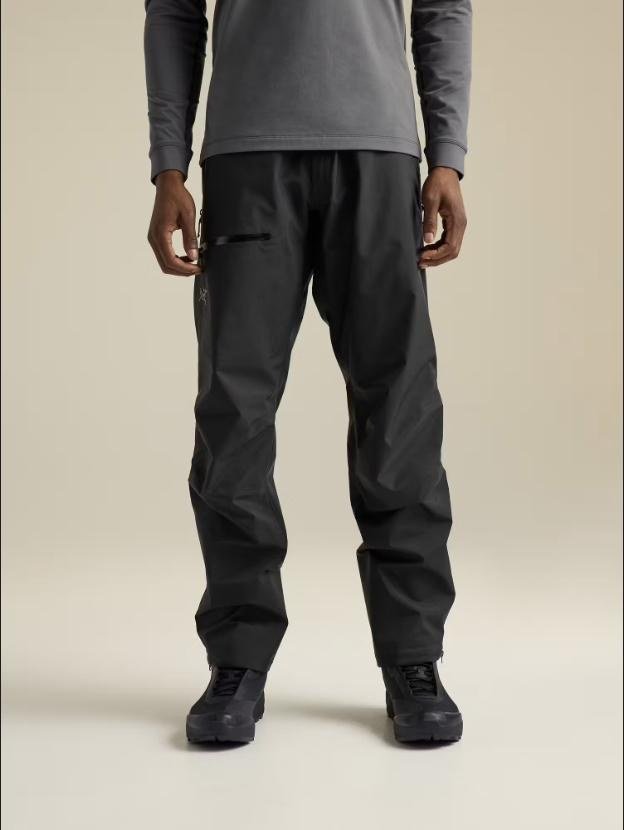
Overview
The Beta Pant is not marketed as a ski pant, which is exactly why it is such good value for skiers. It is Arc’teryx’s do-everything 3-layer GORE-TEX shell: full waterproof protection, a trim articulated cut, and a weight that disappears in a pack. Skiers who run warm, travel to chase conditions, or want one waterproof pant for the whole year keep gravitating to it.
Concessions to the price and the all-purpose brief: no thigh vents, no heavy kick patches, and a simple integrated waist adjustment instead of bib coverage. Under a longer jacket on groomer days none of that matters, and the breathability of 3-layer fabric covers for the missing vents better than a 2L pant could.
Where It Shines
- Genuine 3-layer GORE-TEX protection at a mid-range price
- Light and packable enough to double for hiking, travel, and shoulder-season storms
- Clean fit that layers over fleece without ballooning
- Breathes better than any 2L pant in this guide
Tradeoffs to Know
- No vents, so high-output skiers manage heat with layers instead of zips
- Cuffs lack burly reinforcement; edge-happy skiers will scuff them faster
- No insulation means it depends entirely on what you wear under it
Who It’s For
The skier who wants one excellent shell for everything: fifteen ski days, spring hikes, wet city weekends. Also the right call for warm-blooded skiers who overheat in traditional insulated ski pants.
Key Specs by Size
Figures are approximate and drawn from Arc’teryx’s published men’s bottoms size chart (via arcteryx.com) and retailer listings at REI and MEC. The chart gives body measurements, not garment measurements, and the inseam figures below are the body inseams Arc’teryx sizes each length to; the finished garment inseam on a medium is about 31 in short, 33 in regular and 36 in tall. Not every size comes in every length: retailers list XS in regular only, S and L in short and regular, M in all three, XL in regular and tall, and XXL in tall only.
| Size | Waist | Hip | Short inseam | Regular inseam | Tall inseam |
|---|---|---|---|---|---|
| XS | 30 in (76cm) | 35.5 in (90cm) | 29.5 in (75cm) | 31.5 in (80cm) | 34.5 in (88cm) |
| S | 32 in (81cm) | 37.5 in (95cm) | 30 in (76cm) | 32 in (81cm) | 35 in (89cm) |
| M | 34 in (86cm) | 39.5 in (100cm) | 30.5 in (77cm) | 32.5 in (82cm) | 35.5 in (90cm) |
| L | 37 in (94cm) | 42.5 in (108cm) | 30.5 in (78cm) | 32.5 in (83cm) | 36 in (91cm) |
| XL | 40 in (102cm) | 45.5 in (116cm) | 31 in (79cm) | 33 in (84cm) | 36 in (92cm) |
| XXL | 44 in (112cm) | 49.5 in (126cm) | 31 in (79cm) | 33 in (84cm) | 36 in (92cm) |
Across all sizes: 80-denier three-layer GORE-TEX ePE, the PFAS-free expanded-polyethylene membrane that replaced the older PTFE version, with a recycled plain-weave nylon face and GORE C-KNIT backer. The DWR is the PFAS-free FC0 finish, seams are fully taped, and materials meet bluesign criteria. Features run lean: three-quarter-length separating side zips, a single zippered thigh pocket, a low-profile stretch waistband with a full-circumference belt, laminated instep patches, hem eyelets for shock cord, and a RECCO reflector. There is no insulation, no internal boot gaiter and no powder cuff. Retailers list the pant at about 308 to 330g (10.9 to 11.6 oz) in a medium regular. List price is $300 in the US (about $380 CAD), and because Arc’teryx rarely discounts current-season shells, expect to pay close to that unless you catch a past-season colour at the brand’s outlet.
Sizing and Fit
Size by waist first, then pick the length. Arc’teryx calls the cut regular fit with articulated shaping, and REI’s aggregated reviews say it runs slightly large, with the most common complaint being extra room at the knee. If you sit between sizes on the chart, go down, especially if you plan to wear it over a thin base layer rather than a fleece pant. The low-profile waistband has a little stretch and the belt takes up the slack, so a slightly small waist is more forgiving than a slightly big one.
Length matters more on this pant than on most. Because it has no powder cuff or gaiter, a short hem leaves a gap above the boot and a long one drags under the instep patch. A 6’1” rider with a 32 in inseam fits a medium regular according to REI’s model note, which lines up with the chart; riders with inseams of 34 in and up should look at the tall. For resort skiing it pairs with any mid-weight base layer or a light fleece pant, and the leg opening clears a standard alpine or touring boot. It is a shell, so on cold lift days you are relying on what is underneath it.
Who Should Skip It
Skip the Beta Pant if you ski deep snow most days and want a bib that seals out powder at the waist and ankle: the Flylow Baker Bib adds burly fabric, big vents and real gaiters for about $450. Skip it if you run cold and ride lifts more than you skin, because there is no insulation here; the The North Face Freedom Insulated Pant at around $240 is warmer and cheaper. Skip it if you want a true freeride pant with cargo pockets, thigh vents that double as storage and a reinforced cuff, since the Patagonia Powder Town Pants offer all of that for roughly $270.
Beta Pant vs. Patagonia Powder Town Pants vs. Arc’teryx Sabre Bib Pant
These three sit at three price points and three ideas of what a ski pant is. The Patagonia Powder Town Pants, at about $270, are a dedicated resort pant: two-layer H2No shell, light insulation, cargo pockets, powder gaiters and thigh vents. The Arc’teryx Sabre Bib Pant, at roughly $700, is the brand’s heavy-duty freeride piece, with a tougher GORE-TEX face, a flannel backer, full gaiters and bib coverage. The Beta Pant is the lightest and simplest of the three at about $300, a packable hardshell that happens to work on skis. Pick the Powder Town if you ski inbounds and want warmth and pockets without spending more; pick the Sabre Bib if you ski hard in bad weather and want the most protective option; pick the Beta Pant if you want one shell for touring, hiking and resort days and don’t mind adding a gaiter yourself.
Frequently Asked Questions
Is the Arc’teryx Beta Pant good for skiing?
Yes, with limits. It is fully waterproof, breathable and cut to move, but it has no insulation, no boot gaiter and only one pocket, so it suits touring and mild resort days better than cold, deep powder.
What size Arc’teryx Beta Pant should I get?
Match your waist to the chart above, then choose short, regular or tall by inseam; aggregated reviews say it runs slightly roomy, so size down if you are between sizes.
Arc’teryx Beta Pant or Beta AR Pant?
The Beta AR Pant uses heavier GORE-TEX Pro with reinforced panels and costs considerably more; the standard Beta Pant is lighter, softer and the better value if you are not abusing it on rock and ice.
Is the Arc’teryx Beta Pant waterproof?
Yes. The three-layer GORE-TEX ePE membrane and fully taped seams make it a true hardshell, and the PFAS-free DWR keeps the face from wetting out as long as you refresh it occasionally.
How It Compares
See how it stacks up in our full guide: The Best Ski Pants & Bibs of 2026-27. Other picks from that list: Flylow Baker Bib · Arc’teryx Sabre Bib Pant · Patagonia Powder Town Pants · The North Face Freedom Insulated Pant · Columbia Bugaboo V.