Sandbox Classic 2.0 Snow Review: Sizing, Fit and Verdict
Affiliate disclosure: As an Amazon Associate we earn from qualifying purchases. Some links below are affiliate links, see our full disclosure. This breakdown is based on our independent research of current-season specifications and aggregated expert and user feedback.
The quick verdict: The iconic brimmed park helmet, slimmed down and better fitting in 2.0 form. Get the MIPS version. ~$190 MIPS, ~$150 non-MIPS
Overview
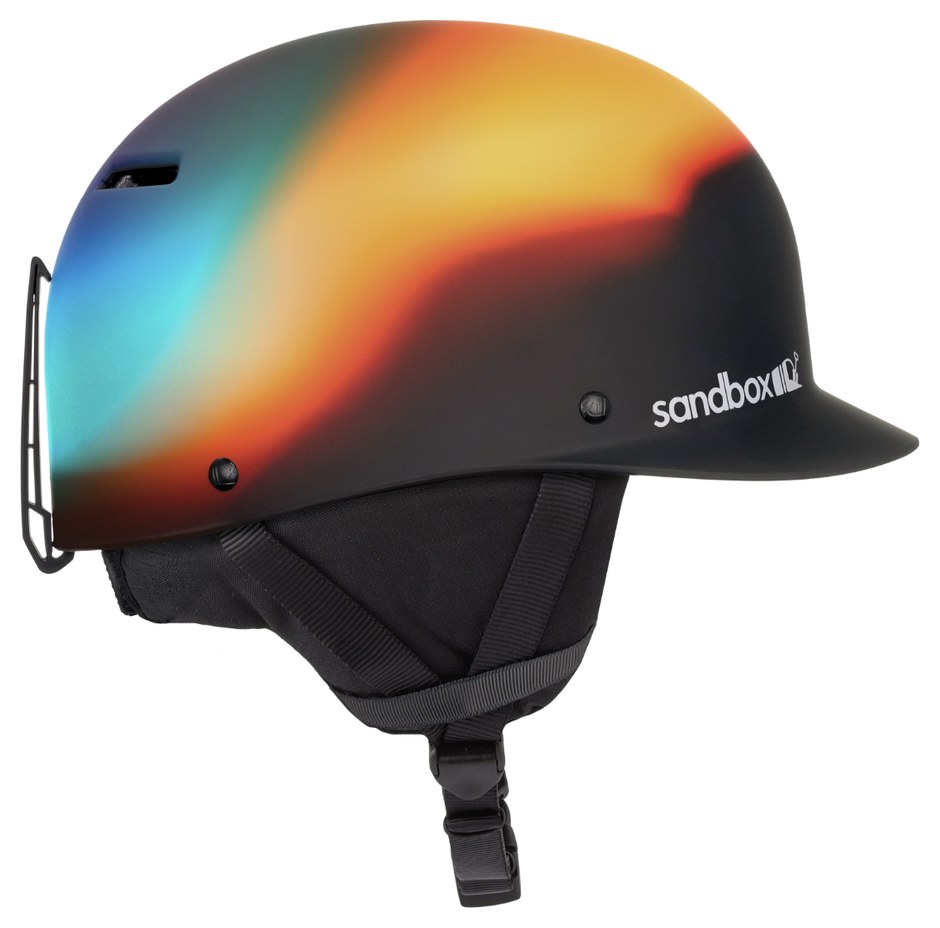
Founded by Whistler park icon Kevin Sansalone, Sandbox turned the baseball-brim helmet into a snowboarding signature, and the Classic is the model that did it. The 2.0 revision addresses the original’s one real flaw, bulk, with a lower-profile shell that no longer swallows smaller heads. The brim still does actual work, cutting glare and taking the edge off snowfall, and the colorway drops rotate like streetwear, from matte earth tones to full rainbow chrome.
The base model uses a low-profile ABS shell with EPS foam and a patented three-vent airflow system (fixed, not adjustable) and a three-position Trip Clip goggle clip, but no rotational protection layer. Sandbox sells a MIPS version for roughly $40 more, and that is the one to buy; our ~$190 figure reflects it.
Where It Shines
- Unmatched park credibility and seasonal colorway drops
- 2.0 shell is notably slimmer than the original Classic
- Brim genuinely helps in glare and light snow
- Removable ear covers with audio pockets and a three-position goggle clip
Tradeoffs to Know
- Base version lacks MIPS or equivalent; the upgrade is worth it
- Crown-heavy fit suits round heads better than oval ones
- Brim can bump large-frame goggles on some faces
Who It’s For
Park and street-inspired riders who care how the kit photographs, and anyone whose helmet doubles as identity. All-mountain riders who never touch a rail will get more function per dollar from the Giro Ledge MIPS or Smith Scout MIPS.
Key Specs by Size
Figures are approximate and drawn from Sandbox’s published size chart (via sandboxhelmets.com, which now lives on parent company Endeavor’s store) and listings at evo and Backcountry. Weights are retailer-claimed and vary by version; Sandbox itself doesn’t publish one.
| Size | Head circumference | In inches | Published weight |
|---|---|---|---|
| S | 52-54cm | 20.5-21.3in | not published |
| M | 55-57cm | 21.7-22.4in | ~550g (1 lb 3.5 oz), MIPS version |
| L | 58-61cm | 22.8-24.0in | ~600g (1 lb 5.2 oz), Original Fit |
| XL | 63-67cm | 24.8-26.4in | not published |
Across the line: an injection-molded ABS hard shell over an EPS foam liner, certified to CE EN 1077 Class B for alpine skiers and snowboarders (plus UKCA). Sandbox doesn’t list ASTM F2040 or CPSC on its current product pages. Inside you get a removable technical grid fleece comfort liner, removable padded ear covers with audio pockets that take most slim headphone drops (no speakers included), a patented three-vent airflow system that’s fixed rather than adjustable, and the Trip Clip, a three-position slide-on goggle clip. There are three builds: the Original Fit sizes with interchangeable fit pads, the Fit System adds a rear dial anchored on both sides, and the MIPS version pairs that dial with a MIPS low-friction layer. Warranty is one year against manufacturing defects. Sandbox lists the Fit System at about $150 and the MIPS at about $190; older Original Fit stock sat around $125 to 135 list. Closeouts are common: last season’s colorways have dropped to roughly $50 to 80 at evo and Backcountry.
Sizing and Fit
Measure around the widest part of your head, about a finger above the eyebrows, and then read the chart honestly. Sandbox prints “our helmets fit small, so please size up” on its own product pages, and aggregated reviews back that up: if you land at 57cm, take the Large. The Original Fit ships with two thicknesses of pad; the Fit System and MIPS versions use the rear dial, which is the easier way to lock in a goggle-tight fit on a cold morning. Note the gap in the chart between 61 and 63cm; if that’s you, try the L and XL in person.
Head shape matters as much as circumference. The Classic is a round-ish mold that sits high on the crown, so long oval heads tend to get pressure at the front and back before the sides are snug. Goggle pairing is the other thing to think about: the brim is the point of this helmet, and large-frame goggles like the Smith 4D Mag or the Anon M4 can bump it on shallower faces. Medium frames sit cleanly under it. Plan on a thin beanie at most underneath; a thick one pushes you up a size.
Who Should Skip It
Skip the Classic 2.0 if rotational protection is your first filter and you want the most of it for the money: the Anon Windham WaveCel uses a full WaveCel cellular liner rather than a MIPS slip plane, and at its clearance price it undercuts the Sandbox MIPS by a wide margin. Skip it if you ski more than you ride and want a conventional, lower-drag lid with real adjustable venting; the Smith Scout MIPS gives you that at about $115. And skip it if you run big-frame goggles or a long oval head, because the brim and crown-heavy fit will fight you all day; the Giro Ledge MIPS has the same skate-style look with no brim and a more forgiving in-mold fit.
Classic 2.0 Snow vs. Giro Ledge vs. Bern Watts
The Giro Ledge MIPS is the value play, about $105 list and often $73 to 95 on sale, with a dial fit, MIPS and a clean brimless shape that works under any goggle. The Bern Watts 2.0 MIPS runs about $170 to 180, has its own small molded visor, and uses Bern’s MIPS-equipped in-mold build, so it’s lighter than the hard-shell Sandbox. The Classic 2.0 Snow is the most expensive of the three in MIPS trim at roughly $190, and its ABS shell is the heaviest, but it’s the only one with a true baseball-cap brim and the colorway range to match. Pick the Ledge if you want MIPS and a dial for the least money; pick the Watts if you like a visor but want a lighter, more conventional fit; pick the Classic 2.0 if the brim and the Sandbox look are non-negotiable and you’ll shop a sale colorway to close the price gap.
Frequently Asked Questions
Is the Sandbox Classic 2.0 Snow certified for skiing?
Yes. It carries CE EN 1077 Class B certification, which covers alpine skiers and snowboarders, and UKCA. Sandbox doesn’t currently list ASTM F2040 for this model, so check the sticker inside if your resort or race program requires it.
What size Sandbox Classic 2.0 should I get?
Use Sandbox’s chart: S for 52-54cm, M for 55-57cm, L for 58-61cm and XL for 63-67cm. The brand says its helmets fit small, so if you’re at the top of a range, go up one size.
Sandbox Classic 2.0 Snow or Giro Ledge MIPS?
The Giro Ledge MIPS is cheaper, lighter and fits more head shapes. The Classic 2.0 is the pick only if you want the brim and the Sandbox colorways badly enough to pay roughly $85 more at list.
Does the Sandbox Classic 2.0 Snow have MIPS?
Only the version sold as Classic 2.0 Snow MIPS. The Original Fit and Fit System versions use the same ABS shell and EPS foam without a rotational layer, and the MIPS version costs about $40 more than the Fit System at list.
How It Compares
See how it stacks up in our full guide: The Best Snowboard Helmets of 2026/27. Other picks from that list: Anon Windham WaveCel · Anon Oslo WaveCel · Giro Ledge MIPS · Bern Watts 2.0 MIPS · Smith Scout MIPS.