Anon Windham WaveCel Review: Specs, Sizing and Verdict
Affiliate disclosure: As an Amazon Associate we earn from qualifying purchases. Some links below are affiliate links, see our full disclosure. This breakdown is based on our independent research of current-season specifications and aggregated expert and user feedback.
The quick verdict: The most complete snowboard helmet under $200: WaveCel protection, BOA fit, magnetic buckle, and a shape that doesn’t look like a mushroom. ~$200 list, typically ~$90-105 on clearance
Overview
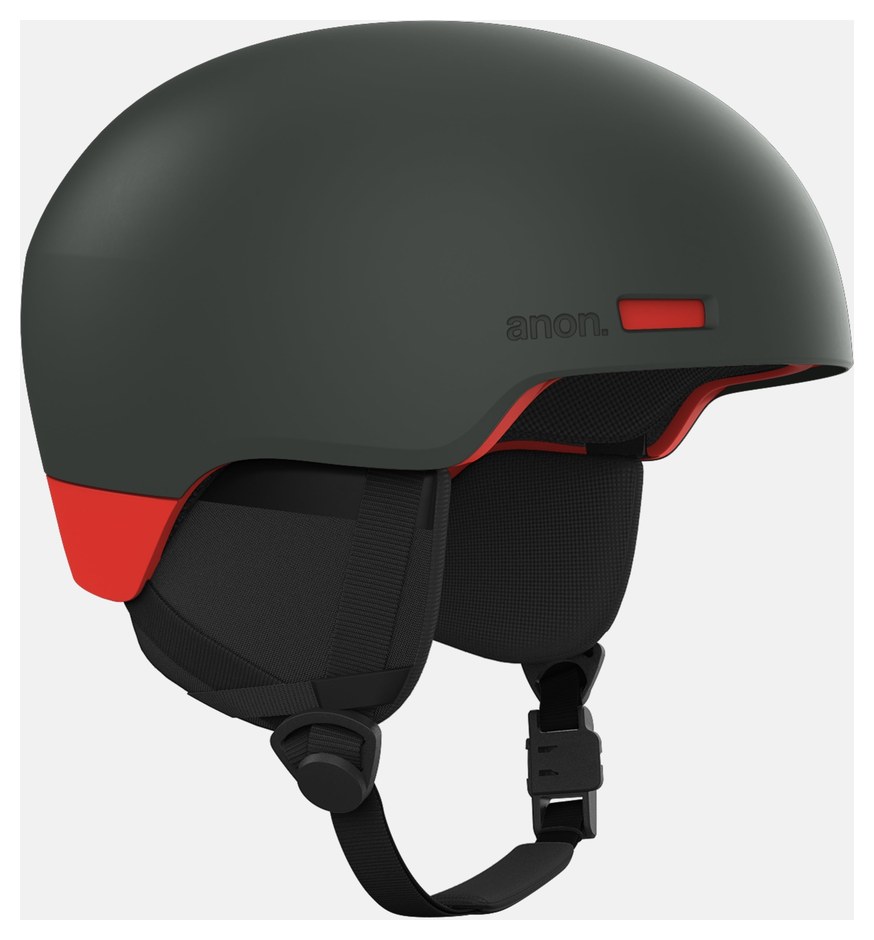
Anon is Burton’s helmet and goggle brand, and the Windham is its case for what an everyday snowboard lid should be. Instead of MIPS, it uses WaveCel, a green honeycomb-like layer you can see through the vents. The cells crumple on direct impact and shear sideways on angled hits, addressing both the linear and rotational forces of a real crash with a single structure. Several independent labs have scored WaveCel designs among the strongest performers in snow-helmet testing.
The rest of the package is quietly excellent. A BOA dial at the rear tightens the fit with one gloved hand, the chin strap closes with a Fidlock magnetic buckle you can work blind, and the low-profile shell avoids the bulbous look that plagues heavily protective helmets.
Where It Shines
- WaveCel handles direct and angled impacts in one structure
- BOA dial and magnetic buckle both work with gloves on
- Low-profile shape looks right on the hill
- Earpads accept drop-in audio kits
Tradeoffs to Know
- Runs slightly heavier than minimalist lids like the Oslo
- Vents are fixed, so spring laps get warm
- WaveCel adds roughly $40-60 over comparable MIPS helmets
Who It’s For
Riders who want the best all-around protection-comfort-style balance and are willing to pay a bit over the value tier for it. If grams matter more than features, look at the Oslo next.
Key Specs by Size
Figures are approximate and drawn from Anon’s published helmet size chart (via anonoptics.com and the Burton product page) plus evo and Blue Tomato listings. Anon makes the Windham WaveCel in four adult sizes; it does not publish a per-size weight, so the table lists head circumference only.
| Size | Head circumference | Fit note |
|---|---|---|
| S | 52-55cm | Size up if you measure 55cm |
| M | 56-59cm | Most common adult size |
| L | 60-62cm | Size up if you measure 62cm |
| XL | 63-64cm | Largest size offered |
Across all sizes: Endura hardshell construction with an injection-molded ABS exterior, a WaveCel collapsible cellular liner that handles both direct and rotational impact, in-shell 360-degree BOA fit dial, Fidlock magnetic buckle, two fixed passive vents backed by snow-stopper fabric, Polartec Power Grid fleece liner, and removable fleece earpads that accept earbuds or audio drop-ins. European retailers list it as certified to CE EN 1077 and ASTM F2040. Anon gives a one-year warranty and a two-year crash-replacement policy on helmets. List price has moved between about $190 and $210 over the last three seasons, with the current-season version at roughly $200; previous-season colors regularly drop to $90 to 105 at evo during autumn clearance.
Sizing and Fit
Measure first. Wrap a soft tape around your head just above the eyebrows and ears, read it in centimetres, and match it to the chart above. Then pay attention to Anon’s own caveat: WaveCel helmets are built to sit closer to the head than a conventional EPS helmet, so if you land on the top number of a range, or wear a thin beanie underneath, take the next size up. The BOA dial has plenty of range to cinch a slightly large shell down, while nothing can rescue a shell that is a touch too small.
The shape is what Anon calls its regular fit, which tends to suit oval heads better than round ones. Anon publishes a separate Round Fit chart for some of its WaveCel models (M 57-59cm, L 59-61cm, for example), so if a regular-fit Anon has pinched you at the temples before, look for a Round Fit variant or order from a retailer with free returns and try both. The earpads pull out for spring laps, and the goggle clip at the back comes off without tools.
Goggle pairing is the usual Anon story: the brim is shaped around Anon’s own frames, so the M4, M5 and Sync families are the safe match, and most other brands’ medium and large frames seat fine against it based on aggregated owner reviews. The one thing to avoid is sizing down to get a snugger feel, because a shell that rides high leaves a gap above the goggle and lets cold in through the vents.
Who Should Skip It
Skip the Windham if you want the lightest helmet you can get, because an ABS hardshell is always heavier than in-mold; the Anon Oslo WaveCel gives you the same liner in a lighter polycarbonate in-mold shell for about $210. Skip it if you run hot or ride a lot of spring days, since two fixed vents cannot be opened or closed and the Smith Scout MIPS has more airflow for far less money. And skip it if you just need a certified lid at the lowest possible price for a few trips a year; the Giro Ledge MIPS covers that job at roughly $100 and the Sandbox Classic 2.0 Snow brings the same skate-style look for about $120.
Windham WaveCel vs. Bern Watts 2.0 MIPS vs. Smith Scout MIPS
All three are hardshell helmets with a rotational-impact liner, so this comes down to the liner, the fit system and the price. The Bern Watts 2.0 MIPS runs about $170 and is the closest in spirit: thick ABS shell, a visor-brim profile that skaters love, MIPS instead of WaveCel, and a dial fit that is less refined than BOA. The Smith Scout MIPS is the value pick at around $115, with MIPS, more vents and a lighter feel, but a simpler dial and no magnetic buckle. The Windham costs the most, and what you pay for is the BOA dial, the Fidlock buckle and the WaveCel structure. Pick the Watts if you want the chunkiest, most skate-looking lid and prefer MIPS; pick the Scout if you want a dependable certified helmet for the least money; pick the Windham if you value one-handed buckling and dial-in fit, or if you can catch it on clearance near $100, where it becomes the obvious choice.
Frequently Asked Questions
Is the Anon Windham WaveCel good for beginners?
Yes. It is a simple, durable hardshell with a modern rotational-impact liner, and the BOA dial and magnetic buckle make it easy to adjust with gloves on. The only beginner-unfriendly part is the price if you pay full retail.
What size Anon Windham should I get?
Measure your head in centimetres and use Anon’s chart: S for 52 to 55cm, M for 56 to 59cm, L for 60 to 62cm, XL for 63 to 64cm. Because WaveCel helmets fit close to the head, size up if you sit at the top of a range.
Anon Windham or Oslo?
Both use WaveCel, BOA and Fidlock. The Oslo is an in-mold polycarbonate helmet, so it is lighter and sleeker; the Windham’s ABS hardshell is tougher against scrapes and racks and costs less, especially on sale.
Does the Anon Windham have MIPS?
No. It uses WaveCel, a collapsible cellular liner designed to absorb direct impacts and redirect rotational forces in one structure rather than with a separate slip plane.
How It Compares
See how it stacks up in our full guide: The Best Snowboard Helmets of 2026/27. Other picks from that list: Anon Oslo WaveCel · Giro Ledge MIPS · Sandbox Classic 2.0 Snow · Bern Watts 2.0 MIPS · Smith Scout MIPS.