Anon Oslo WaveCel Review: Specs, Sizing and Verdict
Affiliate disclosure: As an Amazon Associate we earn from qualifying purchases. Some links below are affiliate links, see our full disclosure. This breakdown is based on our independent research of current-season specifications and aggregated expert and user feedback.
The quick verdict: WaveCel protection at roughly 448 grams, in the cleanest silhouette on the wall. You pay for what it leaves out. ~$240 list, older colorways ~$125-165 on closeout
Overview
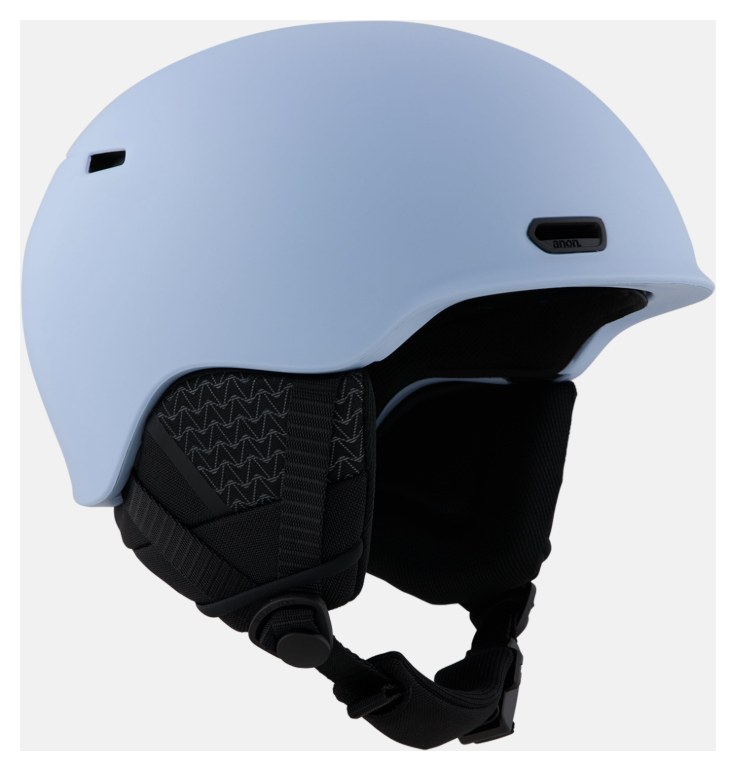
The Oslo answers a simple question: how light can a fully protective snowboard helmet get? At roughly 448 grams it undercuts most WaveCel and Koroyd designs by a comfortable margin, and the difference is real by the end of a long day. Necks notice.
Design-wise it is the anti-Sandbox. No brim, no branding shout, just a smooth rounded shell in muted colors that disappears over any outerwear. The WaveCel layer inside is the same cellular crumple-zone technology as the Windham, so the weight savings don’t come out of the safety budget. They come out of the feature list instead: fit adjustment is simpler and venting is minimal.
Where It Shines
- One of the lightest fully protective snow helmets available
- Same WaveCel tech as heavier Anon models
- Understated shape and colorways pair with anything
- Magnetic buckle operable with mittens
Tradeoffs to Know
- Highest price on our list at roughly $240
- Low-profile shell leaves less room to adjust; pick the right size and head shape up front
- Minimal venting suits cold days better than slush season
Who It’s For
Long-day riders, splitboarders counting grams, and anyone who finds most snowboard helmets heavy or loud-looking. Budget buyers get 90 percent of this experience from the Giro Ledge at half the price.
Key Specs by Size
Figures are approximate and drawn from Anon’s published size chart (via anonoptics.com) and retailer listings at evo and Burton. The Oslo WaveCel comes in four sizes and two head shapes: the standard Regular fit and a Round fit shell for wider, rounder heads. Anon does not publish a per-size weight; the single figure it gives is about 448g.
| Size | Regular fit (head circumference) | Round fit (head circumference) |
|---|---|---|
| S | 52-55cm | 55-57cm |
| M | 56-59cm | 57-59cm |
| L | 60-62cm | 59-61cm |
| XL | 63-64cm | Not offered at the time of writing |
Across all sizes: in-mold construction that fuses a polycarbonate shell to an EPS liner, with the WaveCel cellular layer sitting inside to absorb linear impact and let the head glide under rotational loads. Fit comes from an in-shell 360-degree BOA dial that also adjusts vertically across eight positions, and the chin strap closes with a Fidlock magnetic buckle you can work one-handed in gloves. Venting is fixed: two passive vents backed with snow-stopper fabric, so there is no slider to open or close. The fleece liner and thermoformed ear pads are removable, and the pads are cut to accommodate earbuds. evo lists it as ASTM F2040 and CE EN 1077B certified. Anon’s warranty is one year, plus a crash-replacement discount. List price is about $240; older colorways show up on closeout for roughly $125 to 165.
Sizing and Fit
Measure first. Wrap a soft tape around your head just above the eyebrows and the ears, read the number in centimetres, and find it on the chart above. Anon’s own advice for anyone sitting between two sizes is to go up, and that is sensible here because the BOA dial can take up a lot of slack but can’t add room. A 59cm head is the classic awkward case: it is the top of a Regular M, the top of a Round M and the bottom of a Round L. If you have ever felt pressure at the front and back of a helmet while the sides stayed loose, the Round fit shell is built for you; if a helmet usually pinches at the temples, stick with Regular.
The Oslo sits low and close to the head, so it won’t balloon out the way some skate-style lids do. That low profile also means goggle fit matters. It pairs cleanly with Anon’s own M4 and M5 frames and most other large-fit goggles, but a very tall frame may push the brim up and leave a gap. Try the two together if you can. On the warmth side, the fleece liner and full-coverage ear pads make this a cold-day helmet by default; the fixed two-vent layout keeps snow out but can’t be opened up on a warm spring afternoon, so riders who run hot should factor that in.
Who Should Skip It
Skip the Oslo if you ride a lot of spring slush or hike for your turns, because its fixed venting has no way to dump heat; the Smith Scout MIPS has adjustable airflow and costs roughly half as much. Skip it if you want WaveCel protection but don’t need the low-profile shell and premium trim, since the Anon Windham WaveCel gives you the same impact tech for about $60 less. And skip it if $240 is simply more than you want to put into a helmet: the Giro Ledge MIPS covers the certification basics with rotational protection at around $100, and the Sandbox Classic 2.0 Snow does the same with a brimmed skate look for about $120.
Oslo WaveCel vs. Anon Windham WaveCel vs. Giro Ledge MIPS
Within Anon’s own range, the Windham WaveCel at roughly $180 is the Oslo’s closest relative: same WaveCel liner, same BOA and Fidlock hardware, but a more conventional shell shape without the Oslo’s low-slung profile and Round fit option. The Giro Ledge MIPS at about $100 comes at protection from the other direction with a MIPS slip plane inside a hard-shell, skate-style lid; it is heavier-looking and plainer, but it is also the helmet most people can afford to replace after a crash. The Oslo at about $240 is the design-led pick with the refined fit system. Pick the Ledge if budget comes first and you like the skate silhouette; pick the Windham if you want WaveCel at the lowest price; pick the Oslo if you value the low-profile look, the Round fit option and the best fit adjustment of the three.
Frequently Asked Questions
Anon Oslo or Windham?
Both use WaveCel, BOA and Fidlock, so protection and ease of use are equivalent. The Oslo costs about $60 more for its lower-profile shell and a Round fit option; the Windham is the better value if you don’t need either.
Is WaveCel better than MIPS?
Both are designed to manage rotational forces in angled impacts, WaveCel through a collapsible cellular layer and MIPS through a low-friction slip plane. Independent comparisons have reached different conclusions, and neither system has been shown to be clearly superior across all impact types, so choose on fit, price and comfort rather than on the badge.
What size Anon Oslo should I get?
Measure your head circumference and use the chart: Regular fit runs S 52-55cm, M 56-59cm, L 60-62cm, XL 63-64cm. If you land between sizes, Anon recommends sizing up and dialling in with the BOA.
Is the Anon Oslo WaveCel audio-compatible?
There are no built-in speakers, but the removable ear pads are shaped to accommodate earbuds and the helmet is listed as audio-accessory compatible, so aftermarket helmet audio kits will fit.
How It Compares
See how it stacks up in our full guide: The Best Snowboard Helmets of 2026/27. Other picks from that list: Anon Windham WaveCel · Giro Ledge MIPS · Sandbox Classic 2.0 Snow · Bern Watts 2.0 MIPS · Smith Scout MIPS.