Patagonia R1 Air Full-Zip Hoody Review: Sizing and Verdict
Affiliate disclosure: As an Amazon Associate we earn from qualifying purchases. Some links below are affiliate links, see our full disclosure. This breakdown is based on our independent research of current-season specifications and aggregated expert and user feedback.
The quick verdict: The most breathable fleece in skiing: a zigzag knit that dumps heat on the climb and dries almost before you notice it is wet. ~$200 list, prior-season colors often ~$90 to 145 on closeout
Overview
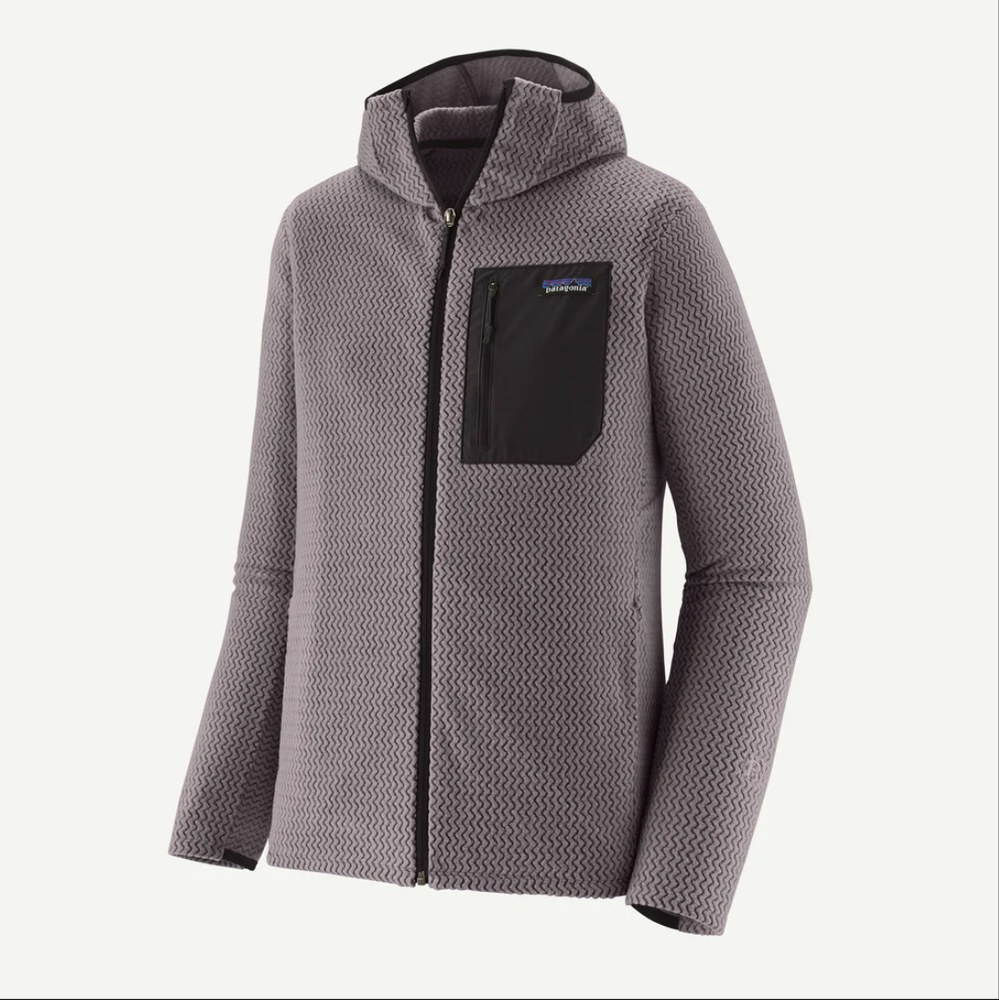
Patagonia's original R1 grid fleece defined the technical-fleece category for two decades. The R1 Air is its lighter-breathing sibling: a zigzag-channel knit that raises loft for warmth while opening continuous air paths for moisture. The practical upshot on skis is simple. You can leave it on all day. Skin up in it without soaking it, ride down in it under a shell without chilling, and hang it up dry by the time you have finished unbuckling your boots.
The full-zip version adds easy venting, a zippered chest pocket and two zippered hand pockets, and the slim hood slides under a helmet without a fight.
Where It Shines
- Best-in-class breathability for skinning, bootpacking, and warm days
- Dries remarkably fast for its warmth
- Soft, low-bulk knit layers under any shell
- Doubles as a daily fleece away from the mountain
- About $100 less than the insulated picks in our guide
Tradeoffs to Know
- Almost no wind resistance on its own; it assumes a shell over it
- Not the warmest option for deep-cold chairlift days
- Zigzag knit can pill where pack straps rub over years of use
Who It’s For
Skiers whose engine runs hot: tourers, hikers, spring-break warriors, and anyone who has ever ridden a lift with their jacket wide open in February. Cold-blooded cruisers should step up to the Atom Hoody instead.
Key Specs by Size
Figures are approximate and drawn from Patagonia’s standard men’s size chart as reproduced by retailers (via patagonia.com, REI and Scheels). Patagonia sells the men’s R1 Air Full-Zip Hoody in six sizes, XS through XXL; there is no tall or big run.
| Size | Chest | Waist | Sleeve |
|---|---|---|---|
| XS | 34-35 in (86-89cm) | 28 in | 32 in |
| S | 35-37 in (89-94cm) | 29-30 in | 33 in |
| M | 38-40 in (96-101cm) | 31-33 in | 34 in |
| L | 42-44 in (106-111cm) | 34-36 in | 35 in |
| XL | 46-48 in (117-122cm) | 38-40 in | 36 in |
| XXL | 50-52 in (127-132cm) | 42-44 in | 37 in |
Across all sizes the fabric is the same 5.7 oz, 100% recycled polyester jacquard fleece knit in a zigzag pattern from hollow-core yarns, bluesign approved and sewn in a Fair Trade Certified factory. Patagonia lists it at about 369g (13 oz), a touch heavier than the classic R1 grid fleece because of the full zip and hood. The cut is Patagonia’s slim fit, hip length, with offset shoulder seams that stay clear of pack straps and a quick-drying woven binding at the cuffs and hem instead of bulky elastic. You get three zippered pockets: one on the left chest and two hand pockets with low-profile zippers. The hood is a slim, scuba-style design built to go under a ski helmet rather than over it. Everything is covered by Patagonia’s Ironclad Guarantee, which includes repairs. List price is roughly $200 for the current season; prior-season colors have shown up at REI, evo and fly shops for about $90 to 145 on closeout.
Sizing and Fit
Buy your usual Patagonia size. The R1 Air is a slim fit, so it tracks the body, but the knit has real stretch and aggregated reviews describe it as true to size with room for a baselayer underneath. A few reviewers found the medium snug and went up to a large; a few others felt it ran slightly large. The honest read is that it sits in the middle of the chart. If your chest lands between two sizes, go up if it will live over a heavier baselayer on cold days; stay at your measured size if it will be the only thing between your skin and your shell, which is where this jacket does its best work.
Torso length is worth a thought. Patagonia calls it hip length and Backcountry lists the center back at roughly 25.5 in for an XS, which is on the shorter side for a ski midlayer; a couple of reviewers say the same. If you are tall for your chest size and ski in a bib, expect the hem to sit at the top of the hip rather than below it. The hood layers under any helmet and under a shell hood without stacking, but it won’t go over a helmet, so the shell hood does that job in a storm.
Think of it as an engine layer rather than a stand-alone jacket. Over a light synthetic or merino baselayer and under a hardshell, it covers most lift and touring days from about 15F upward. It does not replace a puffy for cold, still chairlift laps, and anyone over a 52 in chest will run out of sizes.
Who Should Skip It
Skip the R1 Air if you ski cold and sit still a lot: a breathable fleece can’t hold heat on a windy lift the way an insulated piece can, and the Arc’teryx Atom Hoody is the better choice for a cruiser who runs cold. Skip it if you want one jacket that handles wind and light snow on its own with no shell, because the open knit lets air straight through; the Patagonia Nano-Air Light Hybrid Hoody adds a wind-blocking front panel. And skip it if you are shopping on a budget for a resort-only fleece, since a Columbia Steens Mountain 2.0 does the chairlift job for roughly a third of the money.
R1 Air vs. Smartwool Active Fleece vs. Columbia Steens Mountain 2.0
Three fleeces, three price points, three different jobs. The Smartwool Active Fleece Jacket runs about $180 and uses a merino blend, which brings better odor control and a slightly warmer feel at rest, at the cost of some drying speed. The Columbia Steens Mountain 2.0 is a traditional polyester fleece at roughly $65: warmer per dollar than either, but bulky under a shell and nowhere near as breathable once you start sweating. The R1 Air sits at about $200 and spends that premium on moisture management: it breathes and dries faster than both, with a helmet-friendly hood neither of the others has. Pick the Smartwool if you want natural fiber and several days between washes; pick the Columbia if you ride lifts and would rather spend the savings on a lift ticket; pick the R1 Air if you tour, bootpack or hike for turns and need the layer that stays dry.
Frequently Asked Questions
Is the Patagonia R1 Air warm?
Warm enough as a midlayer, not as an outer layer. Based on Patagonia’s specs and aggregated reviews, it insulates about as well as a comparable-weight fleece while moving moisture far better; under a shell it handles sub-freezing days, but on its own it offers little wind resistance.
R1 Air or R1 Pullover for skiing?
The R1 Pullover is the denser grid fleece: it blocks more wind, packs smaller and works as a heavy baselayer in deep cold. The R1 Air Full-Zip Hoody breathes and dries faster, vents fully and has a helmet hood, which makes it the better midlayer for touring and warm-blooded resort skiers.
What size Patagonia R1 Air should I get?
Use Patagonia’s standard men’s chart: S for a 35 to 37 in chest, M for 38 to 40 in, L for 42 to 44 in, XL for 46 to 48 in. It is slim but stretchy, so size by chest and only go up if you plan to layer a thick baselayer beneath it.
Does the R1 Air Hoody fit under a ski helmet?
Yes. The hood is a slim scuba-style cut designed to sit under a helmet or under a shell hood; it is not built to fit over a helmet.
How It Compares
See how it stacks up in our full guide: The Best Ski Midlayers of 2026-27. Other picks from that list: Arc'teryx Atom Hoody · Patagonia Nano-Air Light Hybrid Hoody · Smartwool Active Fleece Jacket · Columbia Steens Mountain 2.0.