Arc’teryx Atom Hoody Review: Specs, Sizing and Verdict
Affiliate disclosure: As an Amazon Associate we earn from qualifying purchases. Some links below are affiliate links, see our full disclosure. This breakdown is based on our independent research of current-season specifications and aggregated expert and user feedback.
The quick verdict: The benchmark active-insulation midlayer, warm enough for lift laps, breathable enough for the skin track, and polished enough to wear everywhere else. ~$300 list, some colours ~$200 on sale
Overview
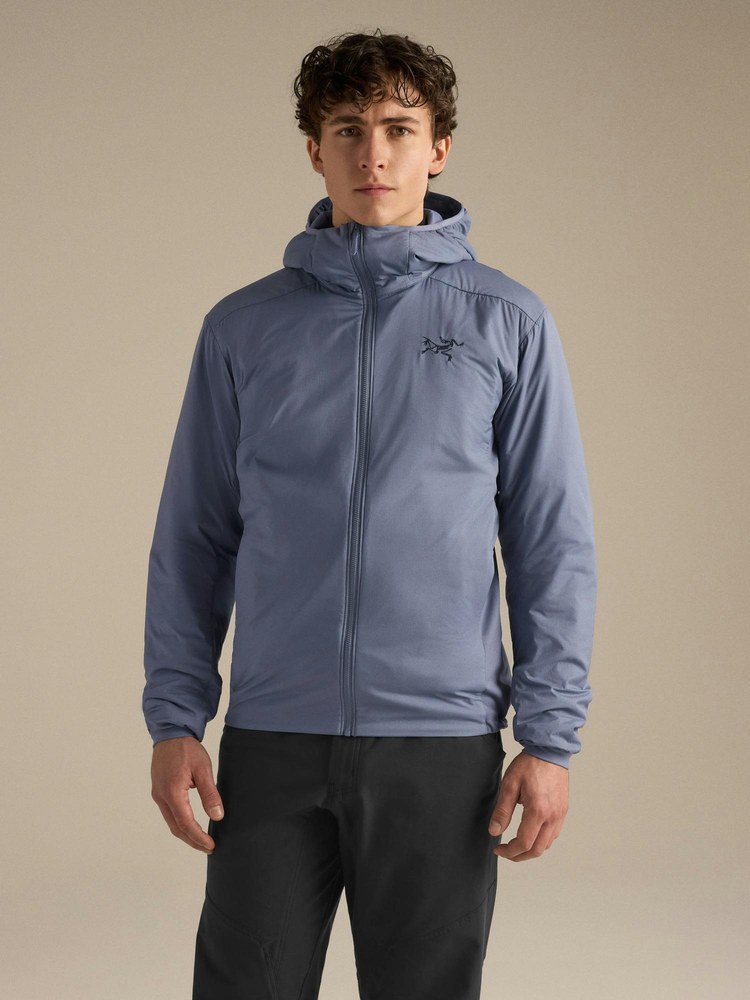
Some gear becomes a category shorthand. Ask around any base lodge what to wear under a shell and someone will just say “an Atom.” Arc'teryx pairs 60-gram Coreloft Compact synthetic insulation through the body, hood, and arms with stretchy fleece panels along the sides and underarms, the sections where skiers dump the most heat. The Tyono face fabric sheds light snow and takes the edge off wind, so the Atom moonlights as a standalone jacket on dry spring days. Reviewers consistently rate it the most versatile piece in the category, and its resale value says the market agrees.
Where It Shines
- Near-perfect warmth-to-breathability balance for stop-and-go skiing
- Side panels vent heat without unzipping, so the chairlift chill never gets in
- Works as a midlayer in January and an outer layer in April
- Trim cut layers cleanly under any shell without bunching
- Durability reputation matches the Arc'teryx price tag
Tradeoffs to Know
- At ~$300 it costs four times the budget option in our guide
- Not warm enough alone for deep-cold days of sitting on lifts; pair it with a shell or size up the system
- The fleece side panels let wind through in exposed terrain
- Synthetic insulation packs larger than an equivalent down piece
Who It’s For
The skier who wants one midlayer for everything: resort laps, sidecountry hikes, travel, and the drive home. If your days are all high-output touring, the more breathable Nano-Air Light Hybrid or R1 Air will suit you better; if budget rules, the Steens Mountain 2.0 covers the basics for a fraction of the cost.
Key Specs by Size
Figures are approximate and drawn from Arc’teryx’s published men’s size chart (via arcteryx.com, as reproduced by Canadian dealers) plus REI and Ski Essentials listings. Arc’teryx lists the men’s Atom Hoody in XS through XXL; REI also stocks an XXXL in some colours. Chest figures are body measurements, not garment measurements.
| Size | Chest (body) | Waist (body) | Sleeve (centre back to cuff) | Centre back length |
|---|---|---|---|---|
| XS | 36 in (91cm) | 30 in (76cm) | 32 in (81cm) | shorter than M |
| S | 38 in (97cm) | 32 in (81cm) | 33 in (84cm) | shorter than M |
| M | 40 in (102cm) | 34 in (86cm) | 34 in (86cm) | 29 in (73cm) |
| L | 43.5 in (110cm) | 37 in (94cm) | 35 in (89cm) | longer than M |
| XL | 46.5 in (118cm) | 40 in (102cm) | 36 in (91cm) | longer than M |
| XXL | 50.5 in (128cm) | 44 in (112cm) | 37 in (94cm) | longer than M |
Across all sizes the build is the same: Coreloft Compact 60 synthetic insulation (60 g/m², 100 percent recycled polyester) in the body and hood, a Tyono 20 air-permeable face fabric with a PFAS-free FC0 DWR, a 20-denier recycled nylon liner, and performance stretch fleece side panels that dump heat under the arms. The adjustable, insulated StormHood has a structured mini brim and sits under a ski helmet; the two hand pockets use hidden zippers and there is a zipped internal chest pocket. Arc’teryx calls the cut Fitted, with articulated patterning, and most retailers describe it as trim. Published weight varies by source, from 12.5 oz (about 355g) at REI to 370g at Ski Essentials, so call it roughly 355 to 375g. It is made in a Fair Trade Certified facility. List price is about $300 in the US; some colourways drop to roughly $200 at REI during sales, and Arc’teryx backs it with its standard limited lifetime warranty on materials and workmanship.
Sizing and Fit
Buy your normal Arc’teryx size. The Atom Hoody is cut for a base layer or a thin fleece underneath, so a 40-inch chest sits squarely in a medium and a 42-inch chest should think about the large rather than squeezing into the top of the medium. The stretch fleece side panels add forgiveness through the torso, which is why REI reviews tend to say it fits slightly large even though Arc’teryx labels it Fitted. If you are between sizes and plan to wear it mostly as a midlayer under a shell, size down; if it will be your outer layer on spring groomer days with a hoody underneath, size up.
Length is hip-length, about 29 inches at centre back on a medium, which clears a harness or a pack hipbelt without riding up when you reach overhead. Sleeves run long in the Arc’teryx tradition, so cuffs stay put under shell cuffs and gloves. The hood is sized to go under a helmet over a bare head or thin beanie, not over the helmet; worn under your lid it works like a warm neck gaiter.
Layering is where the Atom earns its reputation. The slick nylon face slides under any shell without binding, and it replaces a fleece and a light puffy in one piece for resort days above about 15°F (minus 9°C). Broad shoulders and a narrow waist suit the Fitted cut; a stockier build may be happier one size up.
Who Should Skip It
Skip the Atom Hoody if your days are high output, skinning or bootpacking for hours, because 60g of synthetic fill traps more heat than you want on the up; the Patagonia Nano-Air Light Hybrid Hoody breathes far better and the Patagonia R1 Air Full-Zip Hoody is lighter still for pure uphill work. Skip it if you want the warmth and feel of a fleece rather than a puffy, since the Smartwool Active Fleece Jacket is cosier against the skin and cheaper. And skip it if $300 is more than you want to spend on a layer that lives under a shell; the Columbia Steens Mountain 2.0 does the midlayer job on a resort day for roughly a quarter of the price.
Atom Hoody vs. Patagonia Nano-Air Light Hybrid vs. Patagonia R1 Air
These three sit on a warmth-to-breathability spectrum. The Atom Hoody, at about $300, is the warmest and the most wind resistant of the trio, a true synthetic puffy that still moves thanks to its fleece side panels. The Patagonia Nano-Air Light Hybrid Hoody, also around $300, puts lighter stretch insulation on the front and a grid fleece on the back and arms, so it runs cooler and vents constantly; it is the touring pick. The Patagonia R1 Air Full-Zip Hoody at roughly $200 is a high-loft fleece with no insulation layer at all, the lightest and most breathable but the one you feel the wind through. Pick the Atom if you ride lifts, ski in cold, windy places or want one layer that also works as a town jacket; pick the Nano-Air Light Hybrid if you tour more than you ride lifts and overheat easily; pick the R1 Air if you want a breathable fleece under a shell and would rather spend the savings on a proper insulated outer layer.
Frequently Asked Questions
Is the Arc'teryx Atom Hoody warm enough for skiing?
As a midlayer under a shell, yes, for most resort days down to roughly 10 to 15°F with a base layer underneath. On its own it is a cool-weather jacket, not a cold-weather one; for very cold chairlifts look to the Atom Heavyweight Hoody.
What size Arc'teryx Atom Hoody should I get?
Your usual size using the chest chart above: 38-inch chest small, 40 medium, 43 to 44 large, 46 to 47 extra large. Size up only if you plan to wear a thick fleece under it.
Atom Hoody or Atom SL Hoody?
The Atom SL Hoody uses 40g insulation with more fleece panelling, so it is lighter and cooler for shoulder-season hiking and spring touring. The standard Atom Hoody (60g) is the better ski midlayer for most people.
Is the Arc'teryx Atom Hoody waterproof?
No. The Tyono 20 face has a PFAS-free DWR that sheds light snow and drizzle, and the Coreloft fill keeps insulating when damp, but in sustained precipitation you need a shell over it.
How It Compares
See how it stacks up in our full guide: The Best Ski Midlayers of 2026-27. Other picks from that list: Patagonia Nano-Air Light Hybrid Hoody · Patagonia R1 Air Full-Zip Hoody · Smartwool Active Fleece Jacket · Columbia Steens Mountain 2.0.