Marker Griffon X 13 Review
Affiliate disclosure: As an Amazon Associate we earn from qualifying purchases. Some links below are affiliate links, see our full disclosure. This breakdown is based on our independent research of current-season specifications and aggregated expert and user feedback.
The quick verdict: Marker’s benchmark freeride binding, rebuilt on a platform that sits 9mm lower than the old Griffon ID. Same locked-in power, quicker edge feel, first-year track record. ~$300
Overview
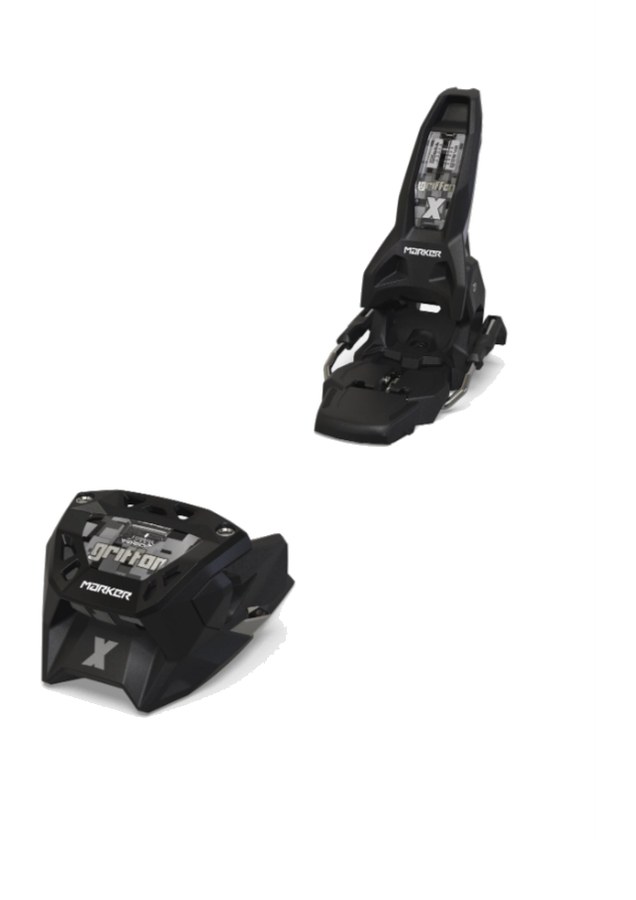
For most of two decades, "just put Griffons on it" was the default answer at the mount bench, and the Griffon 13 ID earned that status with a reputation for surviving abuse that ended careers of lesser bindings. For 2026-27 Marker finally replaced it. The Griffon X 13 moves the family onto the new X platform, shared with the pricier Griffon X MWerks, and slots in as the everyday expert binding below that flagship. Marker positions it for freeride, all-mountain, and park skiers at the expert end of the spectrum.
The big change is height. Marker quotes its lowest freeski stand height yet, 14mm at the heel and just 9mm at the toe, roughly 9mm lower than the outgoing ID model. Lower means quicker edge-to-edge transitions and a more direct snow feel, the same argument Tyrolia has made for the Attack for years. The proven Inter Pivot heel and the Anti-Ice Rail, which scrapes packed snow off a boot sole as you step in, both carry over.
Key Specs
| Spec | Marker Griffon X 13 |
|---|---|
| DIN range | 4-13 |
| Weight | ~1,130g per binding (~2,260g per pair, per retailer listings) |
| Stand height | 9mm toe / 14mm heel |
| Ramp angle | 5mm |
| Brake widths | 90, 105, 120mm |
| Boot compatibility | Alpine (ISO 5355) & GripWalk (ISO 23223) |
| Heel adjustment range | 20mm |
| Construction | Composite toe wings and heel bracket on the new X platform, Anti-Ice Rail, Inter Pivot heel |
| Warranty | 3 years (Marker) |
| Price | ~$300 |
Sizing & Compatibility
Three brake widths keep it simple: 90mm for skis up to about 88 underfoot, 105mm for the mid-fat core where most Griffons end up, and 120mm for powder skis. Note the compatibility change from the old model: the Griffon 13 ID’s Sole.ID toe accepted alpine, GripWalk, WTR, and even ISO 9523 touring soles, while the new X takes alpine and GripWalk only. Touring-boot owners now need to look at Marker’s Duke or Baron lines. The 20mm heel adjustment range is tighter than the Strive’s 30mm, so a big change in boot sole length is more likely to mean a remount.
Where It Shines
- The trademark Griffon feel: a firm, powerful, locked-down connection that heavier and more aggressive skiers consistently prefer, per published comparisons
- New 9mm/14mm stand height is the lowest in this group, for immediate edge response
- Anti-Ice Rail solves the snowy-boot step-in problem better than any competitor
- 3-year warranty beats the 2 years typical of the class
- Eight colorways, if that matters to you (we will not judge)
Tradeoffs to Know
- First-year platform: the composite toe wings replace the ID’s magnesium, and long-term durability is unproven, unlike the decade of history behind the Attack
- Step-in takes more deliberate force than the Attack or Strive; the high heel spring is the price of that solid hold
- Heaviest of our four picks at roughly 2,260g per pair
- No more touring-sole compatibility, a genuine loss from the ID generation
Who It’s For
Strong, heavy, or aggressive skiers who load a binding hard through every turn, ex-racers who want the ski glued to their foot, and Griffon loyalists ready for the lower ride. It remains the power pick of the mainstream freeride class.
Who Should Skip It
Lighter skiers and smooth operators will get the same security from the easier-living Strive or Attack with less effort at the heel. Buyers who prize a proven track record over new design may also prefer waiting a season, or grabbing a discounted Griffon 13 ID while old stock lasts.
How It Compares
The Salomon Strive 14 GW is about 300g lighter per pair and noticeably easier to click into, with a softer, smoother ride. The Griffon X counters with a firmer hold and more direct power transfer. Finesse skiers go Salomon; power skiers go Marker.
The Tyrolia Attack 14 GW was the low-stand-height binding until this Griffon undercut it. The Attack still wins on entry ease, DIN spread (4-14), and street price, and its design has years of proof behind it. The Griffon X wins on outright connection and warranty.
The Look Pivot 2.0 15 GW costs roughly $200 more and answers a different question: maximum elasticity for hard landings. The Griffon delivers more immediate edge feel at a fraction of the price; the Pivot forgives violence the Griffon would release from.
See the full lineup in our guide: The Best Ski Bindings of 2026-27.
Frequently Asked Questions
Should I buy the Griffon X 13 or a leftover Griffon 13 ID?
If you ski touring-sole boots or want maximum proven durability, the discounted ID is arguably the smarter buy this season. If you want the lower stand height and the longer support runway of the current platform, buy the X.
What is the difference between the Griffon X 13 and the Griffon X MWerks?
The MWerks version uses premium materials to cut weight further and costs considerably more. The standard X 13 reviewed here shares the platform and geometry at the accessible price.
Is DIN 13 enough for an aggressive skier?
Almost always. Release settings above 11 are rare outside racing and very heavy experts. If your calculated value genuinely exceeds 10, consider the Jester 16 instead; otherwise the 13 leaves plenty of headroom.