Jones MTN Surf Recycled Jacket Review
Affiliate disclosure: As an Amazon Associate we earn from qualifying purchases. Some links below are affiliate links, see our full disclosure. This breakdown is based on our independent research of current-season specifications and aggregated expert and user feedback.
The quick verdict: The one-jacket answer for riders whose season does not stop at the resort boundary. 20K waterproofing matched with 20K breathability, a four-way stretch shell that moves like a softshell, and a fully recycled build. No fill insulation means you manage warmth with layers, exactly as a crossover jacket should. ~$400
Overview
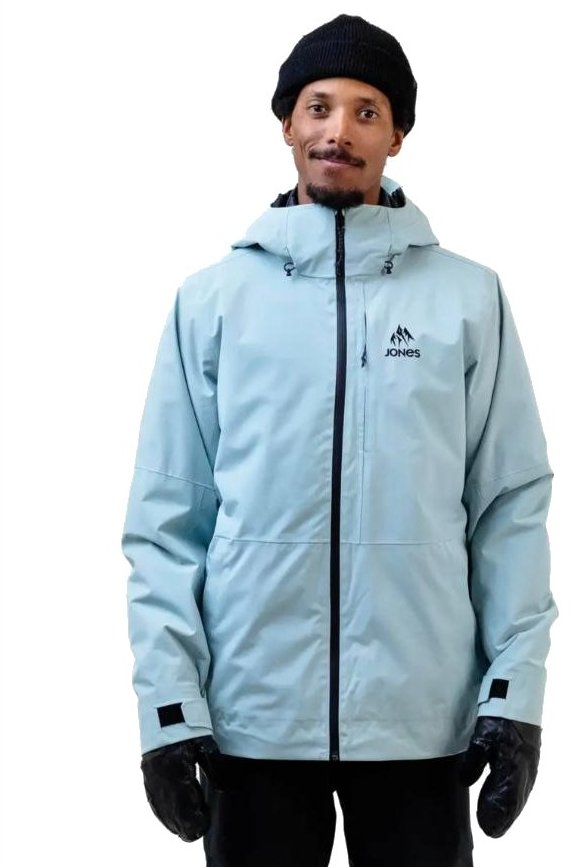
Jeremy Jones built his company around the idea that the best snowboarding often starts where the lifts end, and the MTN Surf Recycled is the outerwear version of that philosophy. Jones positions it as the brand's "do everything" jacket: beneath the expedition-grade Shralpinist shells in the line, above the resort-only pieces, and aimed at the rider who laps groomers Saturday and skins a ridge Sunday. The name is literal; the cut and the stretch are meant to make riding feel closer to surfing.
The 2026/27 version is a 2-layer shell with a fully laminated hydrophilic membrane rated 20K/20K, built on a 75-denier recycled polyester face with four-way stretch and a PFC-free water-repellent finish, per the brand site. Seams are fully taped, the zippers are YKK AquaGuard, and the whole jacket, lining included, is 100 percent recycled and bluesign certified. Unlike earlier MTN Surf versions that carried light PrimaLoft fill, this one skips insulation entirely in favor of a soft recycled lining, trading standing-still warmth for uphill range. Jones being Jones, there is a "Five Red Flags" avalanche-awareness print inside, and owner reviews on the brand site average 4.6 of 5 across more than 50 ratings.
Key Specs
| Spec | Jones MTN Surf Recycled Jacket |
|---|---|
| Shell | 2L, 100% recycled 75D polyester, 4-way stretch, PFC-free DWR |
| Rating | 20,000mm waterproof / 20,000g breathable (brand site) |
| Seams | Fully taped, YKK AquaGuard and recycled Natulon zippers |
| Insulation | None; 100% recycled polyester lining |
| Hood | Fixed, helmet-compatible, tri-pull adjustable |
| Vents | Zippered underarm vents |
| Powder skirt | Minimalist, with adjustable cord-lock waist |
| Pockets | 2 hand, 2 chest, forearm pass pocket, internal zip pocket, phone sleeve |
| Fit / length | Relaxed, articulated, mid-length |
| Sizes | S-XXL (brand site) |
| Certifications | bluesign approved materials, OEKO-TEX Standard 100 |
| Warranty | 2 years, extendable to 3 with product registration (brand site) |
| Price | ~$400 list; prior-season colors often discounted |
Sizing & Fit
The MTN Surf runs relaxed and mid-length, longer than the Volcom and Burton in this guide, with an articulated cut built for movement. Take your regular size; the stretch fabric absorbs a midlayer without going up. Two fit notes recur in owner reviews on the brand site: the sleeves run long, which taller riders love and shorter-armed riders should know going in, and the Arctic Blue colorway reads more mint than blue in person. The hood's three-point adjustment closes cleanly over a helmet, and the forearm pass pocket sits where RFID gates actually scan. For deep days the minimalist powder skirt plus cinchable waist does the sealing work; it pairs best with bibs rather than low-rise pants.
Where It Shines
- Breathability: 20K with pit vents is the best uphill spec in this guide, and the brand rates it 9 of 10 for both waterproofing and breathability
- The four-way stretch face fabric, which published reviews single out as the jacket's defining on-snow trait
- Storm protection: fully taped seams and AquaGuard zips behind a 20K membrane
- Sustainability without asterisks: fully recycled build, bluesign and OEKO-TEX certified, PFC-free finish
- Registered three-year warranty, the longest coverage here after Burton's lifetime
Tradeoffs to Know
- No fill insulation: standing in a January liftline it is only as warm as what you layered under it
- Earlier MTN Surf versions had PrimaLoft fill, so discounted older stock behaves differently than current-season jackets
- Long sleeves and a mid-length relaxed cut will not suit riders who like trim outerwear
- At ~$400 it costs Volcom L money without the Gore-Tex badge, a fair fight it wins only if stretch and breathability matter to you
Who It's For
Riders splitting time between resort laps and sidecountry or splitboard days, anyone who hikes for turns even occasionally, and riders who prize mobility: the stretch shell plus articulated cut moves better than anything else in this lineup. It is also the clear pick for buyers who weight sustainability credentials heavily.
Who Should Skip It
Riders who never leave the groomers and want maximum warmth per dollar belong in the 686 Hydra Thermagraph. Budget-first buyers get the essentials in the Burton Covert 2.0 for far less. And if you want the Gore-Tex name and a pant interface for the same money, the Volcom L Gore-Tex is waiting.
How It Compares
The Volcom L Gore-Tex matches it on price and waterproofing and adds the Zip Tech pant seal, but its 2L Gore-Tex build cannot match the Jones for breathability or stretch. Resort-only riders should lean Volcom; anyone pointing uphill should lean Jones.
The 686 Hydra Thermagraph is the warmth-first counterpoint: 140g of mapped insulation for $100 less, at the cost of uphill range and layering flexibility. Cold commuter laps, pick the 686; variable days and effort, pick the Jones.
The Burton Covert 2.0 costs roughly $130 less as an insulated entry-level piece. It is the sensible first jacket; the Jones is the one you graduate to when your riding outgrows the resort boundary.
See the full lineup in our guide: The Best Snowboard Jackets of 2026-27.
Frequently Asked Questions
Is the Jones MTN Surf jacket insulated?
The current 2026/27 version is a lined shell with no fill insulation; the recycled polyester lining adds a touch of warmth over a bare shell. Earlier versions of this jacket carried light PrimaLoft fill, so check the season when buying discounted stock. For midwinter lift days, pair it with a real midlayer.
How does the MTN Surf fit?
Relaxed and mid-length, with an articulated cut and sleeves that owner reviews consistently describe as long. Most riders take their regular size. The four-way stretch fabric means the roomy cut never feels restrictive when reaching or skinning.
Can the MTN Surf handle backcountry touring?
Yes, within reason. Its 20K breathability, stretch fabric, and pit vents handle skin-track efforts better than any other jacket in our guide, and Jones prints avalanche-awareness reminders inside. Dedicated multi-day tourers may still prefer a lighter 3L shell like the brand's Shralpinist. New to the backcountry? Start with our avalanche safety gear guide.