686 Hydra Thermagraph Jacket Review
Affiliate disclosure: As an Amazon Associate we earn from qualifying purchases. Some links below are affiliate links, see our full disclosure. This breakdown is based on our independent research of current-season specifications and aggregated expert and user feedback.
The quick verdict: The cold-day pick. 140g of recycled insulation mapped to your core, a 20K/15K shell with fully taped seams, and thoughtful touches like a phone-heater pocket and collar breath vents, all at a price the spec sheet should not allow. The flip side of built-in warmth is a ceiling on spring days. ~$300
Overview
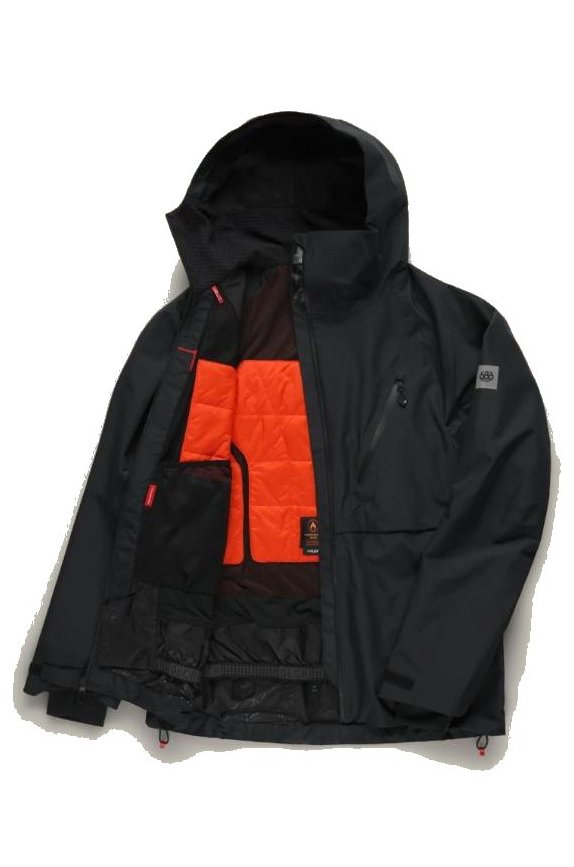
686 has spent three decades as the engineering-minded outsider of snowboard outerwear, and the Hydra Thermagraph is its argument for insulated jackets done properly. In the brand's line it sits as the flagship insulated piece below the GLCR technical-shell family, built for the rider who wants serious weather protection and built-in warmth in one purchase. Open the front zip and the concept is literally visible: panels of bright orange fill stitched across the core, thinning out toward the arms.
That is the Thermagraph system, and the logic is simple. Your torso loses heat fastest and needs insulation most; your arms need freedom more than fill. So 686 maps 140g of infiLOFT, an 85 percent recycled synthetic, across the chest and back, and tapers it elsewhere, per the brand's spec sheet. The shell is 686's 2-layer infiDRY fabric rated 20,000mm waterproof and 15,000g breathable, with a PFAS-free finish and fully taped seams. A honeycomb fleece lining, fleece collar panels, and welded adjustable cuffs finish the warmth story, and the details keep going: a phone pocket positioned over a warm zone to protect battery life, perforated "Vader Vents" in the collar so you can breathe into the jacket on a frigid chair without fogging layers, and a five-point connection to 686 pants.
Key Specs
| Spec | 686 Hydra Thermagraph Jacket |
|---|---|
| Shell | 2L infiDRY, 100% recycled polyester face, PFAS-free DWR |
| Rating | 20,000mm waterproof / 15,000g breathable |
| Seams | Fully taped (Bemis) |
| Insulation | Thermagraph body mapping, 140g infiLOFT, 85% recycled |
| Lining | Honeycomb fleece with comfort fleece collar panels |
| Hood | Fixed, adjustable, helmet-compatible, with Hood Link roll-and-clip |
| Vents | Air-Flo mesh pit zips plus Vader Vent collar perforations |
| Powder skirt | Attached, with Lycra stretch panel and 5-point Pant Jacket Connect |
| Pockets | 8 total: 5 external incl. phone-heater and pass pockets, 3 internal |
| Fit / sizes | Regular articulated fit, hip length; S-XXL |
| Warranty | 1 year (brand site) |
| Price | ~$300 (brand site and retailer listings) |
Sizing & Fit
686 rates the fit a 5 on its 1-to-8 slim-to-loose scale: a standard contemporary snowboard cut, articulated at the elbows and shoulders, with layering room that matters less here because the warmth is built in. Most riders should order their regular size; with 140g in the core, the days you need more than a base layer and a light fleece underneath are rare. Sizing runs S through XXL. Inner Lycra wrist gaiters with thumbholes seal the sleeve-to-glove gap and pair well with any of our glove picks, and the welded cuffs adjust flat so they clear glove gauntlets. One omission to note: the powder skirt is attached rather than removable, so this jacket stays in full storm trim year-round.
Where It Shines
- Warmth per dollar: retailer listings place its 140g body-mapped fill in their warmest insulated tier, at a price below most 100g jackets
- A 20K/15K shell with fully taped seams, double the fabric rating of similarly priced insulated competitors
- Cold-weather details that published reviews call out: the phone-heater pocket, fleece collar, and collar breath vents
- Mobility for an insulated jacket, because the fill tapers away from the shoulders and arms
- Recycled face fabric and insulation with a PFAS-free finish
Tradeoffs to Know
- Fixed warmth: on days above freezing the vents help, but you cannot take the 140g out
- The 1-year warranty is the shortest in this guide, against Burton's lifetime and Jones's registered 3 years
- Attached powder skirt adds a little bulk on park and spring days
- The 2L build with full lining packs bigger than a shell, so it is a poor candidate for a backcountry pack
Who It's For
Riders who are cold on every chairlift no matter what the thermometer claims, people riding genuinely cold regions (the Rockies in January, the Midwest, interior Canada), and anyone who wants one warm purchase instead of a shell-plus-midlayer system. At around $300 it is also the sweet spot for strong value hunters who find the Covert 2.0's 10K shell too light.
Who Should Skip It
Riders in mild or spring-heavy climates will cook; the Volcom L Gore-Tex shell adapts where this cannot. Anyone touring or hiking regularly should take the breathable, stretchy Jones MTN Surf instead. And if the budget stops at $250, the Burton Covert 2.0 keeps most of the resort feature set.
How It Compares
The Burton Covert 2.0 runs about $30 cheaper with roughly half the insulation (80g vs 140g) and half the fabric rating (10K vs 20K). The Burton counters with a lifetime warranty, a removable skirt, and a wider size run; the 686 is simply more jacket for cold, stormy winters.
The Volcom L Gore-Tex trades the built-in warmth for a Gore-Tex membrane and all-season layering flexibility at about $110 more. Pick the Volcom if your season spans December ice to April corn; pick the 686 if your season is reliably cold and you want warmth without managing layers.
The Jones MTN Surf Recycled is the opposite philosophy: no fill, 20K/20K breathability, and four-way stretch for riders who earn turns. The 686 wins every stationary moment, lift rides included; the Jones wins the moment you start moving uphill.
See the full lineup in our guide: The Best Snowboard Jackets of 2026-27.
Frequently Asked Questions
How warm is the 686 Hydra Thermagraph?
It is the warmest jacket in our snowboard jacket guide. The body-mapped 140g of infiLOFT concentrates fill through the core, and retailers rate it in their warmest insulated tier. Most riders will be comfortable on typical midwinter lift days with only a base layer underneath.
What is Thermagraph body mapping?
686 places heavier insulation across the chest, back, and core, and lighter fill through the arms and sides. You keep warmth where blood flow matters and lose less mobility in the sleeves, which is why the jacket feels less puffy than its warmth rating suggests.
Is the Hydra Thermagraph too warm for spring riding?
On sunny days above freezing, yes, it can be. The pit zips and collar vents buy some range, but a fixed 140g of core insulation has a ceiling. Riders who regularly ride warm temperatures are better served by a shell like the Volcom L or Jones MTN Surf.