Head Edge 110 HV GW BOA Review
Affiliate disclosure: As an Amazon Associate we earn from qualifying purchases. Some links below are affiliate links, see our full disclosure. This breakdown is based on our independent research of current-season specifications and aggregated expert and user feedback.
The quick verdict: The boot for wide feet and high insteps that refuse to compromise on performance. A 110 flex with a BOA dial wrapping the forefoot evenly, the easiest entry shell in its class, and a warm graphene-infused liner. Narrow feet need not apply; that is what the fit designation means. ~$650
Overview
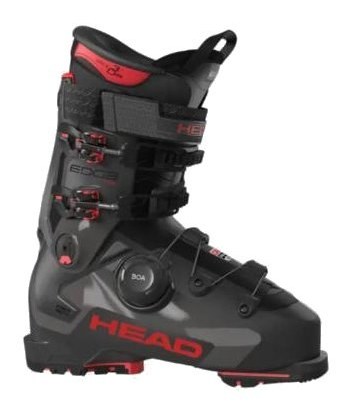
Head rebuilt its all-mountain boot range around the Edge family, and the Edge 110 HV GW BOA sits at the point where most progressing skiers' needs actually intersect: advanced-rated flex, accommodating fit, and the fit technology that has been reshaping the category. Head itself calls it "the most accommodating HEAD boot" aimed at advanced skiers who want precision with less fatigue, and positions it below the race-bred Raptor line and alongside the lighter Kore touring boots.
The headline feature is the BOA Fit System. Instead of two lower buckles pressing the shell down at two points, a dial tensions a stainless cable that wraps the entire forefoot zone, and clicks adjust it in millimeter increments with gloves on. Around it, Head builds a polyurethane shell with Super Light cuff material, the EZ-SKI high-top overlap design that opens wide for entry and puts the shin in direct contact with the lower boot, and a Perfect Fit 3D EVO liner with PrimaLoft insulation and a graphene infusion that spreads heat toward cold toes, per the brand and retailer spec sheets. Soles are GripWalk, and the brand site's early owner reviews single out exactly the buyer this boot targets: wide forefoot, high instep, years of painful boots, finally comfortable.
Key Specs
| Spec | Head Edge 110 HV GW BOA |
|---|---|
| Flex | 110 (brand lists a 110/100 setting range) |
| Last width | 102mm, High Volume fit with extra instep height |
| Shell / cuff | Polyurethane with Form Fit, Super Light cuff, EZ-SKI high-top entry |
| Closure | BOA Fit System on the lower boot, cuff buckle and power strap |
| Liner | Perfect Fit 3D EVO, PrimaLoft insulated, graphene heat-spreading |
| Soles | GripWalk (GW) |
| Stance | Allride balance, all-mountain terrain rating |
| Sizes | 25.5-30.5 mondo (brand site) |
| Skill level | Advanced (brand rating); strong intermediates fit the flex |
| Warranty | Standard HEAD manufacturer coverage; BOA separately warranties its dials and laces for life |
| Price | ~$650 (brand site); buckle version runs ~$50 less |
Sizing & Fit
HV is the operative spec. The 102mm last plus added instep height targets the feet that standard 98-100mm performance boots punish: wide forefeet, tall arches, thick ankles. Within that audience, buy your measured mondo size and expect a performance-snug fit that the BOA fine-tunes through the day; our boot sizing guide covers the shell-fit check worth doing before any purchase. The first owner review on Head's own site comes from a skier with exactly this foot shape who called the fit perfect after years of problems, which matches the design brief. Two cautions from the spec sheet: narrow and low-volume feet will rattle around no matter how far the dial turns, and the 110 flex sits on the accessible side of the number, which suits advancing skiers better than ex-racers.
Where It Shines
- Even forefoot pressure: the BOA wrap eliminates the two-point buckle clamp, the core comfort gain published BOA-boot reviews keep confirming
- Entry and exit: the EZ high-top shell opens wider than conventional overlaps, rare in a boot this stiff
- Warmth: PrimaLoft fill plus the graphene layer in the Perfect Fit 3D EVO liner, per the brand spec
- On-the-fly adjustment: micro-clicks with gloves on, from the lift chair
- GripWalk soles standard, so walking to the lot stops being a hazard sport
Tradeoffs to Know
- High volume is a fit, not a feature: narrow feet belong in the Speedmachine 3 100 instead
- The 110 rating runs friendly; experts who bend boots hard will top it out and should look at a 130 like the Cabrio MV
- BOA adds roughly $50 over the buckle Edge 110, and a broken dial mid-day is harder to improvise around than a bent buckle, even with BOA's lifetime dial warranty
- No weight advantage: this is a full-build alpine boot, not a crossover, and Head does not publish a weight for it
Who It's For
Advancing intermediate to advanced skiers with wide feet or high insteps who have been renting pain or buying boots a size up to cope. It is also the right call for anyone who wants modern fit tech without a custom-fit price: the dial plus the heat-moldable liner covers most of what a first bootfitting visit would chase. Cold-footed skiers get a measurable bonus from the liner.
Who Should Skip It
Average-to-narrow feet get a more precise wrap from the Nordica Speedmachine 3 100 at $150 less. True beginners do not need this much boot; the Evo 70 or BFC 80 serve the learning years better. And experts chasing maximum support should step up to the Cabrio MV 130.
How It Compares
The Nordica Speedmachine 3 100 is the pick for average-width feet: a 100mm last, softer 100 flex, and a ~$500 price. Choose the Nordica for a closer stock fit on a normal foot; choose the Edge when volume is the problem the Nordica can't solve.
The K2 BFC 80 shares the wide-fit mission at a comfort-first 80 flex and a lower price. It is the better buy for relaxed cruisers; the Edge carries far more support for skiers pushing into advanced terrain.
The Rossignol Evo 70 HV+ is the budget wide-fit entry point at ~$250. First-season skiers start there; the Edge is the boot they graduate into three or four seasons later.
The Dalbello Cabrio MV 130 is the expert alternative: a three-piece 130 flex with its own easy-entry trick. Strong, heavy, or aggressive skiers who found 110 flexes soft should make that jump.
See the full lineup in our guide: The Best Ski Boots of 2026-27.
Frequently Asked Questions
Will the Edge 110 HV BOA fit narrow feet?
Not well. HV means high volume: a 102mm last with extra height through the instep, designed for wider and taller feet. The BOA dial can snug the wrap down somewhat, but a genuinely narrow foot will swim; a 98-100mm boot like the Nordica Speedmachine 3 100 is the better starting point.
Is the BOA system durable, and what if it breaks?
BOA has run on snowboard boots and cycling shoes for decades and backs its dials and laces with a lifetime warranty of its own, with replacement kits widely available. The practical tradeoff is that a damaged dial on the hill usually ends the day, where a bent buckle can often be muscled closed.
What is the difference between the BOA and buckle versions of the Edge 110?
The shell, liner, flex, and HV fit are the same; the BOA version replaces the two lower buckles with a dial-and-cable wrap over the forefoot and costs about $50 more. Both keep a traditional buckle and power strap on the cuff. Choose BOA for even forefoot pressure and glove-friendly adjustment, buckles for simplicity and a lower price.