Affiliate disclosure: As an Amazon Associate we earn from qualifying purchases. Some links below are affiliate links, see our full disclosure.
Getting the right ski boot fit is arguably the single most important equipment decision you'll make as a skier. No matter how high-end your skis are or how expensive your jacket is, ill-fitting boots will ruin your day on the mountain, cause pain, and make you a worse skier. A properly sized boot keeps your feet warm, transfers power efficiently, and lets you focus on the snow instead of your feet. This comprehensive guide walks you through everything you need to know about how to size ski boots correctly.
Mondo Size Quick Reference Chart
Common sizing for men and women
Men's Sizes
Mondo (cm)
Boot Size
US Men's
Shoe Size
EU Size
European
26.0
Standard
7.5-8
Common
40-41
Standard
26.5
Standard
8-8.5
Popular
41-42
Standard
27.0
Standard
9
Common
42-43
Standard
27.5
Standard
9.5
Popular
43-44
Standard
Women's Sizes
Mondo (cm)
Boot Size
US Women's
Shoe Size
EU Size
European
23.5
Small
5
Common
36
Standard
24.5
Medium
6-6.5
Popular
37-38
Standard
25.5
Medium
8
Common
39-40
Standard
26.0
Large
8.5-9
Popular
40-41
Standard
27.0
Large
10
Common
42-43
Standard
Why Boot Fit Matters More Than You Think
Your ski boots are the interface between your body and your skis. Unlike shoes, where a half-size difference might go unnoticed, ski boots demand precision. A boot that's too large will cause your foot to slide, leading to blisters, cold toes, and poor control. A boot that's too tight will cut off circulation, cause foot pain, and actually make you a worse skier because you're tensing up trying to relieve the pressure.
Boot fit affects:
Ankle and calf comfort during long days on the mountain
Toe circulation and whether your feet get cold
Power transfer to your skis and edge control
Your ability to feel the snow and respond to terrain
Injury prevention and alignment
Spending time to get the sizing right now will save you pain, money, and frustration later. Let's walk through the process together.
Understanding Mondo Point Sizing: The Key to Proper Boot Fit
Before you can size ski boots correctly, you need to understand Mondo Point sizing. This is the international standard used by ski boot manufacturers, and it's completely different from regular shoe sizes. Once you understand it, everything becomes much clearer.
What is Mondo Point (MP) Sizing?
Mondo Point is a measurement system that indicates the length of a ski boot's shell in centimeters. One Mondo Point equals one centimeter. So a boot labeled "27.5 MP" has an internal shell length of 27.5 centimeters. This system is consistent across all major manufacturers, which means a 27.5 MP Salomon boot will have the same length as a 27.5 MP Nordica boot.
This standardization is why Mondo sizing is superior to traditional shoe sizes for ski boots. A US men's size 8 doesn't mean the same thing across different brands, but a 26.5 MP does.
Mondo vs. Traditional Shoe Sizes
The chart below shows how Mondo Point sizing compares to US, European, and UK shoe sizes:
Mondo Point (MP)
US Men's
US Women's
EU
UK
23.5
,
5
36
3
24.0
,
5.5-6
36.5
3.5
24.5
,
6-6.5
37-38
4-4.5
25.0
6.5
7-7.5
38-39
5-5.5
25.5
7
8
39-40
6
26.0
7.5-8
8.5-9
40-41
6.5-7
26.5
8-8.5
9.5
41-42
7-7.5
27.0
9
10
42-43
8
27.5
9.5
10.5-11
43-44
8.5-9
28.0
10-10.5
11-11.5
44-45
9-9.5
28.5
11
12-12.5
45-46
10
29.0
11.5-12
13
46-47
10.5-11
Notice the variation in traditional shoe sizes? This is why you can't just rely on your normal shoe size. Always use Mondo Point sizing for ski boots.
How to Measure Your Feet at Home: Step-by-Step
You don't need to visit a professional bootfitter to find your approximate Mondo size. You can measure at home with just a few simple tools. Here's how.
Tools You'll Need
A ruler or measuring tape (metric is easiest)
A piece of white paper
A pen or pencil
A flat surface like a hardwood floor (not carpet)
Thin socks (like the ones you'd wear under ski boots)
Measuring Foot Length
Step 1: Put on a pair of thin socks, the same thickness as merino wool ski socks you'll wear on the mountain.
Step 2: Place your paper on a hard, flat floor against a wall or baseboard. Remove your shoe and place your heel firmly against the wall, with your foot on the paper.
Step 3: Make a mark on the paper at your longest toe (usually the big toe, but not always). Keep your foot flat and don't press or stretch your foot.
Step 4: Using your ruler, measure the distance from the wall to the mark in centimeters. This is your foot length.
Step 5: Repeat the process with your other foot. Most people have slightly different sized feet, so always go with the larger measurement.
Measuring Foot Width
Width matters more than many skiers realize. Boots come in different widths, and fitting the right width prevents heel lift and pressure points.
Step 1: While your foot is still on the paper, measure the widest part of your forefoot (usually across the ball of your foot).
Step 2: Mark this width on the paper and measure in centimeters.
Step 3: Compare your measurements: For every 1cm of foot width, there's typically a 3mm difference in boot width.
Your Mondo Size
Your Mondo Point size is approximately 1.5 cm larger than your foot length measurement. This extra space accounts for the thickness of the liner and allows for proper sock thickness. So if your foot measures 25.5 cm, you'd be looking at approximately a 27.0 MP boot. However, this is just a starting point, keep reading to understand how flex rating and boot last width affect your final choice.
Understanding Ski Boot Flex Ratings
Flex rating is a number that indicates how stiff or soft a boot is. It directly affects how easy or hard it is to bend the boot forward. The flex rating scale typically ranges from 60 (very soft) to 130+ (very stiff).
The Flex Rating Scale
60-80 Flex: Very soft, forgiving boots designed for beginners, children, and lightweight skiers
90-110 Flex: Moderate flex, appropriate for intermediate skiers and lighter all-mountain skiing
120-140 Flex: Stiff boots for advanced and expert skiers, racers, and aggressive all-mountain skiing
150+ Flex: Super stiff, specialized boots for extreme skiing and racing
Choosing the Right Flex for Your Level
Beginners (Flex 60-80): If you're just starting out, a softer flex boot is your friend. Softer boots are more forgiving, require less energy to turn, and are more comfortable for extended periods. The downside? They don't provide as much power transfer or stability at higher speeds. But that's fine. You're learning control and technique first.
Intermediate Skiers (Flex 90-110): Once you're confident on blue runs and can control your speed, you're ready for a bit more rigidity. A flex in the 90-110 range gives you better power transfer while still being forgiving enough that you won't be fighting the boot.
Advanced/Expert Skiers (Flex 120+): If you're bombing down blacks, carving hard, and skiing fast, you need a stiffer boot that responds immediately to your inputs. The tradeoff is that these boots are less forgiving and require excellent technique to ski comfortably.
Pro Tip: Many skiers choose a flex that's one level softer than they think they need. You can always progress into a stiffer boot later, and skiing with a boot that's too stiff is far more frustrating than one that's too soft.
Boot Width and Last Width Explained
Last width is the width of the boot's internal shell and is measured in millimeters. This is different from your foot width and is crucial for proper fit.
Standard Boot Widths
Narrow Last (95-98mm): Designed for skiers with narrow feet, these boots provide a snug fit that minimizes heel lift. Most boots in this range are race or high-performance models.
Medium Last (100-102mm): The standard width offered by most manufacturers. Appropriate for average-width feet. Most popular selection.
Wide Last (104mm+): Designed for skiers with wider feet or high insteps. Boots like the Rossignol Evo 70 HV+ are built on this last.
How to Know Which Width You Need
A boot that's too narrow will be painful, cut off circulation, and cause blisters. A boot that's too wide will allow your foot to slide around, reducing control and causing heel lift. Here's a simple test: When you stand in the boot with the liner and buckles loosely fastened, you should be able to fit one finger (not your thumb) between your heel and the boot back. Your foot should feel snug across the widest part without being compressed.
If you have particularly wide feet or a high instep, don't force yourself into a standard width. Brands like Dalbello and some Salomon models offer wider options. Proper width is more important than being in the "popular" choice.
The Shell Fit Test: Do It Yourself
Before you commit to a boot, you should do a shell fit test. This tells you whether the shell (the plastic part) is the right size, separate from the liner.
How to Perform a Shell Fit Test
Step 1: Remove the liner from the boot completely (they usually slide out).
Step 2: Put on thin socks and stand in just the plastic shell.
Step 3: Press your heel all the way to the back of the shell and look at the space in front of your toes. There should be about 1-1.5 cm (roughly the width of your thumb) of space. This is your "bump room", space for your foot to move slightly when you're carving and for edging.
Step 4: Check the width at the ball of your foot. It should be snug but not painful. You should not be able to wiggle your foot side to side.
Step 5: Check your heel. It should be tight enough that you can't lift your heel, but not so tight that it cuts off circulation.
Important: If there's more than 1.5 cm of space in front of your toes, the boot is too large. If there's less than 1 cm or your toes are touching the end, the boot is too small. A boot that's too small will cause pain and won't perform well.
Liner Break-In: What to Expect in the First Few Days
Even with perfect sizing, new boots require a break-in period. The liner needs to compress and mold to your feet, and your feet need to adjust to the new fit.
Week One: The Learning Curve
Your first few days in new boots will feel different, and that's normal. The liner is stiff and hasn't compressed yet. Your feet will feel supported but snug. Here's what to expect:
First sensation: Some pressure on your feet, particularly around the ankle and heel
Possible blisters on hot spots: This is usually temporary and resolves as the liner breaks in
Some foot numbness: This typically improves once the liner compresses slightly
Slight stiffness: New boots feel "new" on your feet until the liner softens
Week Two to Four: The Molding Phase
As you ski more, the liner will compress and mold to your foot shape. This is when boots start to feel truly comfortable. Most people notice a significant improvement in comfort after 5-10 days of skiing.
Make the Break-In Easier
Wear proper ski socks: Merino wool blends are best, never wear cotton
Put on boot liners 30 minutes before you ski to let them warm and start molding
Use thick bandages or moleskin on hot spots to prevent blisters
Don't buckle your boots too tightly at first, snug is better than death-grip
Do shorter ski days initially, then work up to full days
Keep your feet warm and dry with proper socks and gaiters
When to See a Professional Bootfitter (And Why It's Worth It)
Self-sizing gets you in the ballpark, but a professional bootfitter takes it to the next level. Here's when you should consider seeing one.
Signs You Should Visit a Bootfitter
You've had recurring foot pain from boots in the past
You have unusually shaped feet (very wide, very narrow, high arch, etc.)
You're struggling with heel lift or blisters despite proper sizing
You're investing in an expensive boot and want to maximize the fit
You're an intermediate or advanced skier and want to fine-tune your performance
You have existing foot issues (plantar fasciitis, bunions, heel spurs)
What a Professional Bootfitter Does
A good bootfitter will:
Use a Brannock device to precisely measure both feet
Ask detailed questions about your skiing style, experience, and any foot issues
Have you try multiple boots in different widths and flex ratings
Examine your feet, ankles, and lower legs for alignment issues
Perform shell and liner fit tests with professional-grade equipment
Perform heat molding of the liner for a custom fit
Adjust the boot shell if needed (grinding, padding, etc.)
Discuss and potentially recommend custom insoles or footbeds
Provide aftercare advice and follow-up adjustments
Investment Perspective: A professional fitting usually costs $100-200, but it can save you from buying the wrong boot (which costs $300-800+) or dealing with foot pain all season. If you're spending money on new boots, spend an extra $150 to get them fitted right.
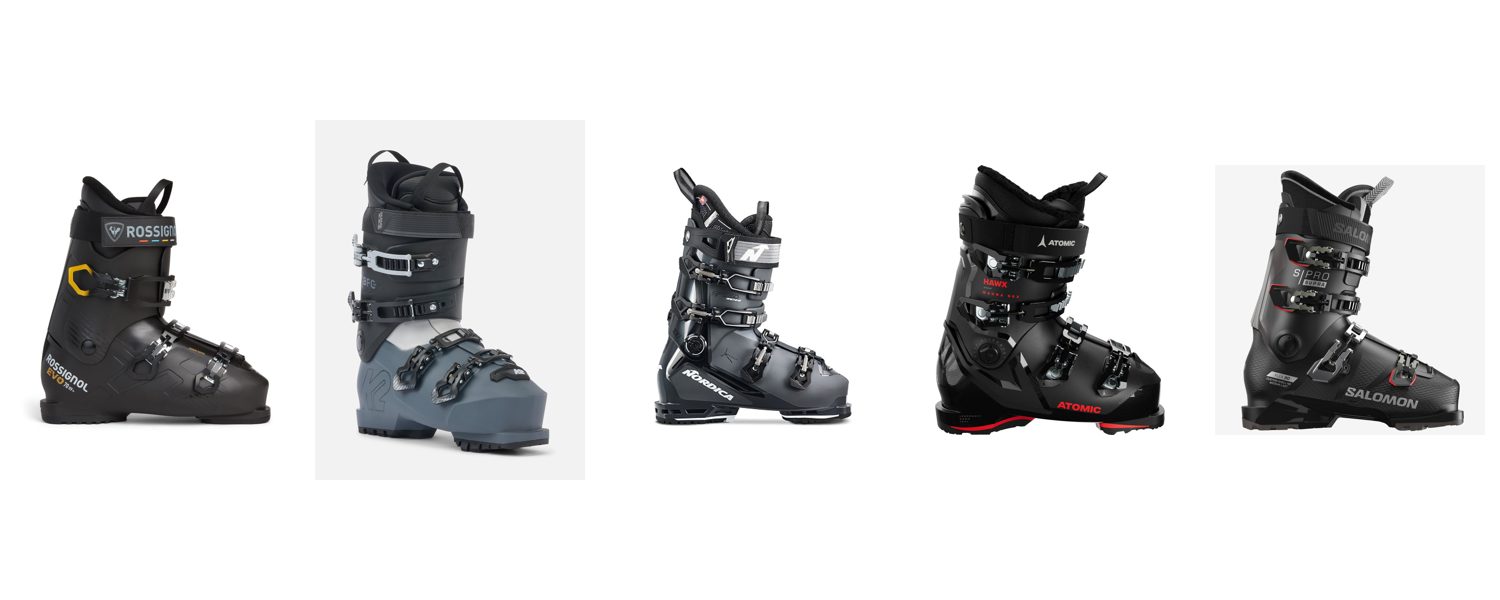
Top 5 Recommended Beginner-Friendly Ski Boots for 2026/27
Based on current market offerings, here are five excellent entry-level boots that are comfortable, forgiving, and won't break the bank.
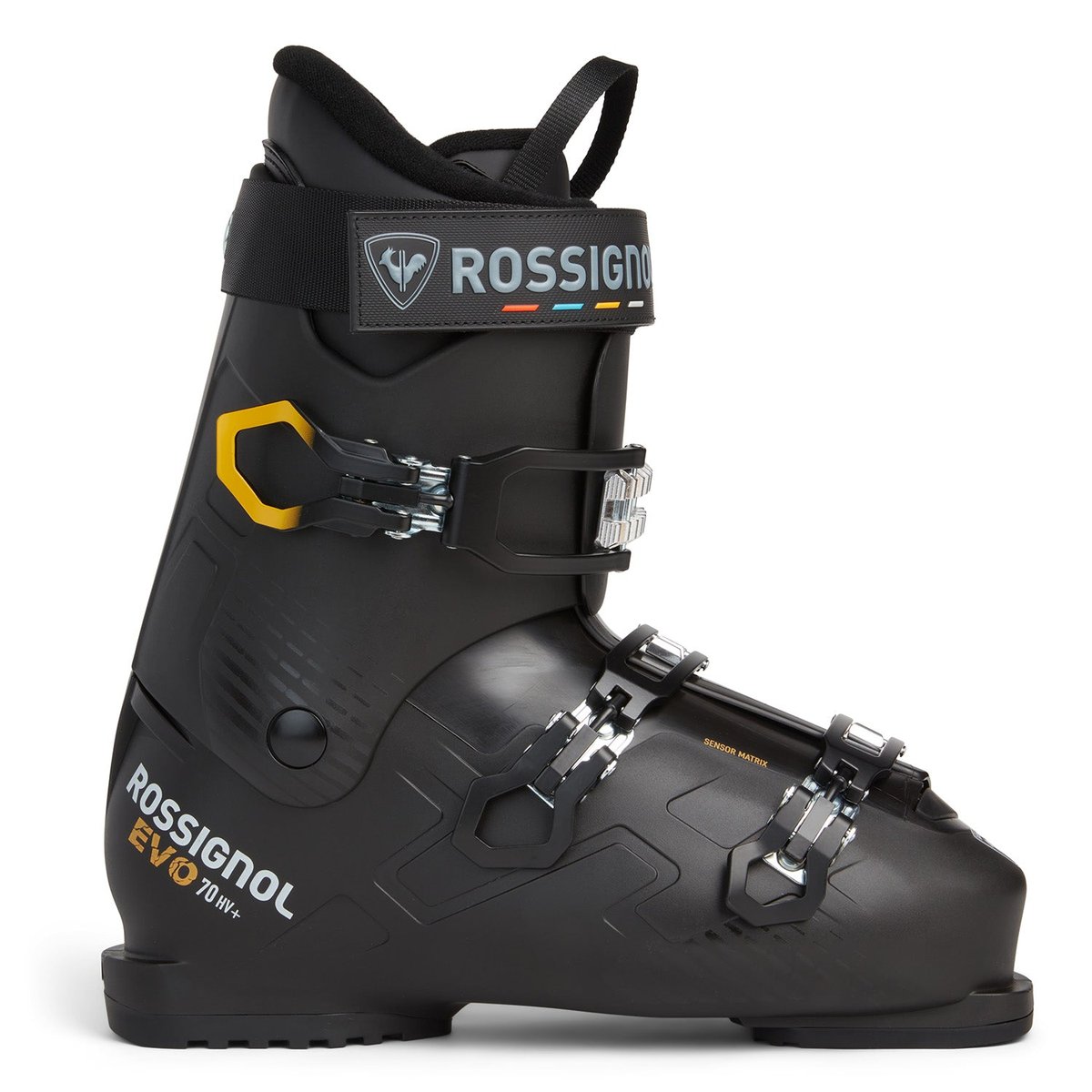
Flex: 70 / 50 Last Width: 100-102mm (wide) Best For: True beginners seeking comfort and forgiveness Key Features: Soft flex, wide last for comfort, excellent padding, easy to put on and take off
Rossignol's entry-level offerings are designed specifically for skiers just starting out. The Evo 70 and Kelia 50 feature Rossignol's softest flex options, making them extremely forgiving. The wide last means they work well for average to wide feet. These are boots that prioritize comfort on day one, making them perfect for beginners who are still learning and don't need maximum performance. You'll appreciate the generous padding and easy buckle systems.
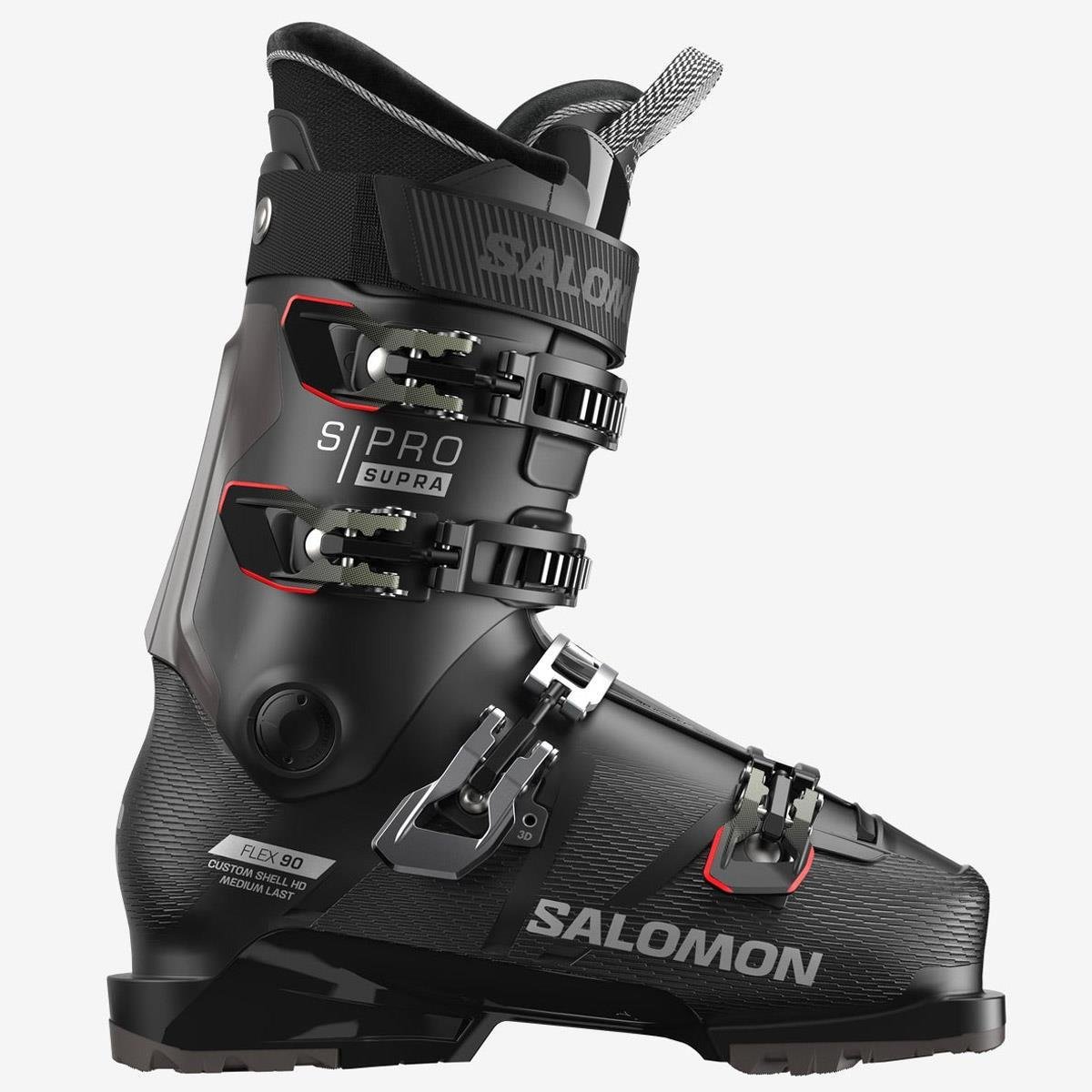
Flex: 90 / 80 Last Width: 100mm Best For: Early intermediate skiers ready to progress Key Features: Customizable fit, responsive flex, excellent power transfer for the price point
Salomon's S/Pro Supra line offers a perfect sweet spot for skiers who've had a season or two and are ready for slightly more performance. The flex is higher than true beginner boots, so you get better power transfer and edge control, but it's still approachable for learning. Salomon's customizable fit system (adjustable cuff) lets you dial in your comfort level. Great all-around boot that grows with you.
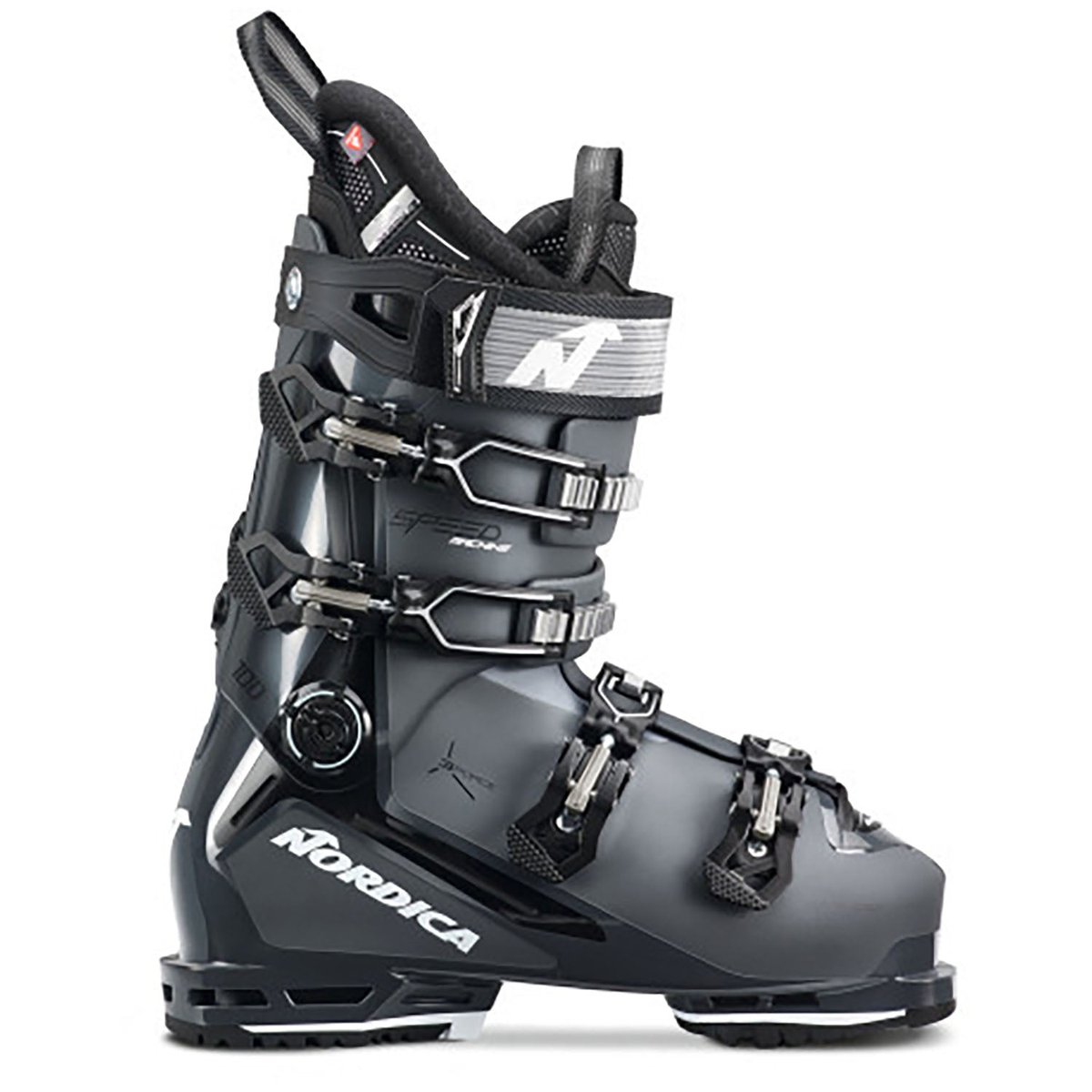
Flex: 100 / 85 Last Width: 100mm (medium, the narrower side of this list) Best For: Athletic beginners and progressing skiers with narrow to average feet Key Features: Precise 100mm fit, cork-infused heat-moldable liner, quality construction
The Speedmachine 3 is one of the most recommended all-mountain boot families going, and the 100 flex is the most approachable men's version (the women's line starts at the 85 W). If you have narrow to average feet, this is one of your best options: the 100mm last is noticeably snugger than the wide-fit boots on this list. Note that a 100 flex rewards athletic skiers who plan to ski a lot; lighter or more casual beginners should consider Nordica's softer, wider Sportmachine 3 line instead.
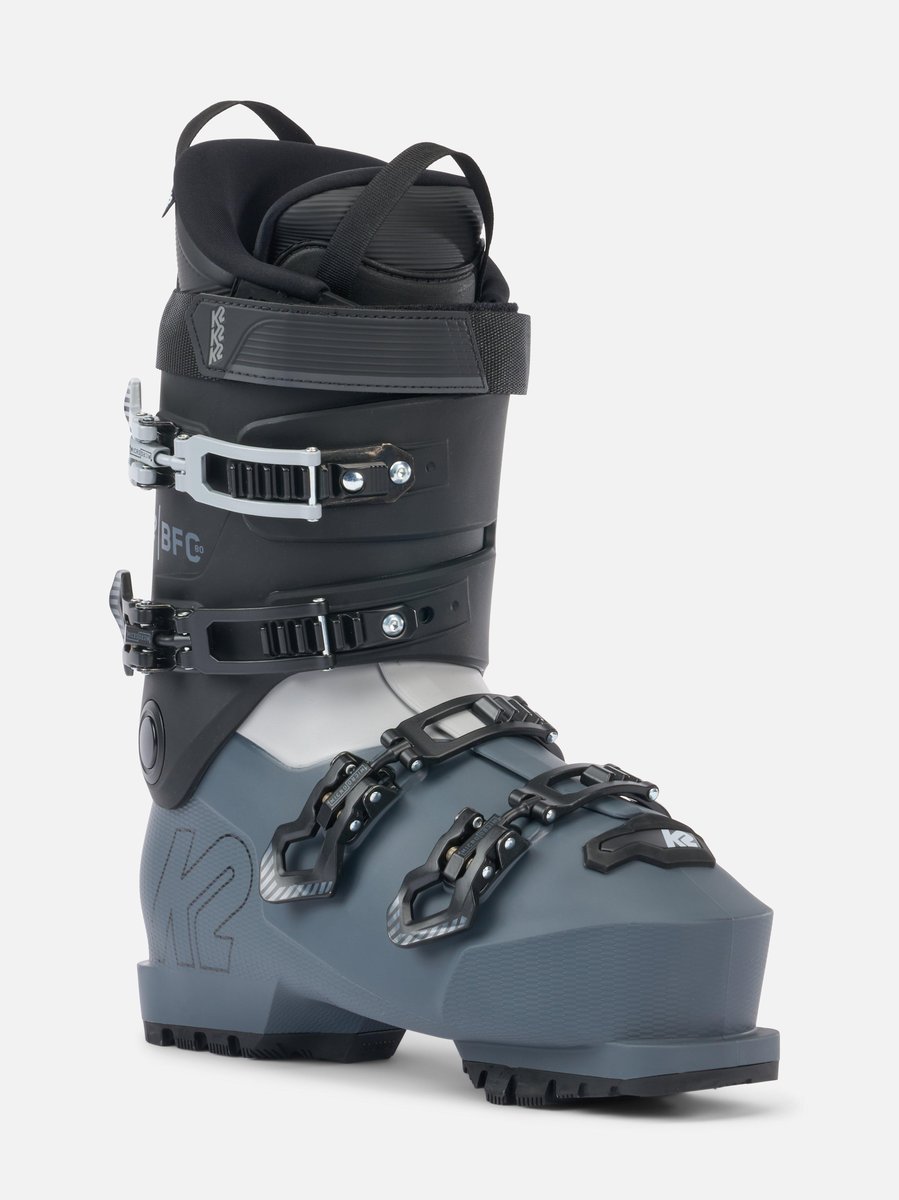
Flex: 80 / 75 Last Width: 103mm (wide) Best For: Skiers who prioritize ease of use and all-day comfort Key Features: Hands Free Entry design, heat-moldable shell and cuff, GripWalk soles included, plush CushFit liner
BFC stands for Built For Comfort, and this is the benchmark easy-entry boot. A softer panel over the instep lets you step in and out without wrestling the shell open by hand, which makes cold mornings and lodge breaks dramatically less painful. The 103mm last is wide and roomy, the liner is plush, and both shell and cuff can be heat-molded for a semi-custom fit, rare at this price. The honest tradeoff: all that cushioning costs some precision, so if you have carving ambitions, step up to the Salomon S/Pro Supra 90 or Nordica Speedmachine 3 100 instead.
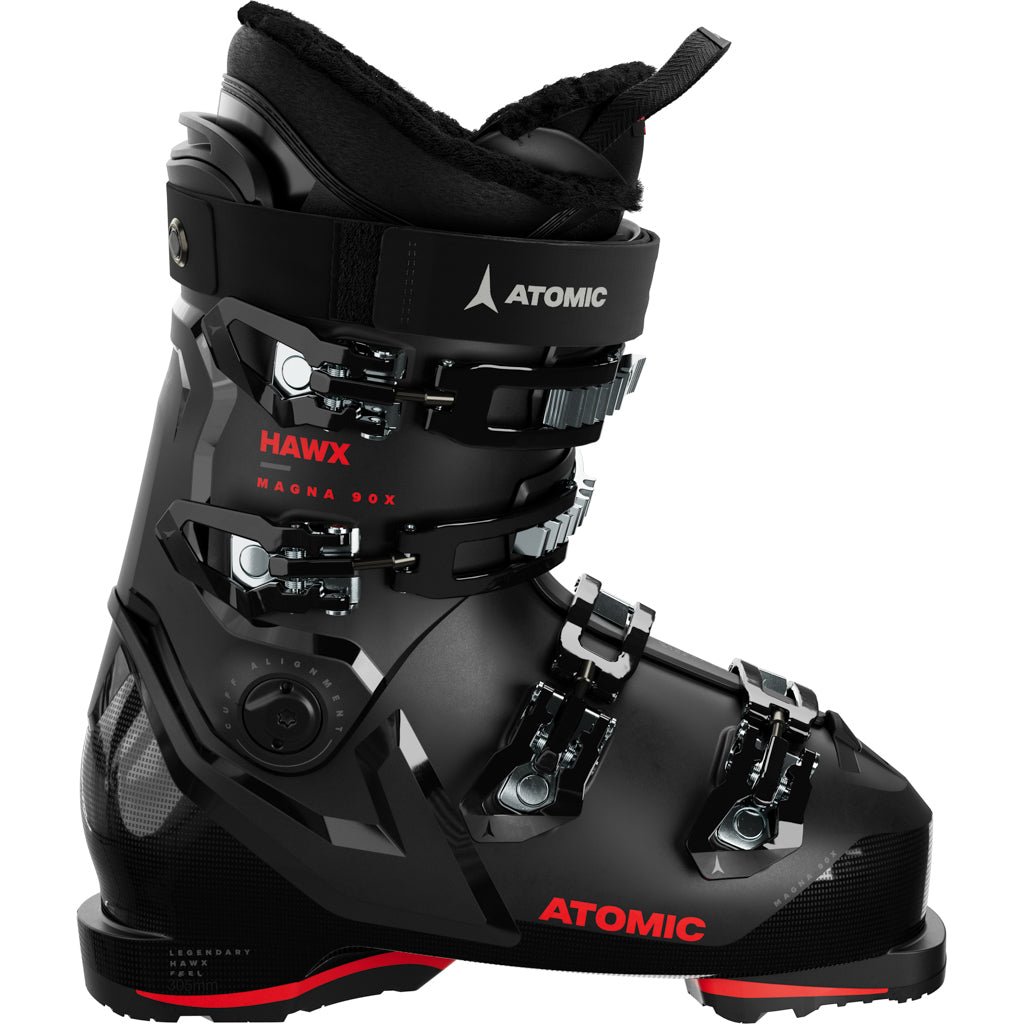
Flex: 90 Last Width: 102mm (wide) Best For: Progressive beginners and light intermediates with wider feet Key Features: Memory Fit heat-moldable shell and liner, GripWalk soles standard, comfortable out of the box
Atomic's Hawx Magna line is built for wider feet, and the 90X hits the sweet spot: soft enough for beginners to be comfortable but responsive enough for skiers who are progressing quickly. Its standout feature is Atomic's Memory Fit system, which lets a shop oven-mold the shell, cuff, and liner together for a semi-custom fit, rare at this price. GripWalk soles come standard. Average or narrow feet should try the Hawx Prime 90 instead.
Don't make these mistakes when sizing your ski boots:
Mistake #1: Going by Your Regular Shoe Size
This is the most common error. Your shoe size doesn't translate directly to Mondo Point sizing. A US men's size 10 could be anywhere from a 27.0 to 28.5 MP depending on the boot brand and your specific foot shape. Always measure in centimeters and reference Mondo sizing.
Mistake #2: Buying a Boot That's Too Large "For Growth"
Children's feet do grow, but skiing in an oversized boot is dangerous and miserable. The loss of control and power transfer outweighs any "growth room" benefit. Buy the right size now and plan on replacing boots as kids grow. Adults: never buy a boot thinking you'll "grow into it." That's not how feet work.
Mistake #3: Buckling Your Boots Too Tightly
Many skiers crank their boot buckles like they're closing a car door. This cuts off circulation and causes numbness and pain. Your boots should be snug, not tourniquet-tight. You should be able to fit one finger between the buckle and your leg. Buckle from bottom to top, gradually tightening, and stop when you feel resistance.
Mistake #4: Ignoring Heel Lift
If your heel lifts out of the boot when you flex forward, the boot is too large. This kills your control and power transfer. The shell fit test catches this, do it before you buy.
Mistake #5: Not Considering Width
A boot that's the right length but wrong width will cause blisters, pressure points, and poor control. Don't ignore width in pursuit of getting "the right size." Wide-footed skiers need wide boots, period.
Mistake #6: Trying to Ski in Pain
Some discomfort during break-in is normal, but actual pain is not. Sharp pressure points, burning sensations, or significant pain means the boot isn't right for your foot. Return it and try a different model. Suffering through an entire season is unnecessary. There's a boot out there that fits.
FAQ: Your Boot Sizing Questions Answered
Q: Do I measure in my ski socks or without?
A: Always measure in the socks you'll wear skiing. Merino wool ski socks are typically thicker than regular socks, and this affects sizing. Measure with those socks on to be accurate.
Q: Can I wear two pairs of socks to make a tight boot fit?
A: No, don't do this. Wearing multiple socks actually reduces circulation and can make your feet colder and more numb. Boots should fit snugly enough on their own. If you need extra sock thickness, the boot is too small.
Q: How long should the break-in period last?
A: Most people feel significantly improved comfort after 3-5 days of skiing in new boots. Full break-in typically takes 10-20 days of skiing. However, this assumes the boot is the right size. If you're still in significant pain after two weeks, the fit isn't right, see a bootfitter.
Q: Should I buy my boots online or in a store?
A: For your first boots or if you have fit concerns, visit a physical store or local bootfitter. Trying on multiple sizes and widths in person is invaluable. Once you know your exact size, you can shop online for deals. For replacement boots, online shopping works fine if you're confident in your sizing.
Q: Why do my feet go numb when I ski?
A: This is usually caused by boots that are too tight, cutting off circulation. Buckle looser (you should fit a finger between the buckle and leg). It can also be caused by cold feet, thicker socks and thermal inserts help. If your boots are sized correctly and you're using proper socks, see a bootfitter who can check your circulation.
Q: Can ski boots be adjusted after purchase?
A: Yes! Professional bootfitters can stretch boots (for width issues), add padding, grind the shell, and make other adjustments. If you're 90% happy with a boot but have one problem area, a bootfitter might be able to fix it for $30-100. It's worth exploring before you return a boot.
Final Thoughts: Get It Right, Enjoy Your Skiing
Proper boot fit is the foundation of a great ski day. When your boots fit correctly, you stop thinking about your feet and focus on the snow. You're warmer, more comfortable, and a better skier because your power transfers efficiently to your skis.
Take the time to measure your feet carefully, understand Mondo sizing, and don't rush the fitting process. If you can't find the right fit on your own, invest in a professional bootfitter. It's money well spent. And remember: there's a perfect boot out there for your feet. You just need to find it.