The Best Splitboards of 2026/27
Affiliate disclosure: As an Amazon Associate we earn from qualifying purchases. Some links below are affiliate links, see our full disclosure. Recommendations are based on our independent research of current-season gear, specifications, and aggregated expert and user feedback.
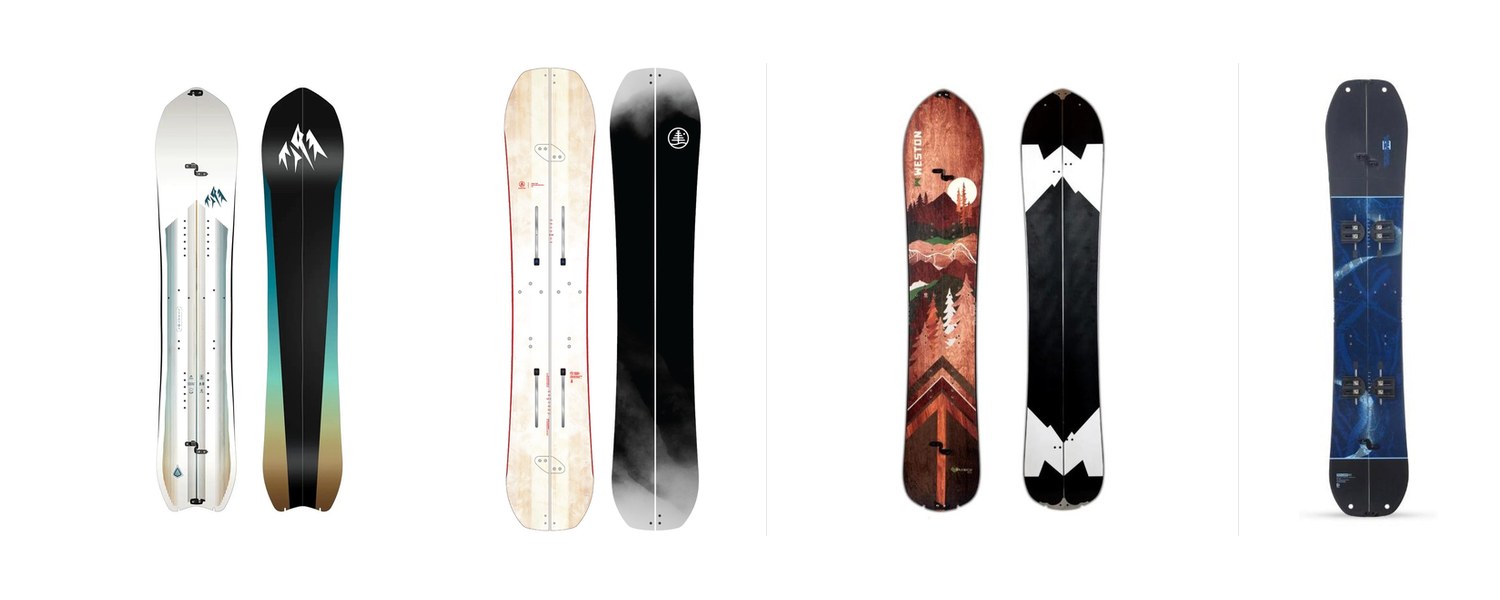
A splitboard is the price of admission to the quiet side of snowboarding: skin up under your own power, clip the halves back together, and ride terrain no lift reaches. The catch is that the board is only one line on the shopping list, and the differences between models have real consequences a long way from the trailhead. Some climb better, some descend better, and one pick here ships with skins and pucks already in the box. Based on our research across current-season specs, published reviews, and owner feedback, these four boards cover the field for 2026/27, from the do-everything benchmark to the simplest complete package.
Before you buy anything: a splitboard is backcountry equipment. You also need a beacon, shovel, probe, a partner, and avalanche education; our avalanche safety gear guide covers the kit, and an AIARE 1 course or your local equivalent covers the judgment. No board choice matters more than that.
Quick Comparison
| Pick | Best For | Profile | Skins Included | Price |
|---|---|---|---|---|
| Jones Stratos Splitboard | Overall | Directional CamRock | No | ~$1,000 |
| Burton Hometown Hero Split | Hard chargers | Directional camber | No | ~$1,000 |
| Weston Backwoods Splitboard | Long tours, trees | Tapered directional, camber + rocker nose | No | ~$990 |
| K2 Marauder Split Package | Complete package | Directional combination camber | Yes, plus pucks | ~$1,160 |
Our Picks
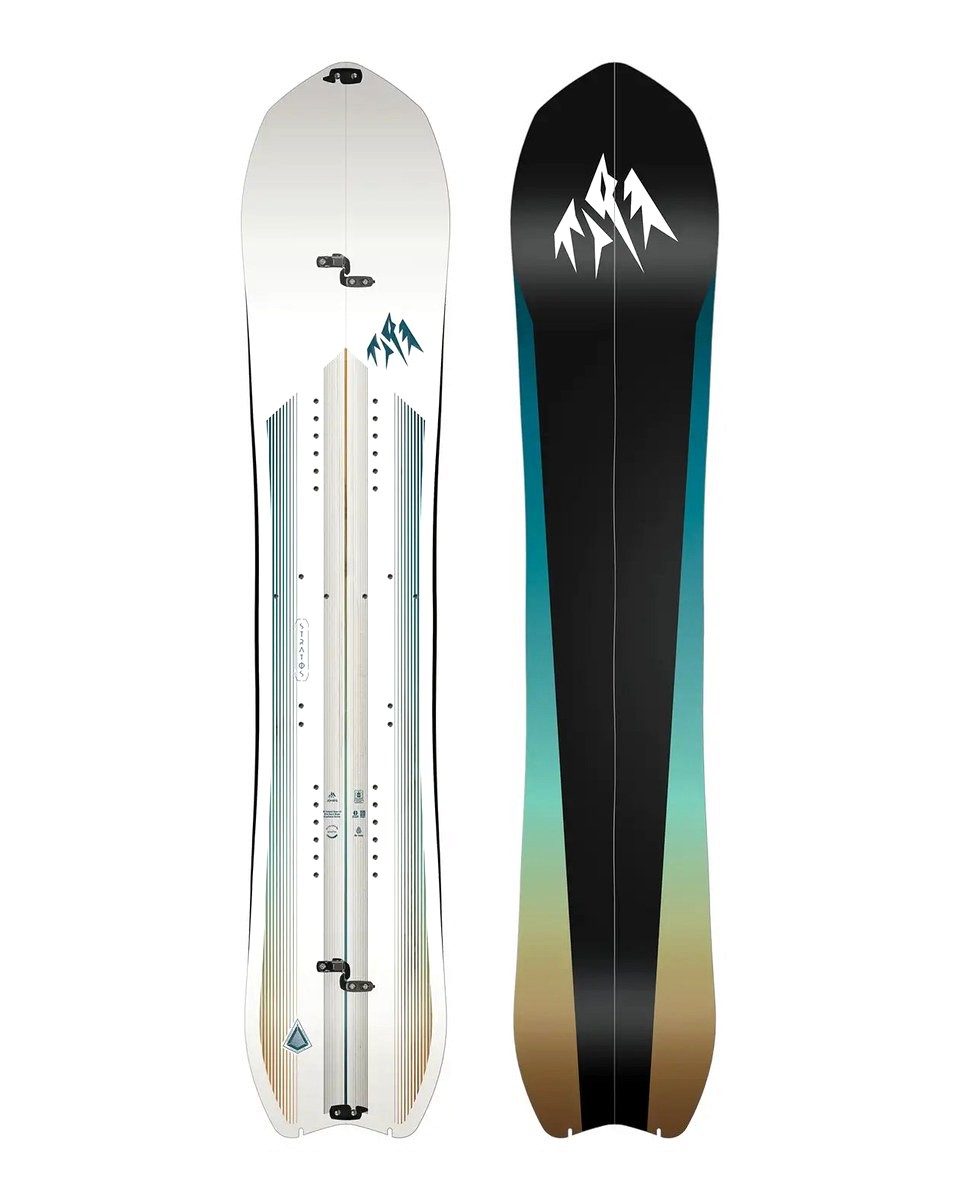
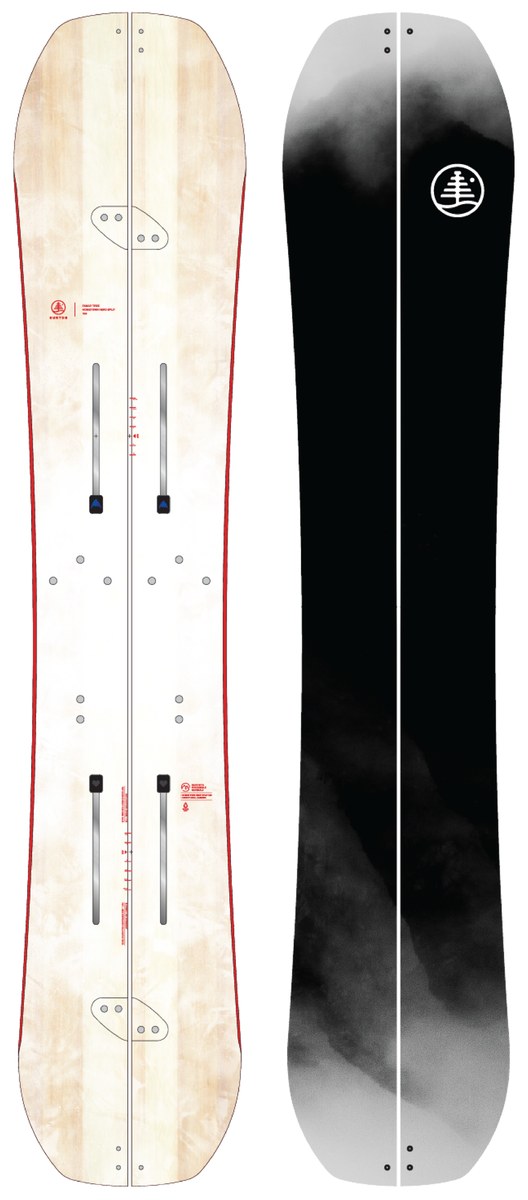
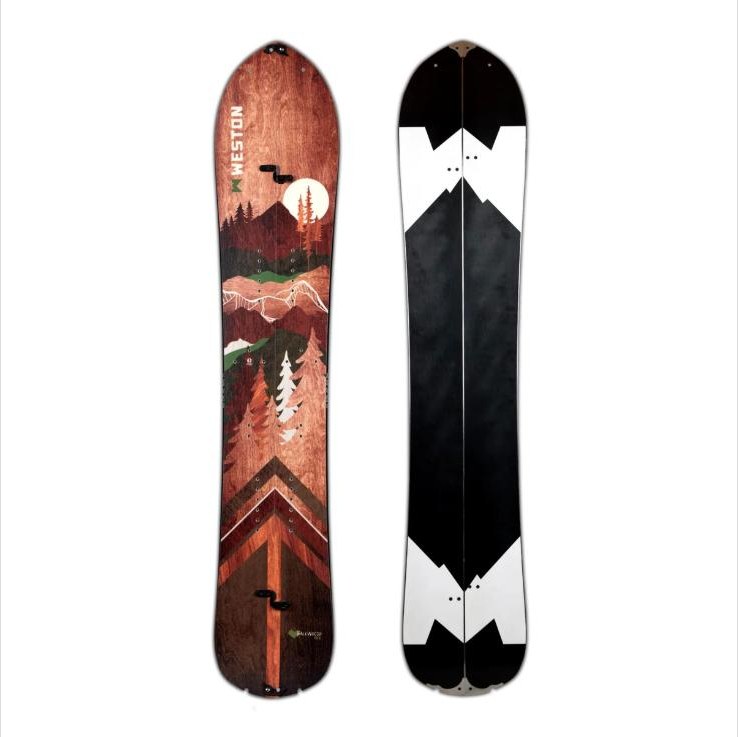
How to Choose a Splitboard
Size like a freeride board, not a park board. Most brands, Jones included, tell you to ride your usual freeride length. Going much longer adds float but costs you on kick turns; the weight ranges in each pick's size chart are the better guide than length alone. If you ride a 158 solid board in powder, start there.
Camber climbs, rocker floats. Camber underfoot drives edge grip on firm skin tracks and icy traverses, which is where sketchy moments actually happen. A rockered nose keeps you planing on the way down. Every board here blends the two; the Burton leans furthest toward camber and hard-snow bite, the Weston furthest toward taper and float.
Mind the hardware ecosystem. Most splitboards, the Weston and K2 included, use Voile-pattern pucks that accept almost any split binding. Burton's Split Channel is its own system with pucks premounted and the widest binding adjustability, but check compatibility before you buy bindings. Clips matter too: Karakoram clips on the Weston pull the halves together noticeably tighter than basic hooks.
Budget for the whole kit. A realistic first setup is the board (~$1,000), skins (~$200 unless they are included), split bindings (~$400-600), collapsible poles (~$100, see the BD Traverse), plus beacon, shovel and probe (~$400, see our avalanche safety guide and the BCA Tracker 4). A 25-35 liter touring pack carries it all; our ski backpack guide has options. Call it $2,200-2,700 all-in, which is why the K2 package math is worth a look.
Be honest about your split between resort and backcountry. If you will tour a handful of days a season, a solid board plus the occasional rental may serve you better; our all-mountain snowboard guide covers that side. Once you are out most weekends, a dedicated split stops being a luxury.
Frequently Asked Questions
Do splitboards come with skins and bindings?
Usually not. Most boards, including the Jones, Burton and Weston here, ship as a board with clips and (sometimes) pucks, and you buy skins and splitboard-specific bindings separately. The K2 Marauder package is the exception in this guide: skins, pucks and mounting hardware are included, so you only add bindings and poles.
What size splitboard should I buy?
Brands consistently point you to your normal freeride size, then to rider weight rather than height. Check the weight range on the specific size: splitboard sizing runs on surface area and weight, and the wide versions exist for boot sizes around US 11 and up as much as for heavier riders.
Can I just use snowshoes and carry my regular board?
You can, and plenty of people start that way, but published comparisons and guide feedback agree it is slower and far more tiring: the board on your back catches wind, and snowshoes sink where skins glide. For more than the occasional short hike, the splitboard wins on every count except price.