Mammut Tour 30 Removable Airbag 3.0 Review: Specs and Verdict
Affiliate disclosure: As an Amazon Associate we earn from qualifying purchases. Some links below are affiliate links, see our full disclosure. This breakdown is based on our independent research of current-season specifications and aggregated expert and user feedback.
The quick verdict: A sensible 30L touring pack wrapped around one of the lightest, most proven cartridge airbag systems made. Cartridge sold separately. ~$780 list, closeouts ~$440 to 460
Overview
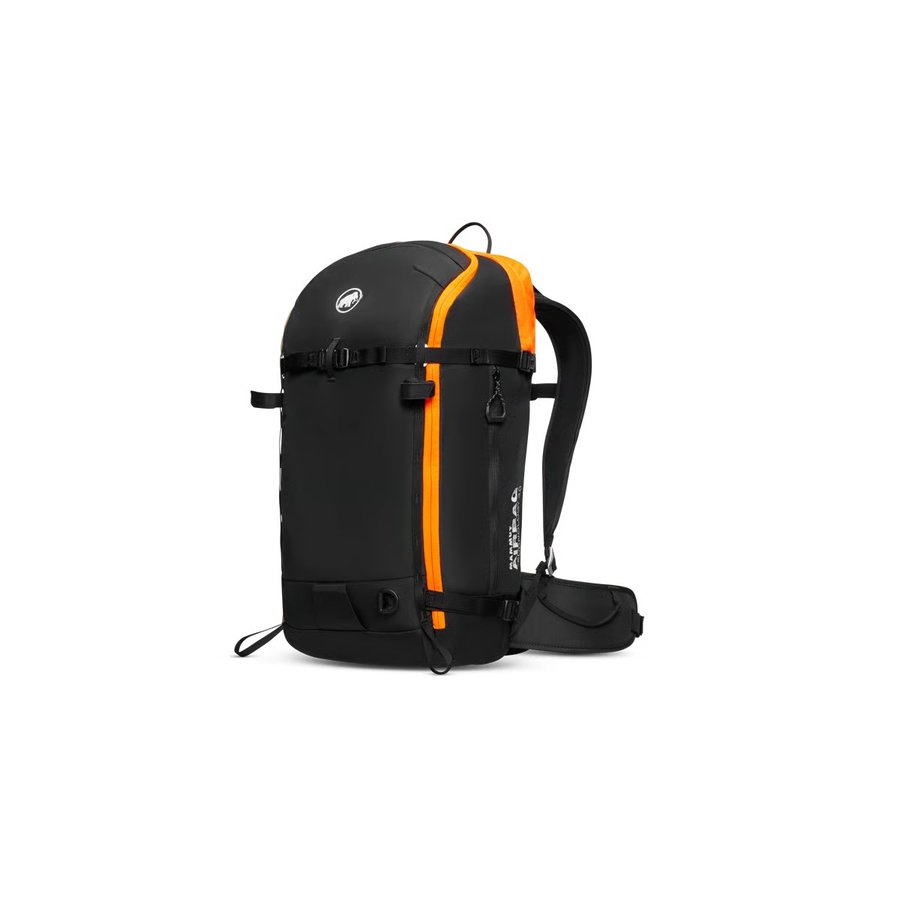
Avalanche airbags work by volume: an inflated 150-liter balloon makes you a large object, and large objects surface in flowing debris. Mammut’s Removable Airbag System 3.0 has years of documented deployments behind it and weighs about a kilogram including the cartridge, among the lightest cartridge systems available. The Tour 30 is the do-everything host pack: a blaze-orange internal compartment for shovel and probe your partners can spot instantly, a 3D-molded back panel, helmet holder, and standard ski and pole carry. Pull the system out and it serves as a regular pack in the off-season.
Where It Shines
- Proven deployment record across years of real-world incidents
- System lifts out: summer pack, easier air travel, future pack upgrades
- Safety compartment in high-vis orange speeds partner rescue
- Carries like a normal touring pack, not a safety appliance
Tradeoffs to Know
- Real cost is the pack plus a cartridge, budget roughly $1,000 all-in at list, ~$700 on closeout
- Roughly 1.5kg heavier than the Freerider 30 once fully assembled
- Cartridges are restricted on airplanes; plan to rent or buy at your destination
- An airbag supplements a beacon, shovel, probe, and education, it replaces none of them
Who It’s For
Skiers and riders who spend real time in avalanche terrain: frequent tourers, sidecountry regulars in consequential zones, and anyone whose partners already carry airbags. Inbounds skiers should put the money toward avalanche education and one of the lighter picks in our guide.
Key Specs and Sizes
Figures are approximate and drawn from Mammut’s published product and support pages (via mammut.com) and retailer listings at Backcountry, evo and Ascent Outdoors. The Tour 30 comes in one back length; the Tour 30 Women has a shorter, women’s-specific harness.
| Spec | Detail |
|---|---|
| Volume | 30L (about 1,830 cu in), one size |
| Weight, pack only | Roughly 1,400 to 1,455g (3.1 to 3.2 lb) |
| Weight, with system and cartridge | Roughly 2,100 to 2,250g (4.6 to 5.0 lb) with the airbag system fitted, plus about 310g for the carbon cartridge or 625g for the aluminum one |
| Airbag system | Removable Airbag System 3.0 (included), about 700g bare, ~1kg with carbon cartridge |
| Airbag volume | 150L, inflates in about 3 seconds, mechanical T-handle on the left strap |
| Cartridge | Sold separately: refillable 207-bar aluminum (~$250, about 625g) or non-refillable 300-bar carbon (about 310g, limited US availability) |
| Fabric | Recycled 420D nylon Oxford, PFC-free DWR, recycled lining |
| Back panel and frame | Thermoformed 2-layer EVA back, aluminum Contact U-frame; no published torso range |
| Carry systems | Diagonal ski carry, vertical snowboard and splitboard carry, helmet holder, two ice-axe or pole loops, side compression, hip-belt gear loop |
| Avalanche gear pocket | Dedicated front compartment, high-visibility orange lining, SOS label inside |
| Access | Top zip plus full rear-panel zip, hip-belt zip pocket, hydration compatible |
| Warranty | 2 years |
| Price | ~$780 list with airbag system; closeouts roughly $440 to 460 |
The 420D recycled nylon is a middle-weight fabric, tougher than Mammut’s ultralight packs and lighter than its pro-grade bags, and Mammut rates the system for -30 to +40 C. Watch the two versions when shopping: the full Tour 30 Removable Airbag 3.0 ships with the deployment unit and balloon, while the “ready” version is the same bag with an empty bay for a system you already own, at a fraction of the price.
Compatibility
Cartridges are the part people get wrong. Mammut makes three that fit the RAS 3.0: a refillable 207-bar aluminum cartridge, a non-refillable 300-bar carbon cartridge and a non-refillable 300-bar steel cartridge. In North America the aluminum one is what you’ll find on shelves, at roughly $250. It ships empty; you fill it to 3,000 psi at a dive or paintball shop or a dealer, and after any pull you refill it with a new burst-disc kit rather than buying a whole new cartridge. The carbon cartridge is what gets the system down to that headline kilogram, since it weighs about half as much, but it is one-shot and has historically been hard to buy in the US. Older RAS 2.0 parts do not fit the 3.0 bay.
Flying is possible but fiddly. IATA’s passenger provisions allow one airbag and one cartridge per person, with the cartridge stowed in its compartment, not screwed into the system, and the airline’s written permission obtained in advance; Mammut recommends checked baggage and printing its cartridge data sheet for the check-in desk. Any airline can still refuse. Most US travelers fly with the pack and system and rent or buy a cartridge at the destination.
The system itself is a module. The same RAS 3.0 unit lifts out of the Tour 30 and drops into any other Airbag 3.0 host from Mammut: the Free 22 and 28 for sidecountry laps, the Pro 35 and 45 for guiding and hut trips, the Light 30, the Light Short 28 and the Tour 30 Women. That is why the “ready” packs exist. The men’s Tour 30 comes in one back length that suits average to tall torsos; shorter riders and narrow shoulders should try the Tour 30 Women, which takes the same system and cartridges.
Who Should Skip It
Skip the Tour 30 if you ski mostly inbounds with the occasional gate run and your partners don’t carry airbags; the Dakine Heli Pro 20L at about $145 is a better use of the money, with the balance going to an avalanche course. Skip it if you want the lightest possible touring setup, because a complete airbag pack adds more than a kilogram over the Deuter Freerider 30 and an airbag only helps once things have already gone wrong. Skip it, too, if you tour ten days a year and simply want a well-organized backcountry pack; the Black Diamond Dawn Patrol 32 does that for roughly $270.
Tour 30 Airbag vs. Black Diamond Dawn Patrol 32 vs. Osprey Soelden 32
The Osprey Soelden 32 at about $195 is the comfort pick, with Osprey’s suspension, an easy back-panel opening and the lowest price of the trio; it carries no airbag and never will. The Black Diamond Dawn Patrol 32 at roughly $270 is the dedicated tourer’s bag, with a cleaner avy-tool layout and a snug ride that skis well on the descent. The Mammut costs three to five times either of them once you add a cartridge and weighs roughly a kilogram and a half more, in exchange for a proven 150L balloon. Pick the Soelden if you want the most comfortable 30-ish liter pack for mixed resort and backcountry days. Pick the Dawn Patrol if you tour often but ride conservative terrain and would rather spend on a beacon and education. Pick the Tour 30 if you spend real days on consequential slopes and your group already treats airbags as standard kit.
Frequently Asked Questions
Can you fly with the Mammut airbag cartridge?
Yes, under IATA passenger rules: one airbag and one cartridge per person, cartridge stowed unscrewed in its compartment, airline permission secured before you travel. Airlines can refuse, so many skiers fly with the pack and system and rent or buy a cartridge at the destination.
Is the Mammut Tour 30 airbag worth it for resort sidecountry?
Only if that sidecountry is genuine avalanche terrain and you ride it regularly. For lift-served gates on low-angle, controlled slopes, a lighter pack plus avalanche education and a good beacon is the better first purchase.
Does the Mammut Tour 30 come with the cartridge?
No. The full version includes the Removable Airbag System 3.0 but not the cartridge; the refillable aluminum cartridge adds roughly $250. The “ready” version includes neither the system nor the cartridge.
Mammut Tour 30 or Free 28 Removable Airbag 3.0?
Same system, different bag. The Free 28 is slimmer and freeride-oriented with less organization; the Tour 30 carries more, adds rear-panel access and suits longer tours and hut trips.
How It Compares
See how it stacks up in our full guide: The Best Ski Backpacks of 2026-27. Other picks from that list: Osprey Soelden 32 · Dakine Heli Pro 20L · Black Diamond Dawn Patrol 32 · Deuter Freerider 30.