Elan Ripstick 100 W Review
Affiliate disclosure: As an Amazon Associate we earn from qualifying purchases. Some links below are affiliate links, see our full disclosure. This breakdown is based on our independent research of current-season specifications and aggregated expert and user feedback.
The quick verdict: A 100mm ski with the energy bill of an 88. Carbon instead of metal, a clever asymmetric profile, and the kind of easy versatility that makes long days feel shorter. Locked-in ice grip is the one thing it cannot offer. ~$800
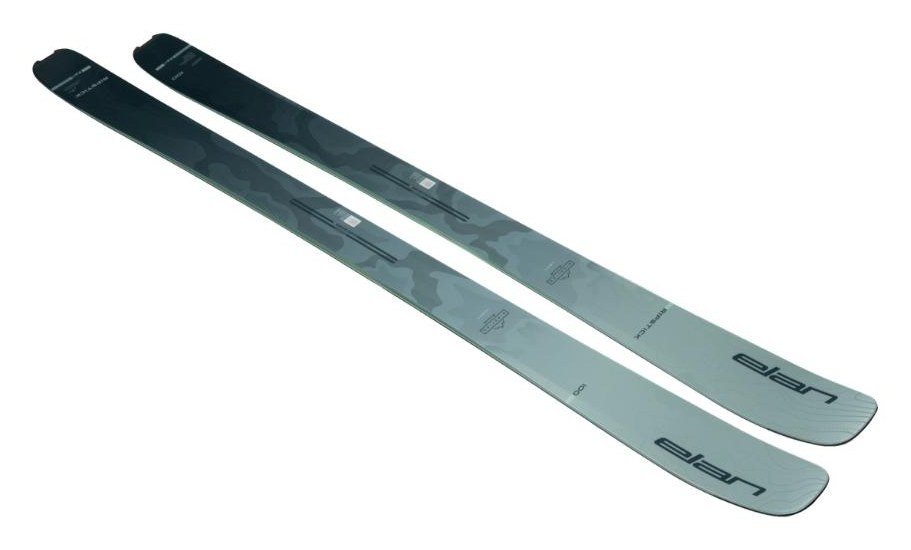
Overview
Elan builds its skis in the Slovenian Alps and has spent a decade refining one idea: that most skiers are better served by intelligence than by mass. The Ripstick 100 W is that philosophy at all-mountain width. It anchors the women's Ripstick range between the firmer-snow 88 W and the powder-leaning 102 W Black Edition, and Elan aims it at advanced skiers who want one light ski for the whole mountain.
Two technologies define it. Amphibio makes the left and right skis mirror-image asymmetric: each has a cambered inside edge for grip and a rockered outside edge for forgiveness, so the edge you carve on is longer than the edge you catch. Carbon does the work metal would. Elan's Carbon Deck and uni-directional carbon strips run longer along the inside edge for stability and shorter on the outside for ease, and the latest version swapped the old vapor tip inserts for full wood to quiet the front of the ski. Independent measurements put it around 1,680g per ski at 175cm, feather-light for a 100mm all-mountain design.
Key Specs
| Spec | Elan Ripstick 100 W |
|---|---|
| Waist width | 100mm |
| Dimensions | 134 / 100 / 114mm at 168cm (brand site) |
| Turn radius | 16.8m at 168cm |
| Lengths | 154, 161, 168, 175cm |
| Weight | About 1,680g per ski at 175cm (independent measurement) |
| Core | Laminated wood with Carbon Deck and carbon rods, no metal |
| Profile | Amphibio: cambered inside edge, rockered outside edge, per ski |
| Base | Sintered |
| Ability level | Advanced to expert (brand site); friendly enough for intermediates |
| Price | ~$800 flat, without bindings (brand site) |
Sizing & Fit
Four lengths from 154 to 175cm cover the field, and the right call here is usually the longer one. Because the ski is so light, sizing up buys stability without the usual weight penalty, and the rockered outside edges keep even the 175cm manageable in trees. One quirk is non-negotiable: Amphibio skis are left and right specific, marked on the topsheet, and mounting or skiing them swapped undoes the design. The ski pairs happily with mid-flex boots in the 95-110 range and does not demand race-stiff gear to perform. A 100mm-waist ski needs a brake around 110mm; our bindings guide covers the details.
Where It Shines
- Weight-to-width ratio: among the lightest metal-free skis in the 100mm class per published measurements, and it skis that way
- Versatility that testers in the 2026 SkiEssentials test repeatedly flagged, holding up at speed on firm snow despite the width
- Trees, bumps, and tight terrain, where the low swing weight and quick pivot make it the most agile pick in our guide
- Fatigue: the lightest ski at 3pm is the one still being skied well, a point user reviews make over and over
- Soft-snow range: 100mm underfoot floats typical resort storm totals without a second ski
Tradeoffs to Know
- No metal means no metal damping: on true ice it skids sooner than the Mantra 88 W or Black Pearl 88, a consistent reviewer note
- Some testers found the tail less playful than expected, more planted than poppy
- Light skis get knocked around in heavy chop; the Santa Ana 102 is far calmer when the crud sets up thick
- The left-right pairing is one more thing to check every morning in the rack
Who It's For
Skiers who count turns, not top speeds. If your favorite runs wind through trees and bumps, if you ski long days, or if you have ever ended an afternoon early because your legs quit before your enthusiasm did, this is the pick. It also suits lighter skiers who find metal skis plankish, and anyone splitting time between groomers and soft snow who wants a single do-everything ski.
Who Should Skip It
Ice-coast carvers should take the Mantra 88 W instead, and skiers who prize dampness at speed over agility belong on the Santa Ana 102. If your days are 80 percent groomers, the narrower Black Pearl 88 carves better and costs less.
How It Compares
The Blizzard Black Pearl 88 is the firmer-snow generalist: better edge grip, narrower platform, ~$50 less. If groomers dominate your season, the Pearl wins; if variety does, the Ripstick does.
The Volkl Mantra 88 W is everything the Ripstick deliberately is not: Titanal-framed, dense, and surgical on ice. Hard-snow precision picks the Volkl; all-day energy and float pick the Elan.
The Nordica Santa Ana 102 is the other wide option in our guide, trading the Elan's lightness for metal-damped authority in crud and at speed. Finesse skiers choose Elan; power skiers choose Nordica.
See the full lineup in our guide: The Best Women's All-Mountain Skis of 2026-27.
Frequently Asked Questions
What does Amphibio actually do?
Each ski has a dedicated inside edge with camber for grip and an outside edge with rocker for forgiveness. In practice it means cleaner turn entry and fewer edge catches without giving up hold mid-turn. The only cost is that the skis are left and right specific.
Is the Ripstick 100 W stable at speed without metal?
More than its weight suggests. Testers noted it held up at high speeds on firm snow, which they credited to the carbon layout. It does have a ceiling: in refrozen chop at full throttle, metal skis like the Santa Ana 102 stay calmer.
Can an intermediate ski the Ripstick 100 W?
Yes. Elan rates it advanced, but its light weight and forgiving outside edges make it one of the easier 100mm skis to progress on. A strong intermediate who wants room to grow will not be overfaced.