Transpack XT1 Review
Affiliate disclosure: As an Amazon Associate we earn from qualifying purchases. Some links below are affiliate links, see our full disclosure. This breakdown is based on our independent research of current-season specifications and aggregated expert and user feedback.
The quick verdict: The boot bag you see at every race start and rental shop for a reason: boots separated and draining, helmet in the middle, about $70. Simple, proven, done. ~$70
Overview
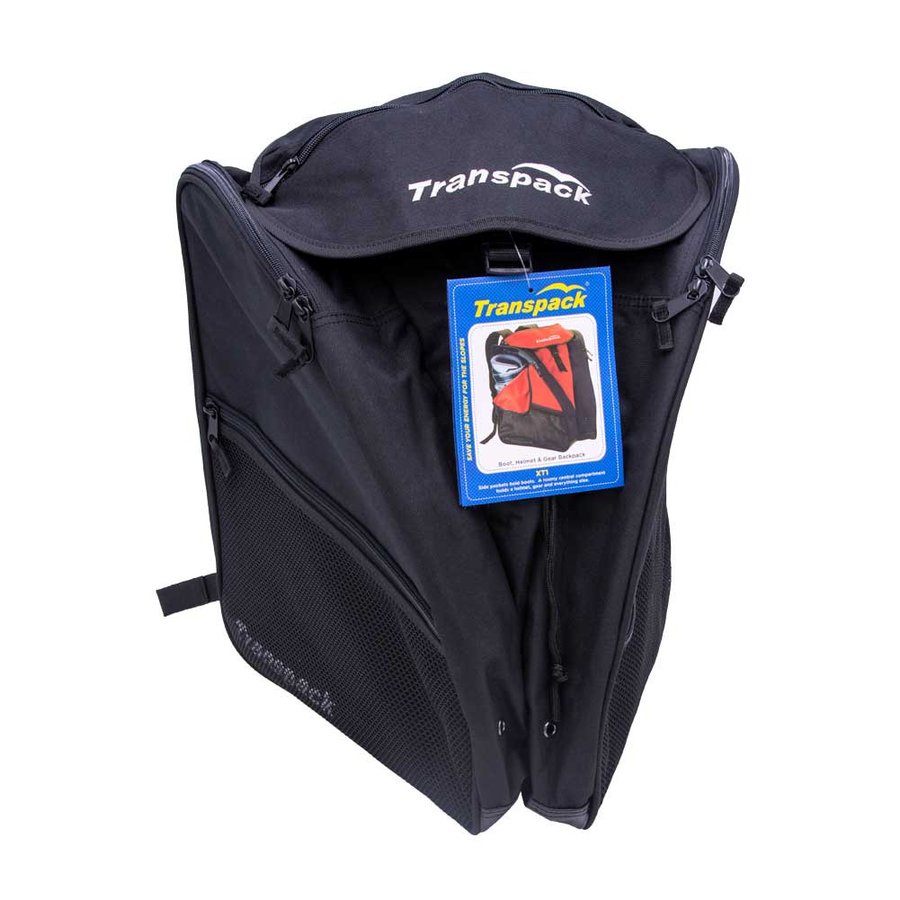
Transpack more or less invented the modern tri-compartment boot bag, and the XT1 is the design at its most distilled. The company calls the layout the Isosceles Storage System: one boot pocket on each angled side, a central well between them sized for a helmet, goggles, and a layer or two, and the whole thing worn as a backpack. It sits in the middle of Transpack’s range, above the entry Edge series and below the padded Pro lineup, and it is the version that shops, race parents, and rental fleets default to season after season.
Nothing about the XT1 is fancy, and that is the point. It is a $70 tool that has stayed in the line for years because the shape works: boots stand upright, water drains out the bottom, and everything you need for a resort day rides in one carry.
Key Specs
| Spec | Detail |
|---|---|
| Capacity | 46 L / 2,800 cu in |
| Layout | Isosceles Storage System: two side boot pockets + central gear well |
| Material | 600D polyester with water-resistant coating; tarpaulin base |
| Drainage | Grommets in each boot pocket, air and water drainage system |
| Pockets | 7 total, including internal zip, mesh sides, and top lid pocket |
| Straps | Adjustable neoprene shoulder straps, closed-cell foam padded back |
| Price | ~$70 (solid colors; artist prints run higher) |
Specs from Transpack’s published product data as listed by authorized retailers; Transpack does not publish an official empty weight.
Fit and Compatibility
Each side pocket takes one adult alpine or snowboard boot, sole down, in effectively any recreational size; the angled shape follows the boot cuff so nothing has to be forced. The central well fits a helmet with goggles attached plus gloves and a midlayer, though it is a snug 46 liters overall: a full change of clothes and lunch push it to the limit. There is no luggage pass-through and no waist belt, and at roughly carry-on height it doubles as a compliant cabin bag for flyers who pack light. Kids’ boots fit with room to spare, one reason the XT1 is so common at junior race starts.
Where It Shines
- Price: at about $70 it undercuts every serious rival, per current retailer listings
- Boots drain and air out through grommeted pockets instead of soaking the middle compartment
- Upright side-pocket design doubles as packing discipline; loading it takes seconds
- Compact enough to work as airline carry-on when not overstuffed
- Double-locking, self-repairing coil zippers on a bag many owners keep for a decade, a durability record echoed across user reviews
Tradeoffs to Know
- Minimal padding: the helmet shares the center well with whatever else you toss in, so goggles should stay in a case
- 46 L runs out fast if you carry outerwear; the 70 L Dakine Boot Locker DLX exists for that job
- Neoprene straps and a simple foam back are fine for parking lots, not for the long hauls the Thule RoundTrip is built for
- Water-resistant, not waterproof; the coated base tolerates slush but standing water will find a seam eventually
Who It’s For
Day-trippers, race families buying three bags at once, beginners assembling a first kit, and anyone who wants the proven shape without paying for features they will never use. If your boot bag lives in a car trunk from December to April, this is the rational choice.
Who Should Skip It
Frequent flyers and long-walk commuters should spend up for the Thule RoundTrip’s protection and harness. Skiers who pack for every contingency will hit the 46-liter ceiling weekly and belong in the Dakine Boot Locker DLX, and gear organizers who want ventilated chambers and assigned pockets are describing the Kulkea Boot Trekker.
How It Compares
Full lineup in our guide: The Best Ski Boot Bags of 2026-27.
Against the Thule RoundTrip Boot Backpack 60L: the Thule adds a padded helmet-and-goggle box, a standing changing mat, a structured body, and a real harness for about $100 more. If you fly with gear or walk far, that is money well spent. If you drive and change in the lot, the XT1 does the same core job at a third of the price.
Against the Dakine Boot Locker DLX 70L: the Dakine carries far more and organizes it behind a clamshell opening for roughly $50 extra, but its single boot bay lacks the XT1’s drainage and separation. Solo skiers with modest kit keep the XT1; pack mules and families step up to the Dakine.
Against the Kulkea Boot Trekker: the Kulkea takes the XT1’s side-pocket concept and adds closable vents, a waterproof TPU base, a full accessory pocket system, and a $155 price gap. The XT1 is the concept at its cheapest and lightest; the Kulkea is the same idea with every box ticked.
FAQ
Does a helmet fit in the Transpack XT1?
Yes. The central compartment is sized for a helmet plus goggles and gloves, and Transpack markets the XT1 as a boot, helmet, and gear backpack. What it lacks is dedicated padding around the helmet, so pack fragile items inside it.
What is the difference between the XT1 and Transpack’s Pro series?
The Pro-level bags add padded compartments, bigger capacities, and burlier materials at roughly double the price. The XT1 keeps the same tri-compartment layout with lighter fabrics and simpler straps.
Is the XT1 waterproof?
It is water-resistant coated 600D polyester with a tarpaulin-style base, which handles snowmelt and slush fine. It is not seam-sealed, so do not leave it sitting in standing water.