Burton Ripcord Review: Full Breakdown
Affiliate disclosure: As an Amazon Associate we earn from qualifying purchases. Some links below are affiliate links, see our full disclosure. This breakdown is based on our independent research of current-season specifications and aggregated expert and user feedback.
The quick verdict: Burton's most forgiving learning platform: flat, catch-free, tapered for easy steering, and backed by a three-year warranty. The right off-ramp if the Custom Flying V sounds like too much board. ~$420, often ~$300-340
Overview
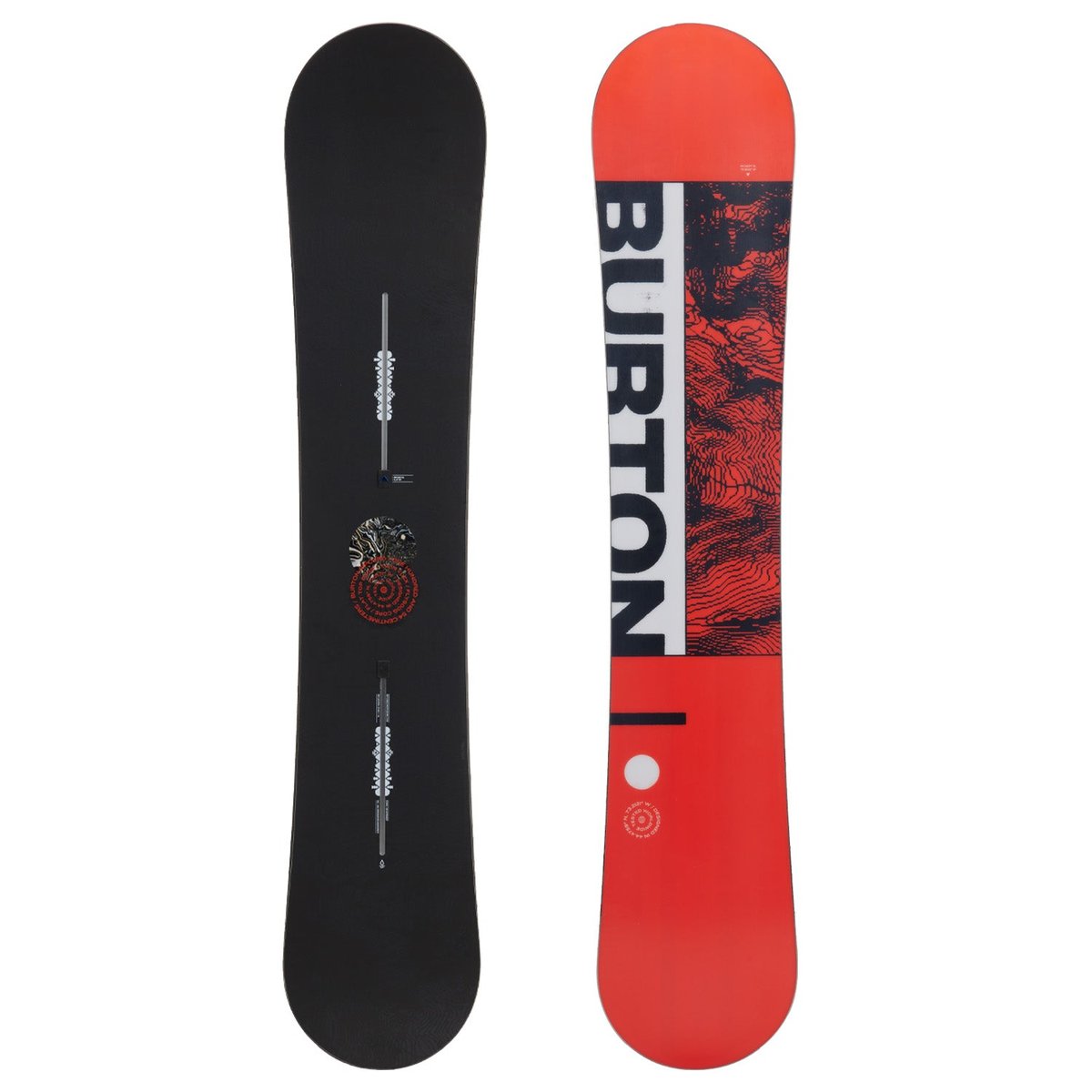
The Ripcord is Burton's classic men's beginner and progression board. The current version rides Burton's Flat Top with Easy Bevel profile, flat between the feet with beveled early-rise tips, which keeps edges from catching while you learn. A soft flex with Squeezebox Low core profiling reduces the effort each turn takes, and the directional shape with 5mm of taper and a setback stance helps the nose rise and steer in soft snow. The Good Ride's coverage of earlier versions praised how well this class of board floats for the price. The low-maintenance extruded base and Burton's three-year warranty round out a very sensible first purchase.
Where It Shines
- Extremely forgiving and catch-free while you learn to link turns
- Low-effort turn initiation from the soft flex and Squeezebox Low core
- Directional taper floats and steers well in soft snow for a budget board
- Extruded base is low maintenance, and Burton backs it for three years
Tradeoffs to Know
- Soft flex gets chattery and washy at speed and on hard carves
- Weak edge hold on ice and a slow base
- Taper and setback compromise switch riding and park progression
Who It’s For
True beginners and early intermediates moving off rentals. Riders who learn fast or want freestyle symmetry should start on the Burton Cultivator instead, and graduates move up to boards like the Burton Custom Flying V.
Key Specs by Size
Figures below are approximate and drawn from Burton’s published spec sheet and retailer listings for the current Ripcord Flat Top. Wide versions (156W, 158W and 162W) add roughly 10mm of waist for riders in US 11+ boots.
| Size | Waist width | Effective edge | Sidecut radius | Rider weight |
|---|---|---|---|---|
| 145 | ~244mm | ~1060mm | ~7.1m | 100-150 lb (45-68 kg) |
| 150 | ~247mm | ~1110mm | ~7.4m | 120-180 lb (54-82 kg) |
| 154 | ~250mm | ~1150mm | ~7.7m | 120-180 lb (54-82 kg) |
| 157 | ~253mm | ~1180mm | ~7.9m | 150-200 lb (68-91 kg) |
| 159 | ~256mm | ~1185mm | ~7.9m | 150-200 lb (68-91 kg) |
All sizes share a ~25mm setback stance, a soft flex, Flat Top with Easy Bevel bend, a Fly 900G core with Squeezebox Low profiling, an extruded base, and Burton’s Channel mounting system. See the Burton snowboards page for the season’s official sheet.
Sizing and Fit
Because the Ripcord is soft and setback, most riders should size it by weight rather than by the old chin-height rule. Sit in the middle of the weight band for your size; if you fall in the overlap between two sizes (a 165 lb rider fits both the 154 and the 157), take the shorter board while you’re learning and the longer one if you already link turns and ride fast. Boot size matters too. Waists of 244-256mm suit US men’s boots up to about 10.5; from 11 up, choose a wide size or expect toe drag on heelside turns.
Bindings: the Channel accepts Burton’s Re:Flex and EST bindings, plus any 4x4 or 2x4 binding with a Channel-compatible disc. Something like the Union STR works fine; you just cannot use a Burton EST binding on a non-Burton board, not the other way round.
Who Should Skip It
Three kinds of rider will outgrow the Ripcord quickly or never enjoy it. Fast learners who expect to ride switch and hit the park within a season should start on a twin like the Cultivator. Anyone on the East Coast who spends most days on refrozen groomers will miss the edge grip of a cambered or hybrid board. And riders above 200 lb, or in size 12+ boots, are pushing the top of the size range; a stiffer, wider board holds up better.
Ripcord vs. Cultivator vs. Custom Flying V
The Cultivator is the same Flat Top idea in a true twin, so it is the better call if freestyle or switch riding is on the horizon, and it costs about the same. The Custom Flying V is the next step: a hybrid rocker-camber profile, medium flex and roughly $200 more. It forgives less and rewards more, which is exactly why it makes a poor first board and a great second one. Buy the Ripcord to learn cheaply and comfortably; plan to hand it down.
Frequently Asked Questions
Is the Burton Ripcord good for beginners?
Yes. Its flat profile with beveled tips is among the most catch-free in Burton’s range, and the soft flex keeps turn effort low, which is why it shows up on most beginner shortlists.
Ripcord or Cultivator?
Ripcord if you ride directional, mostly on groomers and soft snow. Cultivator if you want a twin for switch riding and park progression. Both are soft, flat-profile learning boards.
Does the Ripcord come in a wide version?
Yes. Burton offers wide sizes (156W, 158W, 162W) for riders in roughly US 11+ boots, adding about 10mm of waist width.
How much does the Burton Ripcord cost?
List price is around $420, and it is regularly discounted to roughly $300-340 during the season.
How It Compares
Read where it fits in our Burton Custom Flying V review. Softer alternatives live in our beginner gear guide: Burton Cultivator · Rossignol Evader.