The Complete Guide to Buying Your First Skis: How to Choose Skis for Beginners
Affiliate disclosure: As an Amazon Associate we earn from qualifying purchases. Some links below are affiliate links, see our full disclosure.
Congratulations on deciding to take up skiing! One of the most important decisions you'll make as a new skier is choosing the right pair of first skis. It's easy to feel overwhelmed by the endless options at your local ski shop, from different lengths and widths to various flex ratings and rocker profiles. The good news? Picking your first skis doesn't have to be complicated. This guide will walk you through everything you need to know about how to choose skis for beginners, ensuring you make a confident, informed decision that will set you up for success on the slopes.
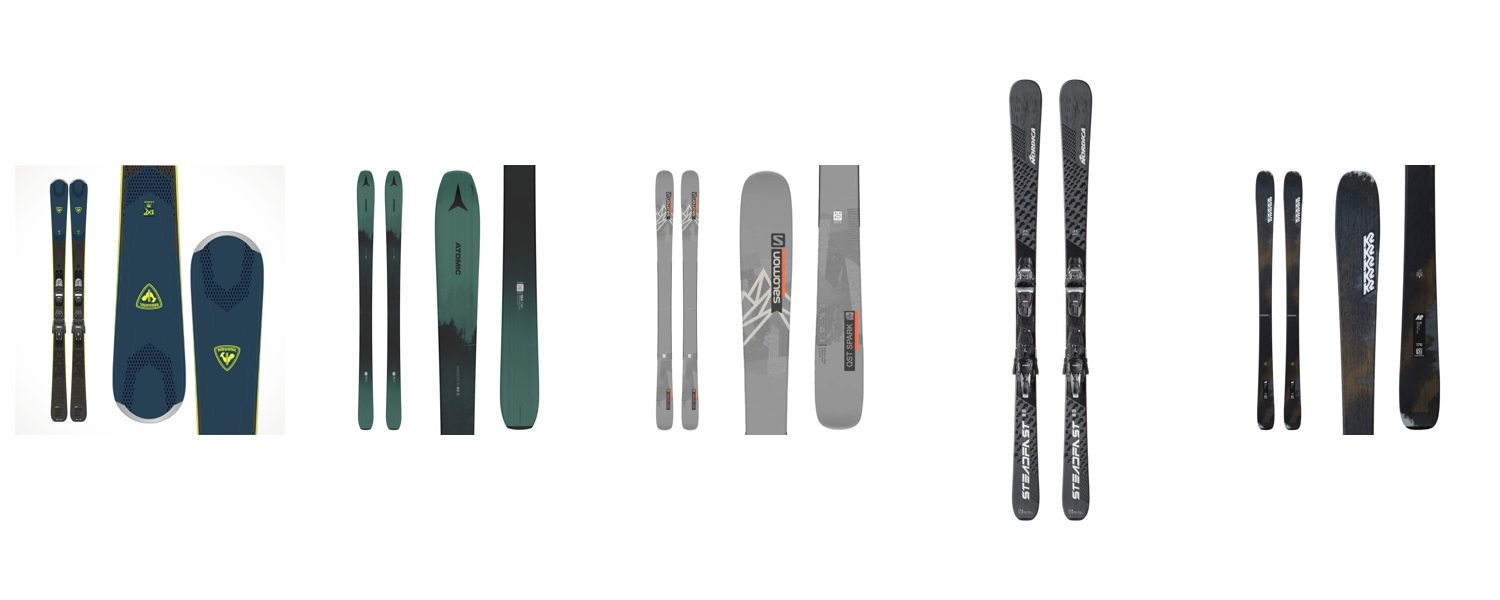
Top 5 Beginner-Friendly Ski Recommendations
Why Choosing the Right First Skis Matters
Your first pair of skis will play a significant role in your learning experience and overall enjoyment of the sport. The wrong skis can make learning harder, lead to frustration, and even increase injury risk. The right skis, on the other hand, will build your confidence, improve your technique faster, and keep you more comfortable on the mountain.
When you're learning, you need skis that are forgiving, easy to maneuver, and responsive to your inputs without being overly aggressive. Beginner skis are specifically designed with this in mind. They have softer flex patterns that are easier to control, lighter weights that reduce fatigue, and characteristics that forgive mistakes while you're still developing your technique.
Investing time now to understand what makes a good beginner ski will pay dividends throughout your skiing journey. You'll have more fun, progress faster, and feel more confident as you develop from beginner to intermediate to advanced skier.

Understanding Different Types of Skis
Before diving into specs and measurements, it's important to know that skis aren't one-size-fits-all. Different ski types are designed for different purposes and snow conditions. As a beginner, your best bet is an all-mountain ski, but let's look at the full spectrum so you understand what's available.
All-Mountain Skis
All-mountain skis are the most versatile option and the ideal choice for beginners. They're engineered to handle groomed runs, light powder, and mixed conditions with equal competence. All-mountain skis typically feature a waist width between 75-85mm, making them stable on hardpack while still offering some flotation in softer snow.
These skis are forgiving, easy to turn, and don't require you to specialize in any particular terrain type. They encourage progressive learning because you can experiment with different aspects of the mountain without worrying that your skis are limiting you. Most recreational skiers, regardless of ability level, ride all-mountain skis because they're simply the most adaptable choice.
Carving Skis
Carving skis, also called on-piste or race skis, are narrow (usually under 75mm at the waist) and designed specifically for cutting crisp turns on groomed runs. They excel at holding an edge and delivering snappy response. However, they're not ideal for beginners because they're less forgiving, require more precision, and offer minimal flotation in powder or off-piste terrain.
Powder Skis
Powder skis are wide (typically 85mm and wider) and designed to help you float through deep snow. They're fun to ride, but they're overkill for a beginner who's primarily learning on groomed runs. They can also be harder to control and require more skill to maneuver effectively.
Park and Freestyle Skis
These twin-tip skis are built for tricks, jumps, and terrain parks. While they're fun, they're not designed with beginner all-mountain progression in mind. Unless you specifically want to focus on park skiing, you'll be better served by an all-mountain option.
Bottom line: Start with all-mountain skis. They'll give you the most versatility, forgiveness, and opportunity to progress as your skills develop.
Key Ski Specifications to Understand
Now that you understand ski types, let's decode the technical specifications you'll see when shopping. These numbers and terms matter, and understanding them will help you make a smart choice.
Waist Width
The waist width is the measurement of your ski at its narrowest point (under your foot, where your boot sits). This measurement is crucial to your experience in different snow conditions.
- 75-79mm: Narrower skis for primarily groomed terrain, quick edge transitions, and hard snow. Good for confident carving on-piste.
- 80-85mm: True all-mountain width. Handles groomers well while offering adequate flotation in powder and soft snow. The sweet spot for most beginners.
- 85mm and wider: More flotation in powder and ungroomed terrain, but less nimble on groomers. Better for intermediate-to-advanced skiers or those focused on off-piste exploration.
Ski Length
Ski length significantly affects your turning radius, stability, and maneuverability. Longer skis are more stable at higher speeds but harder to turn. Shorter skis are more nimble and forgiving for beginners learning basic technique.
As a beginner, you generally want skis that are slightly shorter than traditional recommendations to maximize maneuverability and control. See the sizing chart in the "How to Choose Ski Length" section below for more specific guidance.
Turn Radius
The turn radius describes how tight or wide a turn the ski naturally wants to make. It's determined by the ski's sidecut, the curved shape along the edge of the ski. A smaller turn radius (like 12-14 meters) means the ski wants to make tight, quick turns, which is ideal for beginners learning in confined terrain. A larger radius (18+ meters) requires you to commit to bigger, faster turns.
For beginners, look for turn radii in the 12-15 meter range to give you control and forgiveness.
Flex Rating
Flex describes how stiff or soft a ski is along its length. It's often rated numerically (1-10, with 1 being the softest) or descriptively (soft, medium, stiff).
- Soft flex (1-3): Very forgiving, easy to bend, requires minimal force to initiate turns. Perfect for beginners learning edge control.
- Medium flex (4-6): Balanced between forgiveness and response. Good for developing skiers moving beyond complete beginner stage.
- Stiff flex (7+): Requires more force to flex, delivers more response but less forgiveness. Better for advanced skiers.
As a beginner, you'll want soft to medium-soft flex that allows you to initiate turns easily without fighting the ski.
Rocker vs. Camber
These terms describe the ski's profile when viewed from the side.
- Camber: The ski curves slightly upward in the middle, with contact points at the tip and tail. Traditional camber provides edge grip on hardpack and good response. It's what high-performance skiers prefer.
- Rocker (or reverse camber): The tip and tail curve upward, with the middle touching the snow. Rocker improves flotation in powder and forgiveness in variable conditions. Many beginner skis feature rocker or a blend of both profiles.
- Hybrid (Camber-Rocker): A blend that offers the edge grip of camber in the middle with the forgiveness of rocker in the tips and tails. This is increasingly popular in beginner and all-mountain skis.
For beginner skis, rocker or hybrid profiles are generally more forgiving and more fun in varied conditions. Pure camber can feel unforgiving for newer skiers.
How to Choose Ski Length for Your First Skis
Selecting the correct ski length is one of the most important decisions you'll make. The right length helps you control your skis while learning, whereas skis that are too long can feel unmanageable and slow your progress.
Beginner Ski Length Guide
Traditional ski sizing recommends skis that reach your nose or to your height. However, beginners typically benefit from skis that are 5-10cm shorter than that rule of thumb. Shorter skis are easier to maneuver and more forgiving of technique mistakes.
Here's a general guide based on height and skiing ability:
| Your Height | Traditional Size | Beginner Size | Aggressive Beginner |
|---|---|---|---|
| 5'0" (152 cm) | 150-155 cm | 140-145 cm | 145-150 cm |
| 5'2" (157 cm) | 155-160 cm | 145-150 cm | 150-155 cm |
| 5'4" (163 cm) | 160-165 cm | 150-155 cm | 155-160 cm |
| 5'6" (168 cm) | 165-170 cm | 155-160 cm | 160-165 cm |
| 5'8" (173 cm) | 170-175 cm | 160-165 cm | 165-170 cm |
| 5'10" (178 cm) | 175-180 cm | 165-170 cm | 170-175 cm |
| 6'0" (183 cm) | 180-185 cm | 170-175 cm | 175-180 cm |
| 6'2" (188 cm) | 185-190 cm | 175-180 cm | 180-185 cm |
Other Factors Affecting Ski Length
Weight: Heavier skiers may need slightly longer skis to get appropriate pressure on the snow for the ski's intended performance characteristics. Lighter skiers can often go shorter. Most quality beginner skis are available in multiple lengths specifically to accommodate weight variation.
Leg strength and athletic ability: Athletes with strong legs and good balance may be comfortable at the longer end of the beginner range or even standard sizing. Pure beginners with limited skiing experience should start shorter.
Learning goals and terrain: If you plan to progress quickly and ski varied terrain, you might size slightly longer. If you're taking it slow and staying on beginner terrain, shorter is better.

How to Choose Ski Width for Your Conditions
Waist width is about matching your ski to the snow conditions you'll primarily ski. The key is finding the right balance between edge grip and flotation.
Understanding Width and Conditions
- Mostly groomed runs: Look for 75-79mm waist width. These skis carve well on hardpack and groomers with minimal sacrifice in all-mountain capability.
- Mix of groomed and ungroomed terrain: 80-85mm is the sweet spot. You get excellent performance on groomers while having enough width to float in soft snow and handle variable conditions confidently.
- Significant powder or off-piste focus: 85mm+ provides the flotation you want, though it compromises slightly on groomed run performance.
For most beginners, 78-82mm is the ideal range. This width gives you enough edge grip on hard snow to build confident carving technique while providing flotation when you encounter softer conditions.
Resort-Specific Considerations
Where you'll primarily ski matters. If you're at a beach town ski resort with limited terrain diversity, you might lean toward narrower skis. If you're in the Rockies or Pacific Northwest where variable snow conditions are common, wider all-mountain skis make sense.
New vs. Used Skis: Making the Right Choice
One of your first decisions is whether to buy new or used skis. Both options have advantages and drawbacks worth considering.
New Skis
Pros:
- Latest technology and design improvements
- Full warranty coverage
- Guaranteed edge condition and base integrity
- Consistent, predictable performance
- Access to current season models with desired specifications
Cons:
- Higher upfront cost
- You may outgrow them as your ability changes
- More intimidating if you're nervous about making the "wrong" choice
Used Skis
Pros:
- Significantly lower cost (30-60% savings common)
- Less financial risk if you decide skiing isn't for you
- Access to proven designs with established track records
- Good way to test different brands before committing to new gear
Cons:
- Unknown history, edge and base damage may not be obvious
- No warranty
- May be worn out prematurely
- Limited selection in specific sizes/models
- Potential hidden damage reduces lifespan
Our Recommendation for Beginners
We typically recommend new skis for first-time buyers for three reasons: First, you deserve reliable equipment when you're learning, unexpected ski performance issues can slow your progress and create bad habits. Second, beginner skis are reasonably priced (not the expensive high-end models), so the cost difference between new and used isn't enormous. Third, you'll want a warranty in case of defects, and you'll know exactly what you're getting.
That said, if budget is a significant constraint, quality used skis from a reputable shop with a short history can be a great option. Just make sure they're inspected, have had proper maintenance, and ideally come with some seller guarantee.
What to Budget for Your First Ski Setup
Many beginners underestimate the total cost of getting on skis. It's not just the skis. You need bindings, boots, and poles too. Here's what you should expect to spend:
Complete Beginner Ski Setup Budget
Skis: $300-$600
Quality beginner all-mountain skis from reputable brands typically fall in this range. You can find budget options for $250-$300 or spend up to $700+ for premium models, but $300-$500 gets you solid, reliable equipment.
Bindings: $80-$200
Bindings are critical safety equipment. Don't skimp here. Quality binding systems from brands like Marker, Salomon, and Atomic ($100-$150) are standard. You can find budget options around $80, but mid-range bindings offer better durability and performance.
Boots: $250-$500
Properly fitted boots are essential for comfort and performance. Budget boots might be $150-$200, but quality boots ($300-$400) provide better support, warmth, and longevity. Many people upgrade boots down the line as they discover their preference for flex, fit, and features.
Poles: $30-$80
Poles are often overlooked, but they help with balance and rhythm. Entry-level poles are $30-$50. You don't need expensive poles starting out.
TOTAL ESTIMATE: $660-$1,380
This gets you a complete, quality beginner setup. Mid-range assumption ($400 skis, $150 bindings, $350 boots, $50 poles) = approximately $950.
Money-Saving Tips
- Look for packages: Many shops offer ski-binding packages at discounts. This can save you $50-$100.
- Shop off-season: January-February (end of season) and July-August (before season) often have better deals than November-December.
- Rent first if unsure: If you're not confident you'll stick with skiing, consider renting for your first 2-3 days to make sure you enjoy it before investing in gear.
- Factor in boot fitting: Don't cheap out on boot fitting. A good fit is worth the extra cost and prevents blisters, cold feet, and technique problems.
- Plan for upgrades: Know that your needs may change as your skills develop. Many skiers buy mid-range beginner gear knowing they'll upgrade boots and skis within 1-2 years.
Top 5 Recommended Beginner Skis for 2026-2027 Season
Now that you understand what makes a good beginner ski, here are five excellent options that consistently perform well for new skiers. Each offers great value, forgiveness, and progression potential.
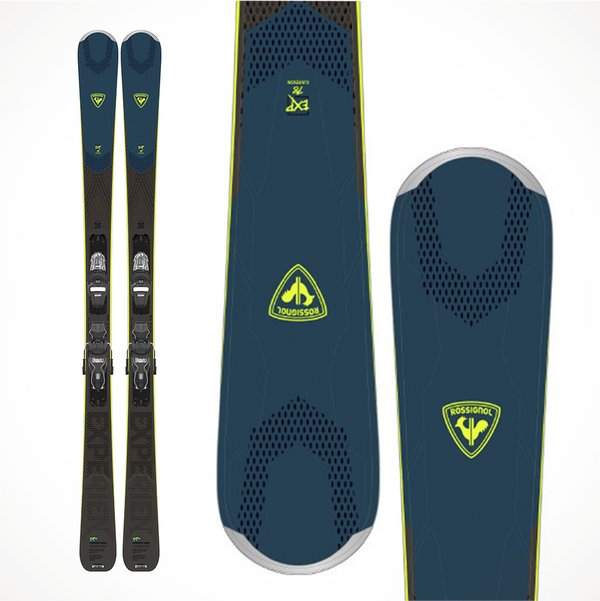
1. Rossignol Experience 78 Carbon
Specifications: 78mm waist width | All-mountain | Lightweight carbon construction | Available lengths: 140-170cm
Why it's great for beginners: The Rossignol Experience 78 lives up to its name. It delivers an excellent learning experience. The 78mm width is perfect for groomed terrain while offering light flotation in soft snow. The carbon construction keeps weight down, reducing fatigue during long learning days. The flex is soft and forgiving, making it easy to initiate turns and build confidence. The responsive edge grip helps you develop solid carving technique without requiring a lot of power.
Best for: Skiers primarily on groomers with some powder exploration. Lightweight design appeals to skiers concerned about fatigue.
Price range: $350-$450 per pair
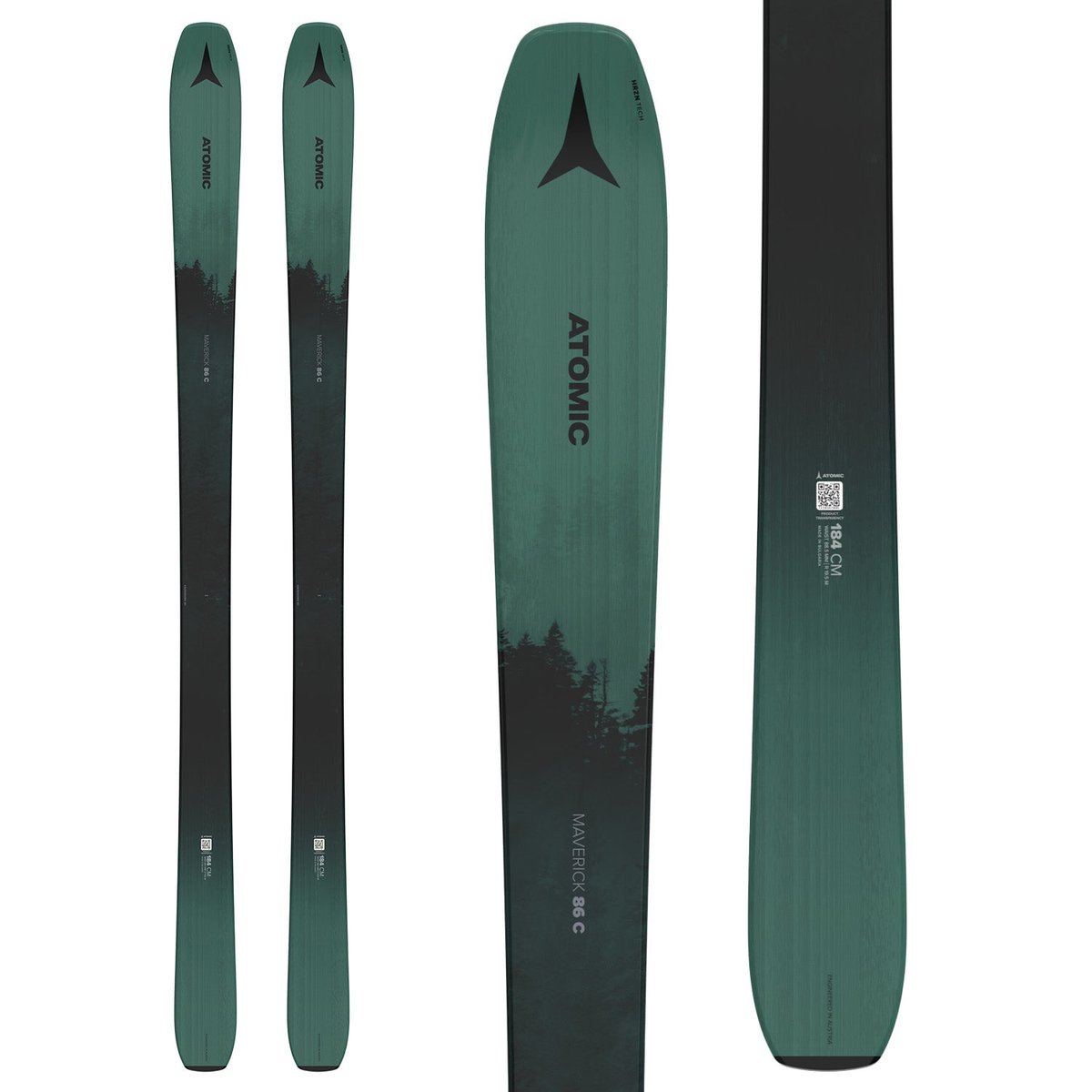
2. Atomic Maverick 86 C
Specifications: 86mm waist width (88.5mm at 179cm) | All-mountain | Carbon backbone, no metal | Lengths: 159-186cm | Also sold as a system with M10 GW bindings
Why it's great for beginners: The Maverick 86 C is Atomic's current ski for progressing beginners, the successor to the retired Vantage line. It is light, around 1580g per ski, with a poplar core reinforced by a carbon backbone instead of metal, so turn initiation takes very little effort. Testers describe the 2026 version as easy to maneuver and more balanced and predictable than earlier Mavericks, and the DuraCap sidewall is built to shrug off the chips and dings of the learning years. At 86mm underfoot it has enough width to explore trees, bumps, and soft-day detours while staying quick on groomers. Spotted a leftover Vantage on sale? Our Atomic Vantage 79 Ti review covers sizing and whether the closeout price is worth it.
Best for: Skiers who want a light, durable, easy-turning ski that will carry them from beginner well into intermediate terrain.
Price range: $550-$600 (system packages with bindings often cost less than the flat ski)
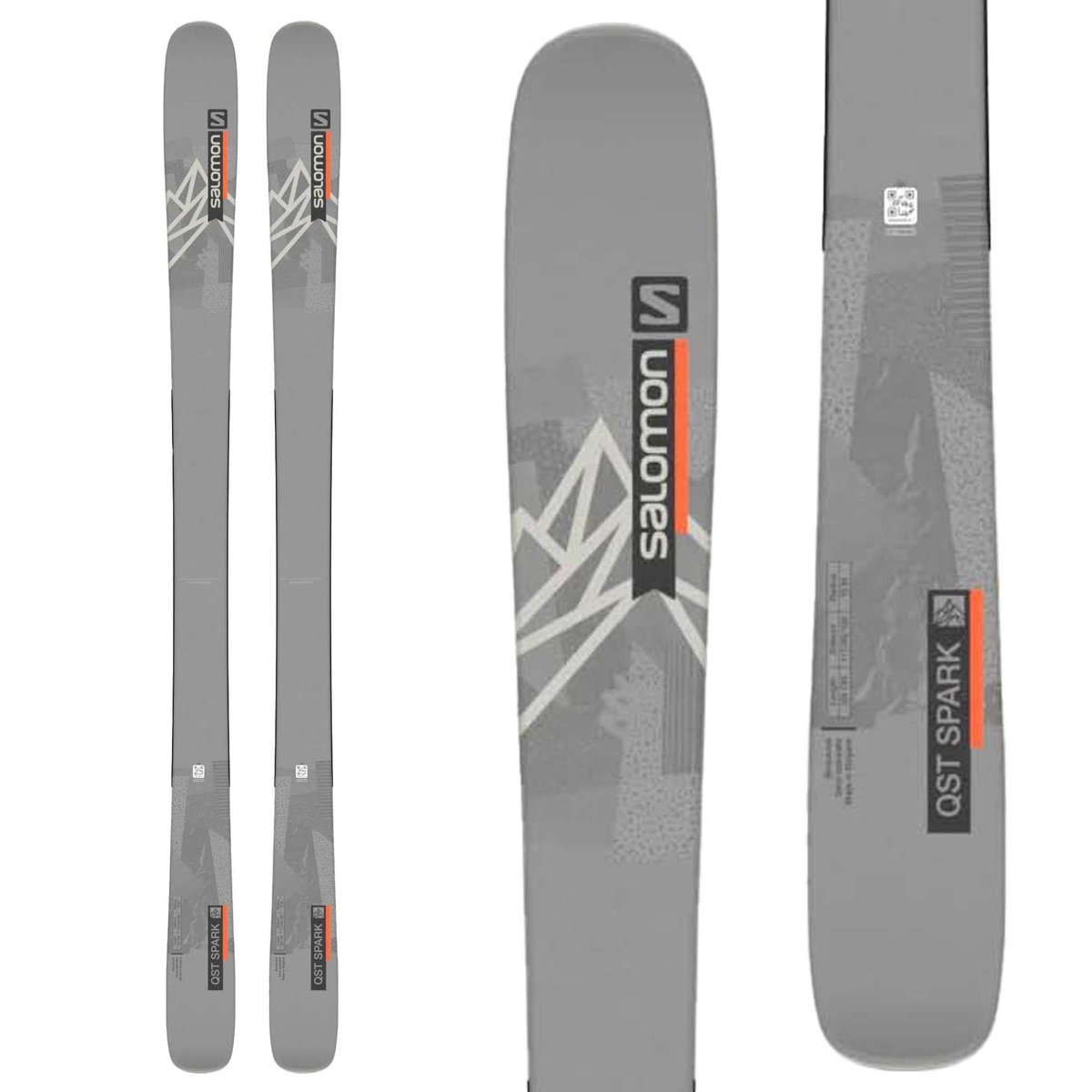
3. Salomon QST Spark
Specifications: 85mm waist width | Twin-tip all-mountain freestyle | Poplar woodcore | Available lengths: 150-171cm
Why it's great for beginners: If you're drawn to park features or want a ski that can handle diverse terrain with equal confidence, the Salomon QST Spark deserves consideration. The twin tips give you the ability to ski backwards and hit small features, making skiing feel more playful and fun. The 85mm width provides floatation and versatility across varying snow conditions. The camber-rocker hybrid profile offers the edge grip you need on groomed runs and the forgiveness you want everywhere else. The poplar woodcore is forgiving and poppy, encouraging experimentation.
Best for: Skiers interested in progression to all terrain types, those who want to explore features, or riders who value having fun over pure speed.
Price range: $380-$480 per pair
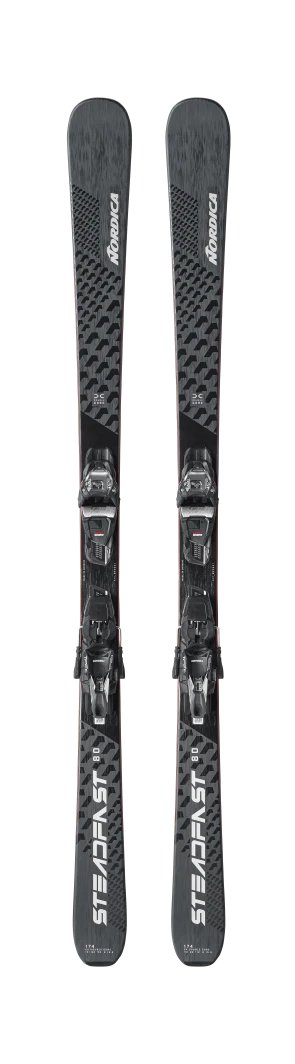
4. Nordica Steadfast 80 DC
Specifications: 80mm waist width (131/80/110 at 174cm) | All-mountain frontside | Double Core with one titanal sheet | Lengths: 156-179cm | Sold as a system with TP2 Light 11 bindings
Why it's great for beginners: The Steadfast 80 DC is Nordica's current adult ski in this class, and it brings construction you rarely see at a progression price: a Double Core that sandwiches an elastomer damping layer between two wood laminates, plus a single sheet of titanal. The result is the smoothest, quietest ride on this list, with edge grip testers scored at 8/10 and a flex reviewers call responsive yet forgiving across speed ranges. It is the ski on this list best suited to learning real carving technique, and the one you are least likely to outgrow. It costs more than the others here at full retail, but sales regularly bring the system into the $500s. If you already carve confidently and want more edge hold, Nordica's Enforcer 80 S is the sportier sibling.
Best for: Skiers who want a progression ski they won't outgrow quickly. Those who value stability, smoothness, and versatility.
Price range: $580-$630 with bindings (watch for sales into the $500s)
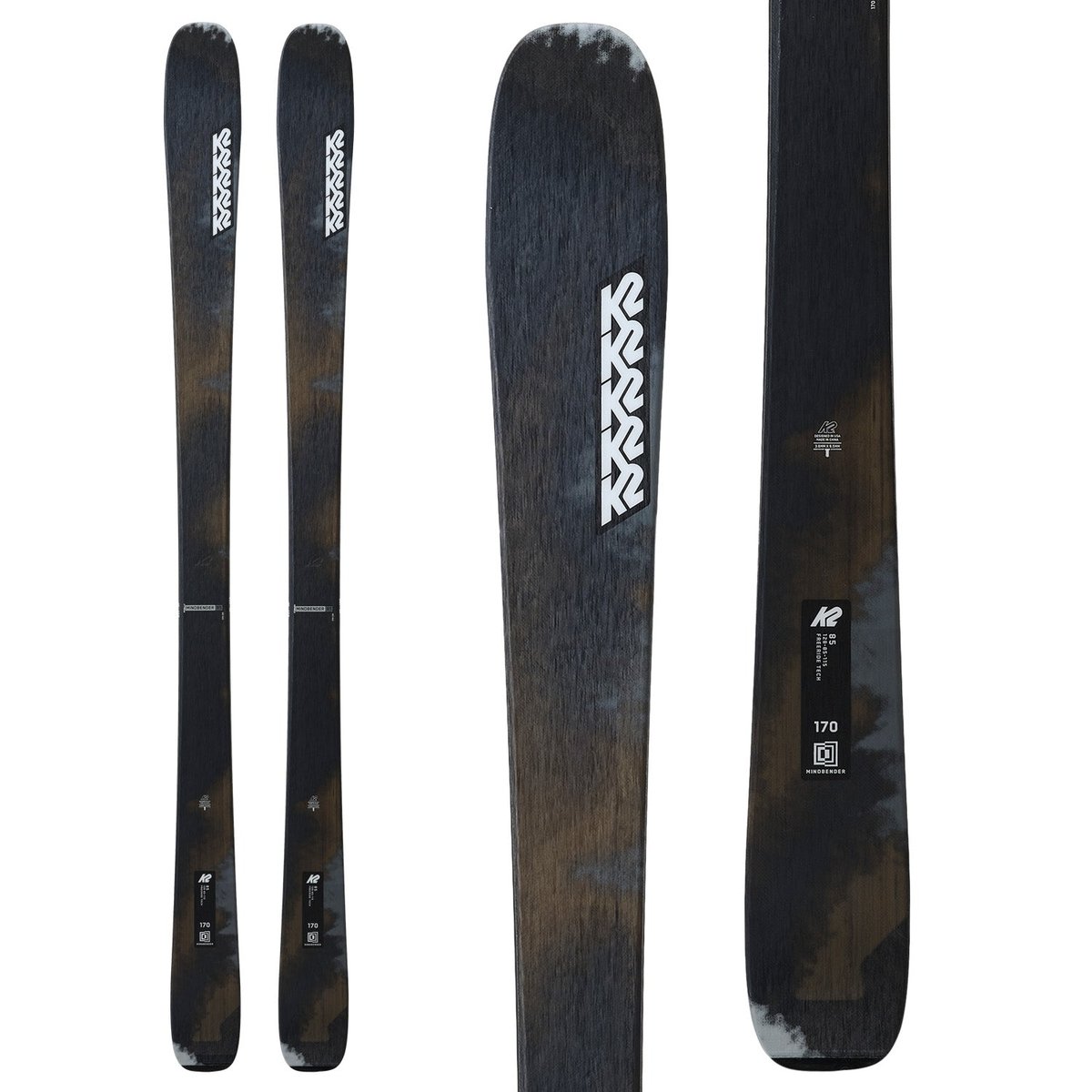
5. K2 Mindbender 85
Specifications: 85mm waist width | All-mountain freeride | Aspen microblock core | Available lengths: 146-171cm
Why it's great for beginners: The K2 Mindbender 85 is for skiers who know they want some versatility and are ready to explore beyond groomed terrain. The 85mm width gives you noticeable flotation in soft snow while remaining nimble enough for groomers. The all-terrain rocker profile is forgiving and playful, a hybrid of camber underfoot with rocker tips and tail. The soft flex encourages confidence building. The Slantwall technology adds responsiveness without harshness. The eco-friendly Bio Resin construction appeals to environmentally conscious skiers. This ski feels fun and encourages exploration.
Best for: Adventurous beginners or early-intermediate skiers ready to explore more varied terrain. Those who want a playful ski that rewards progression.
Price range: $400-$500 per pair
Beginner Ski Comparison Table
| Ski Model | Waist Width | Best Terrain | Flex | Profile | Price Range |
|---|---|---|---|---|---|
| Rossignol Experience 78 | 78mm | Groomed/Mixed | Soft-Medium | Hybrid | $350-$450 |
| Atomic Maverick 86 C | 86mm | Groomed/Mixed | Soft-Medium | Camber-Rocker | $550-$600 |
| Salomon QST Spark | 85mm | All-Mountain | Soft-Medium | Camber-Rocker | $380-$480 |
| Nordica Steadfast 80 DC | 80mm | All-Mountain | Medium | Camber-Rocker | $580-$630 |
| K2 Mindbender 85 | 85mm | All-Mountain Freeride | Soft | All-Terrain Rocker | $400-$500 |
Common Beginner Ski Mistakes to Avoid
Learning from others' mistakes can save you time, money, and frustration. Here are the most common errors beginners make when buying skis:
Mistake #1: Buying Skis That Are Too Long
The "bigger is better" mentality doesn't apply to beginner skis. Skis that are too long are harder to control, more difficult to maneuver, and slower to respond to your input. They make learning harder and can create bad habits. Start shorter than you think you should. You can always progress to longer skis as your technique improves.
Mistake #2: Prioritizing Width Over All Else
A common misconception is that wider skis are "better" beginner skis. In reality, very wide skis (85mm+) are actually harder to control on groomed terrain where you'll spend most of your learning time. Stick to 78-82mm for maximum versatility and control while learning.
Mistake #3: Overlooking Flex and Feel
Don't just look at specs, actually ask to hold and flex different skis. How a ski feels matters. Flex that's too stiff will fight you; flex that's too soft might feel unstable. Soft-to-medium flex is generally ideal for beginners, but the feel needs to work for your particular build and strength level.
Mistake #4: Buying Too Much Ski Too Soon
It's tempting to buy the ski that your friend who's been skiing for 5 years loves, or to aim for advanced skis thinking you'll "grow into them." This is a mistake. Buy skis designed for your current ability level. You'll progress faster, have more fun, and make better use of your equipment. Upgrade as your ability develops.
Mistake #5: Forgetting About Bindings and Boots
Skis are only part of the equation. Bindings are critical safety equipment that must be properly adjusted for your weight and ability level. Boots must fit correctly or you'll be uncomfortable and develop bad habits. Don't cheap out on the system, get properly fitted equipment from a knowledgeable shop.
Mistake #6: Not Considering Your Local Conditions
Buying a powder ski when you ski hardpack groomers, or getting a narrower on-piste ski when you're at a resort with variable conditions are common mismatches. Think about where you'll actually ski and buy accordingly.
Mistake #7: Rushing the Decision
Take your time. Try skis at demo days if possible. Talk to experienced skiers and shop staff. Sleep on the decision. This is a significant investment in your new hobby, a few extra days of research is worth it.
How to Choose Skis: Final Checklist
Before you head to the shop or place your online order, make sure you've considered these key points:
- I understand my local terrain and snow conditions
- I've decided on all-mountain skis as the best beginner choice
- I know my appropriate length based on height, weight, and ability
- I'm targeting waist width in the 78-84mm range
- I understand basic ski specs: flex, rocker, camber, turn radius
- I'm budgeting for the complete setup (skis, bindings, boots, poles)
- I've considered new vs. used and made my choice
- I have a shortlist of specific models I'm considering
- I plan to visit a shop for proper fitting and advice
- I'm not buying skis that are too long, too wide, or too advanced
Frequently Asked Questions About Choosing First Skis
A: Absolutely! Renting is a great way to start. Rental shops have beginner equipment optimized for learning, and you can try different types before buying. However, if you're committed to becoming a regular skier, owning your own properly fitted equipment will improve your experience. Many skiers rent for their first 3-5 days, then buy once they're sure they'll stick with the sport.
A: Your friend's favorite ski might not be ideal for you. Factors like your weight, height, ability level, and the terrain you ski all matter. What works for an athletic 180-lb intermediate skier might not be right for a lighter, pure beginner. That said, recommendations from experienced skiers are helpful starting points, just make sure you test and verify for yourself.
A: Women's skis are typically designed with a more forward-biased flex pattern and geometry to match average differences in weight distribution and strength between men and women. They're not just smaller men's skis. Women generally progress better and more comfortably on properly fitted women's-specific skis. The same principle applies to juniors and kids. They should ski kids' skis, not scaled-down adult equipment.
A: With proper care (annual maintenance, edge care, base repair), quality beginner skis can last 100-150 days of skiing, which is typically 3-5 years of regular recreational use. However, many skiers upgrade before their skis wear out as their ability progresses and they want equipment tailored to their new skill level. Plan on your first pair lasting at least 2-3 seasons if cared for properly.
A: Improvements between seasons are typically incremental rather than revolutionary. New graphics, minor tweaks to flex patterns, and material refinements are common. For a beginner, a solid model from any recent season (within 2-3 years) will perform excellently. The difference between a 2024 and 2026 beginner ski is minimal. Don't feel pressured to buy the absolute newest season if a previous year's model meets your needs and is discounted.
A: Proper ski boots are essential. Regular winter boots don't connect to bindings properly, won't release in a fall, and offer no ankle support for skiing. Your bindings require boots with a proper boot sole and cuff design to function safely. Proper ski boots are one of the most important investments you'll make. They directly impact comfort, performance, and safety.
Ready to Start Your Skiing Journey?
Choosing your first skis is an exciting step toward a lifetime of adventure on the mountain. By understanding ski types, key specifications, proper sizing, and your budget, you're well-equipped to make an informed decision. Remember: the best ski for you is one that matches your height, weight, ability level, and local terrain, not necessarily the one that looks coolest or costs the most.
Start with a quality all-mountain ski in the 78-84mm width range, properly sized shorter than traditional recommendations for maximum control and forgiving. Invest in a complete system including proper boots and bindings. Visit a specialty ski shop where staff can help with fitting and offer expertise. Most importantly, don't overthink it, beginner skis from quality brands are all pretty good these days, and any of the five models recommended above will serve you beautifully as you learn.
The mountain is waiting. Get out there and enjoy the learning process. You've got this!
About AllMountainSport: We're dedicated to helping winter sports enthusiasts make informed gear choices and discover the best destinations and techniques. Whether you're a beginner taking your first run or an experienced backcountry adventurer, our guides and reviews are here to help you get the most out of every moment on the mountain.